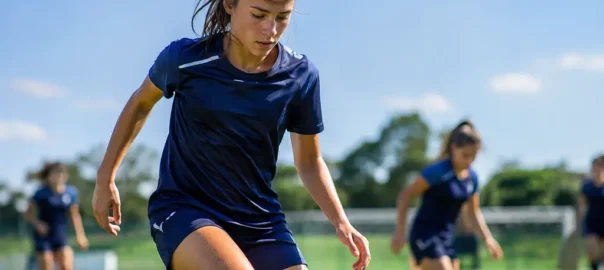
USWNT Roster Newcomers became one of the clearest themes of the United States women’s national team program in 2026. Under Emma Hayes, the player pool widened through January camp debuts, later call-ups, and continued reliance on the NWSL as the senior team’s main competitive base.
The change was not a full reset. The roster still included established internationals, including players with more than 100 caps during the October 2026 window. What shifted was the amount of room given to first-time call-ups, uncapped players, and young professionals trying to move from prospect status into regular senior-team contention.
That balance matters for women’s soccer in the United States because the USWNT has long served as both a competitive standard and a development signal. When new players break through, clubs, academies, youth national teams, and college programs receive a clearer view of which profiles are being rewarded at senior international level.
Why USWNT Roster Newcomers Matter In 2026
USWNT Roster Newcomers In January Camp
The January 2026 camp gave the clearest early picture of Hayes’ selection direction. Maddie Dahlien, Reilyn Turner, Riley Jackson, and Sally Menti were called into the senior team for the first time, while Ayo Oke later joined as a replacement. All five earned first senior caps, becoming the 286th through 290th players to debut for the USWNT, according to U.S. Soccer’s January camp recap.
The January window also produced immediate scoring contributions. Against Paraguay on January 24, 2026, and Chile on January 27, 2026, three of the newcomers scored in their first cap. Reilyn Turner was one of those debut scorers, a marker that turned a standard evaluation camp into a more meaningful competitive audition.
Sports Illustrated reported that the January roster had an average age of 24.1 years and an average of 6.6 senior caps per player, which showed how unusual the group was by traditional USWNT standards in its roster takeaways. Those figures fit the broader idea of a camp built less around settled hierarchy and more around testing roles.
Those USWNT Roster Newcomers did not all arrive with the same profile. Some were attacking players being judged on final-third timing, others were midfield or defensive options being tested for tempo, defensive range, and decision-making. The common thread was opportunity: Hayes used the window to see how young or less-capped players handled the speed of senior international football.
What The Debuts Revealed About Selection
The January debuts showed that form, readiness, and positional need could outweigh long senior-team résumés. That is significant in a player pool where competition is already intense. The USWNT cannot rely only on inherited status if it wants to keep pace with deeper global rivals; it must keep identifying players who can raise the level in specific roles.
For supporters, the camp also gave a reference point for how new players should be assessed. A debut goal is memorable, but selection value is wider than scoring. Pressing discipline, ball retention, defensive recovery, and the ability to execute instructions in limited minutes all affect whether a player remains in the pool after a first camp.
The NWSL Pathway And Youth-Team Link
Professional Minutes Are Changing The Timeline
The 2026 roster pattern reflected the growing strength of the professional route in the United States. Many recent names in and around the senior team developed through NWSL environments, youth national teams, or both. The rise of teenagers and early-20s professionals has shortened the gap between youth success and senior-team evaluation.
That shift does not remove college soccer from the pathway, but it changes the timing of key decisions. Players who turn professional before completing college eligibility, or who enter the professional game at younger ages, can face senior opponents earlier. If they perform, the national team staff has more evidence to use when making call-up decisions.
The October 2026 window underlined that point. The roster included several uncapped players, among them Jordan Silkowitz, Evelyn Shores, Pietra Tordin, Kate Del Fava, and Trinity Byars. Del Fava’s first senior call-up came in early October 2026 after Naomi Girma was replaced because of injury, while Tordin’s call-up strengthened the bridge from the United States’ 2024 FIFA U-20 Women’s World Cup group to the senior pool.
From Youth National Teams To Senior Camps
The youth-to-senior connection is one of the most important parts of the 2026 story. By October 2026, Pietra Tordin’s involvement meant eight players from the USA’s 2024 FIFA U-20 Women’s World Cup team had received senior USWNT call-ups. That does not guarantee long-term senior careers for every player, but it does show a working evaluation chain.
The senior staff’s willingness to bring young players into camp gives the development system a sharper target. Youth national-team performances, NWSL roles, and training habits can all become part of the senior conversation. For more on how the pool developed later in 2026, the site’s USWNT roster analysis after Spain assessed selection balance after the October friendlies.
Women’s soccer coverage across the same network, including extensive reports from Sports Wire News, has also tracked how national-team selection connects with club growth and player visibility. That relationship matters because senior call-ups can raise attention on club performances, especially for younger players still building public profiles.
Roster Balance Under Emma Hayes
Depth Without Removing Veteran Standards
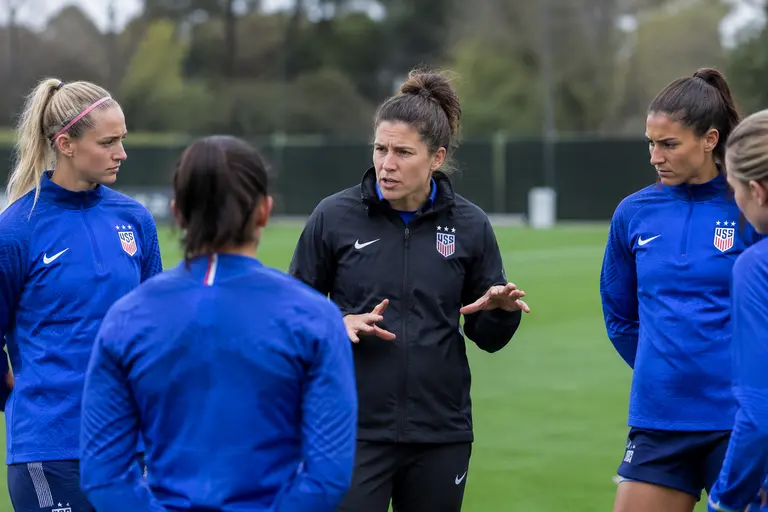
Hayes’ early USWNT period has been defined by expansion, not abandonment of experience. By January 2026, she had awarded 27 first senior caps in 30 matches, a striking number for a program that has often carried strong continuity across major-tournament cycles. The effect was a wider pool and more internal pressure at nearly every position.
At the same time, the October 2026 roster still carried senior experience. Three players had more than 100 caps each, while nine of the 23 field players had 11 or fewer caps. That mix created a useful training environment: new players could be measured against established standards, while veterans had to hold places in a more competitive squad.
This balance is central to understanding USWNT Roster Newcomers. A healthy national team does not simply collect debutants. It uses first caps to test whether players can solve tactical problems, offer different athletic profiles, or add depth where the pool has been thin. Some players will become regulars; others may remain part of a wider tracking group.
Competition Across Roles
The newcomer wave affected all lines of the team. In attack, players such as Turner and Dahlien represented direct, energetic options. In midfield, the evaluation focused on composure and tempo. In defense and goalkeeping, call-ups such as Del Fava and Silkowitz reflected the need to keep pressure on established choices while preparing for future cycles.
Croix Bethune’s 2026 production also showed how quickly a player can shift from promising option to serious contributor. Through mid-October 2026, she had played in two matches, started once, scored one goal, supplied one assist, and logged 107 minutes. Those numbers came from a small sample, but they showed how targeted minutes can help a player make a case.
The wider implication for women’s soccer is clear: more credible senior-team pathways increase the value of weekly club form. NWSL performances become harder to separate from national-team selection, which can lift standards across the league. Players know that strong club minutes can lead to camps, and camps can lead to caps.
USWNT Roster Newcomers And The Senior Pathway
USWNT Roster Newcomers in 2026 represented more than a set of fresh names on a team sheet. They showed how the national team was being pushed by a deeper domestic league, stronger youth-team integration, and a coach willing to test players before roles became fixed.
The January debuts supplied the symbolic breakthrough: five first caps and several immediate goals. The October window supplied the structural picture: uncapped players remained in camp, former U-20 players continued to climb, and the roster still included experienced internationals who set the standard.
That is the most useful way to read the 2026 cycle. The USWNT did not simply get younger for its own sake. It widened the competition, evaluated players across different match contexts, and gave the broader women’s soccer system proof that the route from club and youth performance to senior international opportunity was active.
If the program converts that larger pool into reliable tournament depth, the impact will be felt beyond the national team. Clubs will have more incentive to develop young players, supporters will track emerging professionals earlier, and the senior USWNT will enter future windows with more ways to build a squad rather than only a starting eleven.