
The Brazilian national team holds the most prestigious legacy in international football, lifting five World Cup trophies. Historically, the clubs supplying these legendary squads shifted drastically over the decades. Analyzing the club representation of Brazil’s World Cup rosters reveals a broader story about the global economics of the sport. Fans and sports bettors track these modern roster dynamics to place informed wagers based on a comprehensive BetOnline sportsbook rating. Reviewing the historical shift from domestic powerhouses to English Premier League giants offers a deeper look into how Brazil constructs its national identity on the pitch.
Decades ago, domestic clubs completely dominated the squad list. Today, the English top flight dictates the core of the national team.
The Golden Era of Domestic Dominance
During Brazil’s first true golden era, culminating in three World Cup victories between 1958 and 1970, the national team relied almost exclusively on players competing in the Brazilian state leagues. In 1958 and 1962, clubs like Botafogo and Santos formed the absolute core of the national squad. Santos provided the incomparable Pelé, and Botafogo contributed legends like Garrincha and Nilton Santos.
The 1970 squad, widely considered the greatest international team ever assembled, featured stars entirely based in Brazil. The lack of international television rights and strict transfer regulations kept the best South American talent playing at home. This localization allowed players to develop deep chemistry. They frequently faced each other in domestic competitions before combining their talents for the national team.
The European Shift and Early English Pioneers
The economic realities of global football began changing the composition of Brazil’s World Cup squads in the 1980s and 1990s. The massive financial weight of European leagues lured Brazil’s top stars across the Atlantic. By the time Brazil won its fourth World Cup in 1994, the squad featured a hybrid mix of domestic players and European-based stars.
The 2002 World Cup victory solidified this transition. The legendary attacking trio of Ronaldo, Rivaldo, and Ronaldinho all starred for major European clubs in Spain and France. During this period, Premier League representation remained scarce. Yet, Gilberto Silva anchored the midfield for both Brazil and Arsenal, signaling a future pipeline. As the financial pull of English football grew, elite European clubs established extensive scouting networks in South America, identifying and signing Brazilian teenagers before they could fully establish themselves in their local leagues. Tracking historical data from the official FIFA archives confirms this steady migration to the Premier League over the last two decades.
The Modern Premier League Takeover
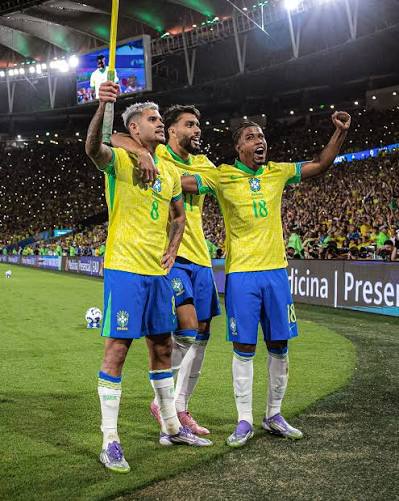
Analyzing the squads for recent tournaments, including the build-up to the 2026 World Cup, highlights the complete European integration of the modern Seleção. The English Premier League now serves as the primary supplier for the national team. Arsenal, Manchester City, and Manchester United consistently send multiple players to represent the green and gold.
Goalkeepers like Alisson Becker and Ederson redefined their positions during their time in England, carrying that elite distribution back to the national team. Midfielders such as Bruno Guimarães and Casemiro form the defensive screen, bringing Premier League physicality to international fixtures. The modern tactical system required to win international tournaments demands players who compete weekly in high-intensity environments, forcing the national team manager to build the roster around English tactical discipline.
Premier League Representation in Recent Brazilian Squads
| Player | English Club | Position | Key Tournament Role |
| Alisson Becker | Liverpool | Goalkeeper | Primary starter |
| Gabriel Magalhães | Arsenal | Center-Back | Defensive anchor |
| Bruno Guimarães | Newcastle United | Midfielder | Box-to-box playmaker |
| Casemiro | Manchester United | Defensive Midfielder | Midfield screen |
| Gabriel Martinelli | Arsenal | Winger | Attacking rotation |
Balancing South American Flair with English Pragmatism
The club origin of Brazil’s players directly impacts how the national team plays. The historic domestic squads played with a distinct, free-flowing style known as Ginga. Today, players developing in English academies arrive at the national team with a highly pragmatic, structurally disciplined approach to the sport. The pace and physical demands of the Premier League strip away some of the traditional flair in favor of ruthless efficiency.
Brazil’s ongoing challenge involves merging the raw, individual creativity found in domestic club youth systems with the strict defensive organization required by English club football. The clubs that produce Brazil’s World Cup players dictate the tactical identity of the nation. As long as the financial disparity between continents exists, the Premier League will continue to host the core of Brazil’s World Cup squads, completely redefining the historical DNA of the sport’s most successful nation.