
What makes a champion truly stand out? Is it just about the numbers, like record points, or something more? We’re looking at how they win, not just if they win. It’s about changing the game’s story to their favor.
Arsenal’s “Invincibles” went a whole Premier League season without losing. Manchester City also set a record with their points. Some say true dominance mixes stats with an unbeatable aura. It’s about being unbeatable, innovating tactics, and leaving a mark on the sport.
This isn’t just about who tops the league. It’s about pushing what’s possible. Was Manchester City’s 100-point season a league highlight or a sign of predictability? We’re not just picking a winner. We’re exploring a legacy. We’re looking beyond wins and losses to understand true dominance.
Highest point totals
A Premier League season is judged by one number: the final points total. This number shows who won and how much they dominated. It turns a season into a statistic, a fact in history books.
For decades, 90 points was the magic number for winning the title. But the 2010s changed this. Now, 90 points is just a starting point.
The 100-Point Club and the Pursuit of Perfection
The 100-point barrier was once a goal no team could reach. But in the 2017-18 season, Manchester City broke this barrier. They showed a new level of football, winning every game.
This achievement wasn’t just about money or talent. It was about a new way of playing football. It was a high-press, possession-obsessed game, where every player worked together perfectly.
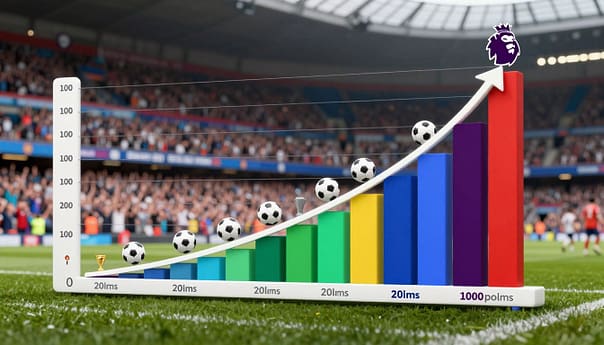
But what does it mean when a team can be so efficient? It raises questions about the league’s fairness. Is a 100-point season a sign of brilliance or a sign of a league’s imbalance?
The Statistical Outliers
Not all stories are about the champions. The real stories are often about the teams that almost won. Liverpool in the 2018-19 season is a great example. They got 97 points, just one point behind Manchester City.
This shows a league full of great teams. A 95+ point season that doesn’t win is rare. It shows a league where every team is fighting hard for the top.
To understand the modern era, here are the most dominant Premier League campaigns by points:
| Team | Points | Season | Notes |
|---|---|---|---|
| Manchester City | 100 | 2017-18 | Record for most points in a Premier League season. |
| Liverpool | 99 | 2019-20 | Won the league, but the 2019-20 season was 38 games. |
| Manchester City | 98 | 2018-19 | Won the league by 1 point in a legendary title race. |
| Chelsea | 95 | 2004-05 | Jose Mourinho’s first season; a record-low 15 goals conceded. |
| Liverpool | 97 | 2018-19 | Finished 2nd with a points total that would win the league in 95% of seasons. |
This table shows how standards have risen. What was once a historic total is now the minimum for a title challenge. The outlier seasons show the era of super-clubs. They prove that even with a near-perfect season, you can’t always win. This defines the modern Premier League.
Goal differential records
In football, the goal difference is more than just a tiebreaker. It shows who truly dominated. It’s the difference between winning and crushing it. Points tell who’s the champion, but goal difference reveals the truth about a team’s power.
It shows not just who won, but by how much they changed the game.
The Art of the Demolition
Manchester City’s 2017-18 season is a prime example. Their +79 goal difference was a clear statement of dominance. They didn’t just win; they dissected their opponents, scoring 106 goals. This was more than winning; it was a form of demolition.
Their 5-0 and 6-0 wins were not flukes. They were a display of tactical superiority. This was dominance as a form of performance art, where the game didn’t end with the final whistle.

But was their 6-0 win a masterpiece or a display of power? Liverpool’s 2019-20 season showed a different kind of dominance. They controlled the game with a relentless press, achieving a +52 goal difference. Their dominance was suffocating, not destructive.
Their art was in the method, not just the margin.
When Goals Are the Best Defense
José Mourinho’s 2004-05 Chelsea side is a prime example of defensive dominance. They conceded just 15 goals in 38 games. This was not just a strong defense; it was a tactical lockdown.
Their philosophy was built on clean sheets and a 1-0 win was a masterpiece. Their goal difference was a testament to their defensive prowess.
Pep Guardiola’s Manchester City took a different approach. Their +79 season was built on a relentless offense. They didn’t just want to win; they wanted to exhaust the scoreboard.
This is the modern duality of dominance: an impenetrable fortress versus an unstoppable siege engine. One suffocates hope; the other vaporizes it with goals.
A massive goal difference is a powerful psychological weapon. It demoralizes opponents before the game even starts. It’s not just about winning; it’s about setting a new standard.
Tactical trends of dominant teams
Tactics, like fashion, have seasons. The Premier League’s dominant style has changed a lot. Each era has brought a new way to be truly dominant.
This change is from being practical to being poetic. It’s about moving from defensive play to using space well. The league’s soul has been shaped by its top teams.
The Evolution of Dominance
Think of Premier League dominance as a living thing. It changes over time. The idea of what makes a champion has changed with each new tactic.
The DNA of a champion has changed a lot. It’s like moving from a siege to a symphony. The league has changed a lot.
We’ve moved from valuing 1-0 wins to seeing 4-3-3 as standard. The league has gone from being practical to focusing on possession. This change is a big lesson in how tactics evolve.
From Pragmatism to Positional Play
The early 2000s were about being practical. José Mourinho’s Chelsea was a great example. They won 95 points and conceded just 15 goals.
This was about being solid and ruthless. It was like a siege, always pushing forward. This was the “Mourinho effect”.
Arsène Wenger’s “Invincibles” showed a different way. They won without losing, playing beautiful football. This was a contrast to Chelsea’s style.
Pep Guardiola and Jürgen Klopp brought new ideas. Guardiola’s Manchester City in 2017-18 was a perfect example. They controlled the game with their tactics.
This was not just about winning. It was about controlling the game. It was a game of chess, where every move was thought out.
Today’s top teams need to be flexible. They need to know how to press, play positionally, and counter-attack. The 2022-23 season showed this. Teams need to adapt their tactics to win.
| Tactical Era | Defining Philosophy | Premier League Example | Key Metric of Dominance |
|---|---|---|---|
| Pragmatic Power (Mid-2000s) | Defensive Solidity & Counter-Attack | Chelsea 2004-05 (Mourinho) | Goals Conceded (15 in 04/05) |
| Possession & Fluidity (Mid-2000s) | Invincible, Fluid Attacking | Arsenal’s Invincibles (03/04) | Unbeaten Season |
| Positional & Pressing Dominance (2010s-20s) | Positional Play & High Press | Man City 2017-18 | 100 Record Points (2017-18) |
| Hybrid & Adaptive (Present Day) | Tactical Fluidity & In-Game Adaptation | Multi-team title races (e.g., 2022-23) | Points Tally in a Multi-Team Race |
Today, being dominant means being flexible. It’s not just about one tactic. It’s about having different plans for different situations. The path to winning has become more complex and beautiful.
Cross-league comparisons
So, you’ve dominated at home. But can you do it on a cold, rainy night in Milan or Madrid? True footballing dominance isn’t just a domestic affair; it’s a continental one. To crown a season truly great, we must look beyond the border and ask: how does Premier League supremacy translate on the European stage?
Premier League vs. The European Elite
Comparing a 95-point Premier League season to a 90-point La Liga campaign is a favorite pub debate. The Premier League’s “competitiveness” is often touted as its strength, but is it a hindrance in Europe? The all-English finals of 2008 and 2019 were high-water marks, but recent years have seen a resurgence of Spanish and German power. A team like Manchester City’s centurions, while domestically untouchable, had to wait for their European coronation.
The Champions League benchmark is the ultimate litmus test. Recent cross-league analyses, such as a 2024 study examining stylistic differences between leagues, highlight how playing styles and player roles can diverge dramatically between competitions. You can read a detailed analysis of such cross-league performance metrics in this study on player performance analytics.
The Champions League benchmark doesn’t lie. The Premier League’s most dominant teams are ultimately judged by their European nights. Was the 2018-19 Liverpool side, with 97 domestic points but a Champions League title, more dominant than the 2008 Manchester United side that won both? The data suggests that the most successful Premier League seasons are those that pair domestic tyranny with continental validation.
The tactical evolution required for this is immense, as the demands of a Premier League season and a deep European run test a squad’s philosophy. A recent analysis of player performance across leagues suggests that adaptability in style is key for European success, a nuance often lost in the physicality of a domestic season.
So, is the Premier League the world’s best league? Perhaps. But in football, the final, wry lesson is this: a domestic bully can be a continental king, but only if their dominance travels well beyond their own backyard.