
The USMNT Fall Window ended as a four-match statement in September and October 2026: four wins, 12 goals, seven different goalscorers, 13 senior debuts and two closing clean sheets. For Mauricio Pochettino, the sequence against Peru, Chile, Mexico and Canada offered a rare blend of results and experimentation without the usual trade-off between development and competitiveness.
All four matches had concluded by October 6, 2026. The United States beat Canada 1-0 at Allianz Field in St. Paul, Minnesota, securing a fourth consecutive win, a second straight shutout and a 4-0-0 record for the window, according to U.S. Soccer’s match recap. The run gave the staff match evidence across the squad rather than only isolated friendly minutes.
The window also carried historical weight because several of the most visible contributions came from first-time internationals and teenagers. Yet the senior core did not disappear from the story. Tyler Adams returned to the captaincy, Yunus Musah reached a cap milestone, and established defenders helped close the window with control rather than chaos.
What The USMNT Fall Window Proved
USMNT Fall Window Match Pattern
The four-match schedule ran from September 26 to October 6, 2026, with games against Peru, Chile, Mexico and Canada. The United States scored 12 goals across the window, and those goals were spread among seven scorers. That distribution mattered because it reduced dependence on one attacking outlet and allowed Pochettino to evaluate finishing, movement and decision-making from several positions.
The strongest structural sign was the progression of the window itself. The attacking output arrived early, while the defensive control became clearer at the end. The 3-0 win against Mexico on October 3 and the 1-0 win against Canada on October 6 gave the United States back-to-back clean sheets in rivalry matches. For a squad mixing World Cup veterans with first-call prospects, that was more than a friendly-window footnote.
The broader context of the rivalry section of the schedule is covered in this related USMNT matches recap, but the player-performance angle is direct: the United States did not rely on one age group, one club background or one tactical profile. Contributions came from teenagers, returning leaders and players still trying to define their international roles.
Debutants And Teen Scorers Changed The Player Pool
First Caps Produced Immediate Returns
The most striking feature of the window was the output from debutants. Thirteen previously uncapped players made senior USMNT debuts and combined for 1,396 minutes. That is a large competitive sample for a group entering the international setup together, particularly across four matches in less than two weeks.
Justin Ellis supplied the first headline moment on September 26, 2026, against Peru. He scored in the fourth minute on his debut, recorded as the fastest goal by a debutant in the modern era. That type of immediate scoring contribution is rare because new internationals are usually adjusting to tempo, spacing and national-team responsibilities before they influence the scoreline.
The teenage records came next. Mathis Albert scored against Chile on September 29 at 17 years and 131 days, becoming the youngest goalscorer in USMNT history. Four days later, Cavan Sullivan broke that mark at 17 years and 5 days by scoring against Mexico on October 3. In one window, the program’s youngest goalscorer record changed twice.
Julian Hall also joined the group of debutants who scored during the run. Taken together, the goals from Mathis Albert, Justin Ellis, Julian Hall and Cavan Sullivan gave the staff more than encouraging appearances. They provided concrete production from players who entered the month without senior caps.
Veterans Gave The Window Its Competitive Spine
Adams, Musah And Freeman Supplied Continuity
The youth story did not stand alone. Tyler Adams was named captain for the window and wore the armband in multiple matches, his first time doing so since the 2022 World Cup. His role gave the group a familiar reference point at a time when many players were entering camp without senior international experience.
Yunus Musah reached his 50th international cap in the Canada match on October 6. That milestone reflected his status as a player who had already accumulated significant senior-team experience despite still being young by international midfield standards. His presence helped connect the older core with the next wave of players competing for minutes.
Alex Freeman’s continuity was another notable marker. He earned his 25th consecutive cap, a run dating back to June 15, 2025. The research from the window also noted that 12 members of the 2026 World Cup roster played alongside 12 prospects receiving first call-ups. That balance shaped the evaluation: Pochettino was not only testing newcomers; he was testing how quickly they could function beside established internationals.
For those interested in broader coverage of sports, including insights into the soccer world, Texas Sportsmen offers a wide array of related content as part of the same network.
Midfield And Attacking Contributions Stood Out
Berhalter And Tillman Strengthened Their Cases
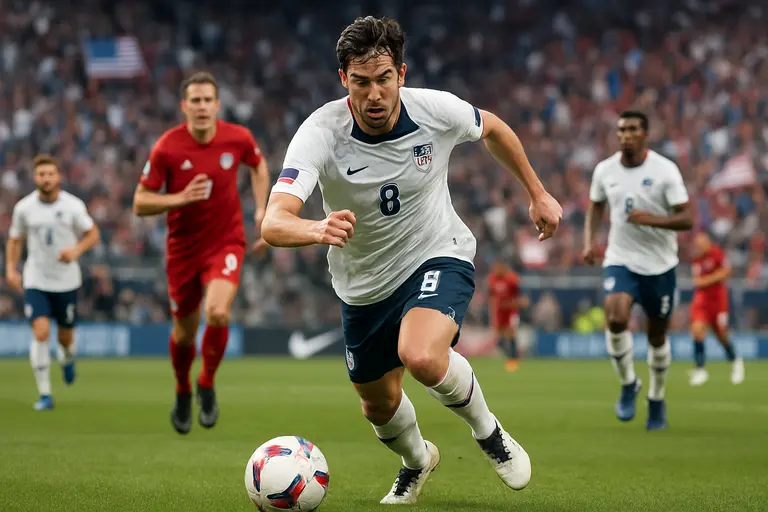
Sebastian Berhalter produced one of the most efficient attacking stretches of the window. He recorded a goal and an assist in back-to-back matches against Peru and Chile. That made him the first USMNT player to do so since Landon Donovan in 2013, and he became the youngest American to achieve that specific feat.
Berhalter’s contribution mattered because it combined end product with repeatability. A single friendly performance can be difficult to interpret, but producing in consecutive matches gives coaches a stronger reason to continue testing a player in competitive structures. His output also added another midfield or attacking-midfield option to a pool already under review after the 2026 World Cup.
Malik Tillman’s goal against Mexico on October 3 carried a different significance. It was his fourth USMNT goal of 2026, making him joint-highest goalscorer for the national team in that calendar year. In a window defined by new scorers, Tillman’s production showed that more established attacking players also maintained influence.
The USMNT Fall Window therefore created two parallel attacking stories. One centered on first-time internationals scoring quickly. The other centered on players with prior senior exposure strengthening their cases through repeat contributions, especially in matches where the squad changed around them.
Defensive Control Closed The Four-Match Run
Schwake, Richards And Trusty Protected The Finish
The final two matches changed the tone of the window from attacking promise to two-way control. The United States beat Mexico 3-0 on October 3 and Canada 1-0 on October 6, closing the run with consecutive shutouts. Rivalry matches often test emotional control as much as structure, and those results gave the staff useful evidence about the defensive group.
Brian Schwake made his first start against Canada and kept a clean sheet. That performance mattered because goalkeeper evaluation at international level can be limited by small samples. A first start in a rivalry match, followed by a shutout, gave the staff a clear data point without overstating what one match can decide.
Chris Richards and Auston Trusty formed a strong center-back pairing during the Canada match. Their work belonged to a wider defensive pattern across the end of the schedule. The United States had scored freely earlier in the window, but the shutouts against Mexico and Canada showed that the group could also manage match states after taking control.
That defensive finish was central to the value of the USMNT Fall Window. A productive attacking camp can still leave questions if the team allows too many chances or loses structure late in matches. The last two results reduced those concerns and gave Pochettino a firmer base for future selection debates.
What The USMNT Fall Window Means For Pochettino
A Larger Pool With Real Selection Pressure
The USMNT Fall Window did not settle every position, and no four-match friendly block can define a full cycle. Its value was that it gave Pochettino evidence across age groups and roles. Teenagers scored. Debutants handled senior minutes. Veterans supplied leadership. Defenders closed the schedule with clean sheets.
The key outcome was selection pressure. Players such as Albert, Ellis, Hall and Sullivan moved from prospect status into the senior conversation through goals. Berhalter and Tillman used production to strengthen their cases. Adams, Musah and Freeman gave the staff continuity around the changes.
For a national team entering a new phase after the 2026 World Cup, the window showed a larger working group rather than a narrow preferred XI. That is the most meaningful legacy of the four matches. The United States finished 4-0-0, but the player-performance story was broader: the pool became more competitive, younger players made measurable contributions, and the senior core remained central to the team’s structure.