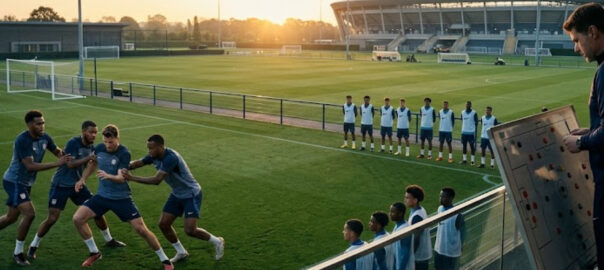
The United States men’s national team entered the 2026 FIFA World Cup with expectations unlike any previous tournament. Playing on home soil, featuring a generation of internationally experienced players, and led by Mauricio Pochettino, the USMNT showed progress but ultimately fell short after a Round of 16 defeat against Belgium. The result created a clear tactical question: what must change before the 2030 World Cup cycle?
The defeat against Belgium exposed both the progress and limitations of the current project. The United States has developed a deeper player pool, more European-based talent, and stronger individual quality, but elite tournament success requires a complete tactical identity capable of competing against experienced football nations.
As Pochettino continues building toward 2030, the focus will move from short-term tournament preparation toward creating a more adaptable system. The next cycle will depend on improving defensive organization, midfield control, attacking efficiency, and the integration of emerging players.
The lessons from Belgium provide a blueprint for the next stage of American soccer development.
Belgium Defeat Revealed The Gap Between Talent And Tactical Control
The USMNT’s Round of 16 elimination showed that individual talent alone cannot overcome teams with greater tactical experience. Belgium entered the match with a clear understanding of managing possession, controlling defensive spaces, and exploiting transitional moments.

The United States generated competitive moments but struggled to maintain control during key phases.
The biggest differences appeared in three areas:
| Tactical Area | USMNT Challenge Against Belgium |
|---|---|
| Defensive transitions | Space allowed after losing possession |
| Midfield control | Difficulty maintaining consistent possession phases |
| Final-third execution | Limited efficiency against organized defense |
The match reflected a broader pattern seen during international competitions. The USMNT has become physically capable of competing with top nations, but controlling matches for 90 minutes remains the next challenge.
Pochettino’s task is not rebuilding from zero. The foundation exists. The challenge is developing a system that allows talented players to perform with greater consistency.
The USMNT World Cup analysis previously explored how Pochettino introduced a more aggressive tactical approach during the tournament. The next phase requires refining that identity rather than replacing it.
Mauricio Pochettino’s Pressing Model Needs More Balance
One of Pochettino’s defining tactical characteristics throughout his managerial career has been aggressive pressing. His teams at Tottenham Hotspur, Paris Saint-Germain, and Chelsea often focused on winning possession quickly after losing the ball.
The USMNT showed elements of this approach during the 2026 World Cup.
The team frequently attempted to pressure opponents higher up the field, using athletic forwards and midfielders to disrupt buildup play.
The problem appeared when opponents escaped the first wave of pressure.
Elite international teams punish pressing systems when the defensive structure behind the press is not synchronized.
For 2030, Pochettino must develop a more flexible pressing model.
The USMNT needs:
- Better spacing between defensive and midfield lines
- More coordinated pressing triggers
- Improved recovery positioning after attacking transitions
The goal is not simply pressing more. The objective is pressing with greater intelligence.
The strongest international teams understand when to accelerate pressure and when to protect space.
Midfield Evolution Will Define The Next USMNT Generation
The midfield remains one of the most important areas for improvement.
The modern international game is often decided through midfield control. Teams that consistently dominate possession, defensive positioning, and transitions usually perform better in knockout matches.
The United States has several talented midfield options, including players such as Weston McKennie, Tyler Adams, Yunus Musah, Malik Tillman, and emerging younger players developing through European clubs.
The challenge is creating a balanced midfield structure.
| Midfield Requirement | Development Priority |
|---|---|
| Ball progression | Breaking defensive lines consistently |
| Defensive coverage | Protecting transitions |
| Tempo control | Managing match rhythm |
| Creativity | Creating chances against compact defenses |
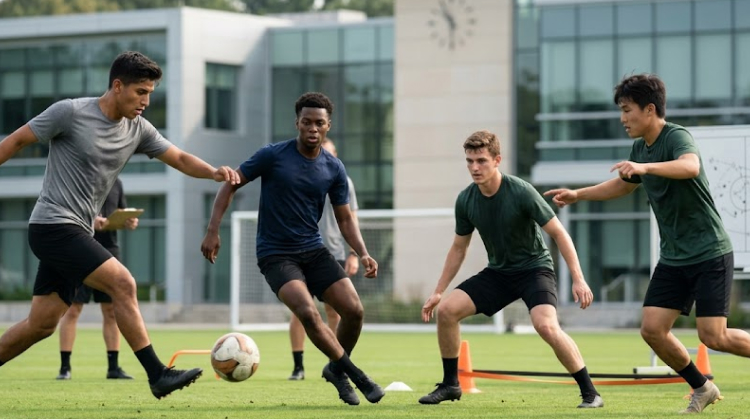
Pochettino’s next step will involve identifying the ideal midfield combination rather than simply selecting the most talented individuals.
The 2030 cycle could introduce a new generation of midfielders who combine technical ability with tactical discipline.
The USMNT Needs More Creativity Against Defensive Blocks
One of the recurring issues for the United States has been breaking down teams that defend in compact structures.
Against athletic opponents, the USMNT often creates opportunities through speed and transitions. Against organized defensive systems, the team has sometimes lacked variety.
International tournaments frequently produce matches where opponents sit deeper and force teams to create through controlled possession.
Pochettino must develop attacking solutions beyond individual moments.
The next generation of USMNT attackers will need to provide:
- Better movement between defensive lines
- More combination play near the penalty area
- Increased goal contributions from midfield positions
Players such as Christian Pulisic, Gio Reyna, Folarin Balogun, and emerging talents will remain important, but the system must create consistent opportunities.
The FIFA technical reports from recent tournaments have repeatedly highlighted the importance of positional flexibility and coordinated attacking movements in elite international football.
Young Players Will Shape The 2030 Tactical Identity
The advantage of the 2026 World Cup cycle is that many important USMNT players remain within their competitive prime years.
Unlike previous generations, the United States now has a larger group of players competing in top European leagues.
The next four years will determine which younger players become national team leaders.
Potential areas of growth include:
- MLS academy graduates earning international opportunities
- European-based prospects gaining first-team experience
- Younger attackers developing tactical maturity
- Defensive players improving distribution skills
Pochettino has historically valued young players who understand tactical responsibilities.
The 2030 squad will likely feature a combination of established stars and emerging talents who fit a more structured tactical system.
Defensive Organization Must Improve Against Elite Opponents
The Belgium match also highlighted defensive areas requiring attention.
Modern international football places enormous importance on defensive transitions. A team can dominate possession but still lose if it cannot recover effectively after turnovers.
The USMNT must improve:
- Defensive communication
- Fullback positioning
- Central midfield protection
- Counterattack prevention
Pochettino’s defensive philosophy depends on collective responsibility.
Every player must understand their role immediately after losing possession.
The strongest national teams are often separated by their reaction moments rather than their attacking ability.
The 2030 Cycle Requires A Clear American Football Identity
For years, the United States searched for a recognizable football identity.
The national team has historically been associated with athleticism, defensive organization, and competitiveness.
The current generation offers something different.
Technical ability, European experience, and tactical awareness have changed expectations.
The challenge is combining those qualities into a consistent style.
Pochettino’s long-term project could create a USMNT identity based around:
- Aggressive but controlled pressing
- Intelligent possession
- Fast attacking transitions
- Flexible tactical systems
The team does not need to copy European football models. It needs a structure that maximizes American player development.
Building Toward 2030 Starts With Lessons From 2026
The Belgium defeat should be viewed as a tactical evaluation point rather than simply a disappointing result.
The USMNT demonstrated that it belongs among competitive international teams. The remaining gap involves controlling difficult matches against experienced opponents.
Mauricio Pochettino now has four years to refine the details that separate promising teams from tournament contenders.
The next cycle will depend on tactical discipline, midfield evolution, defensive improvement, and the continued development of younger players.
The foundation is stronger than at any previous point in American soccer history. The challenge for Pochettino is transforming that foundation into a team capable of winning knockout matches at the highest level.