
The 2026 FIFA World Cup knockout phase introduces a sharp tactical contrast between the United States Men’s National Team and European opponents shaped by structurally disciplined domestic leagues. With matches staged across the United States, Mexico, and Canada between June and July 2026, environmental variation, travel load, and reduced recovery windows add another layer of complexity to already high-intensity fixtures. The USA enters this phase with a system built on vertical transitions, high pressing triggers, and athletic midfield coverage, while European teams arrive with refined positional structures, controlled build-up phases, and compact defensive organization designed to minimize transitional exposure.
These matchups are defined less by individual talent gaps and more by structural interaction zones: midfield spacing, pressing resistance, and the ability to control second-ball recovery after direct attacks. The knockout environment compresses tactical variance, forcing both sides into faster decision cycles where execution speed often outweighs possession dominance.
USMNT Vertical Structure and Transition-Based Identity
The United States tactical model in the 2026 cycle reflects a consistent emphasis on vertical progression rather than prolonged possession phases. The system relies on rapid forward distribution from defensive zones into attacking midfield corridors, often bypassing traditional midfield circulation patterns. This approach is designed to exploit disorganized defensive blocks, particularly during transitions immediately after ball recovery.
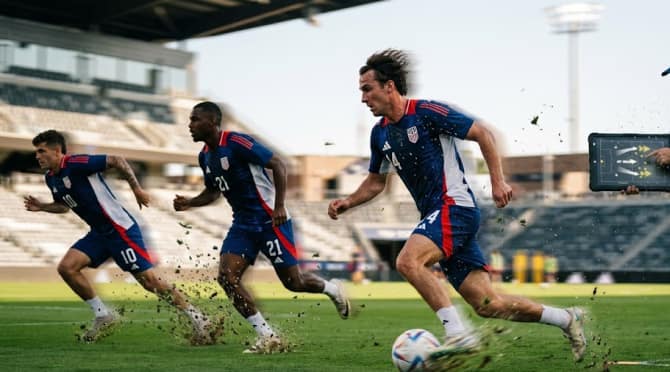
Christian Pulisic operates as a key reference point in advanced zones, frequently receiving early vertical passes in half-space positions. Weston McKennie’s role becomes critical in connecting defensive recovery phases to forward progression, while Tyler Adams provides structural balance in screening opposition counterattacks. Against European opponents, this structure faces immediate stress tests due to compact mid-block formations that reduce central passing lanes.
European teams often respond to this vertical system by compressing midfield space and forcing lateral circulation. This reduces USMNT progression efficiency and increases reliance on wide areas for attacking buildup. When successful, the USA can still generate high-value chances through early diagonal switches and fast overlaps from full-backs.
A broader analytical framework for these dynamics can be found in modern international tournament structures, where vertical transition teams increasingly compete against positional systems designed to neutralize direct progression. The expanded 48-team World Cup format amplifies this tactical tension by increasing match density and reducing recovery time between high-intensity fixtures.
European opposition scouting reports frequently highlight the USA’s preference for early forward penetration as both a strength and vulnerability. While it creates direct attacking opportunities, it also increases turnover exposure in central zones when passing lanes are closed under pressure.
According to UEFA technical reports and elite competition tracking data available through UEFA tactical analysis, teams facing high vertical transition systems tend to reduce opponent central entry passes by maintaining narrow midfield spacing and coordinated defensive shifts. This pattern becomes especially relevant in knockout football where risk tolerance is reduced.
European Positional Systems and Midfield Control Mechanisms
European national teams in 2026 generally operate within structured positional frameworks built on controlled possession phases, progressive buildup patterns, and disciplined spacing between defensive and midfield lines. Unlike transition-heavy systems, European teams prioritize stability in build-up sequences, often using three-at-the-back structures or inverted full-back systems to maintain numerical superiority in central zones.
This structural approach limits exposure to counterattacks and reduces unpredictability in defensive transitions. Midfield control becomes the central mechanism through which European teams manage match tempo. Players are positioned to receive under minimal pressure, allowing progressive passing sequences to unfold in controlled stages.
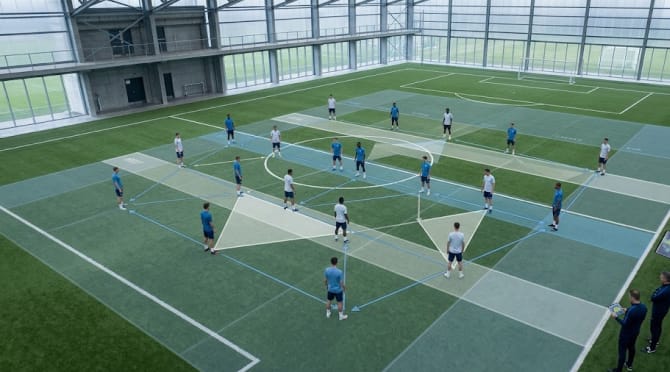
When facing the USMNT, European teams typically adjust by accelerating their own transition phases. This reduces the effectiveness of American pressing intensity and forces the match into controlled possession exchanges rather than chaotic transitional sequences.
European defensive organization also plays a critical role in neutralizing wide overload attempts. Compact lateral shifting ensures that wide attackers are immediately doubled, limiting 1v1 isolation scenarios that the USA often seeks in transition phases.
A comparative tactical model of these systems is frequently analyzed through platforms like Opta football analytics, where possession retention rates and progressive pass efficiency highlight the structural stability advantage held by European teams in controlled match environments.
Midfield Collision Zones and Second-Ball Dynamics
The decisive battleground in USA vs Europe knockout matches lies in midfield collision zones, particularly during second-ball recovery phases. These moments occur immediately after long passes, defensive clearances, or disrupted buildup sequences.
The USA benefits from athletic midfield profiles capable of covering large defensive zones quickly, allowing them to recover loose balls and restart vertical attacks. However, European teams counter this with positional discipline that prioritizes spatial occupation over reactive movement.
This creates a repeating tactical cycle: USA initiates vertical progression, European structure disrupts entry passes, and midfield recovery determines the next phase of possession. Control of these cycles often dictates match momentum more than total possession statistics.
| Tactical Phase | USMNT Execution | European Response |
|---|---|---|
| Build-up Exit | Direct vertical pass into midfield channels | Narrow pressing lanes to force lateral circulation |
| Midfield Battle | Physical recovery of second balls | Positional blocking of central progression |
| Transition Attack | Fast forward runs into space | Immediate counter-press or structured reset |
This interaction highlights the importance of transitional awareness in knockout football. Teams that win second-ball duels consistently gain territorial advantage even without sustained possession control.
Wide Area Exploitation and Structural Stretching
Wide zones become critical attacking outlets for the United States when central progression is blocked. Full-backs and wide midfielders are tasked with stretching European defensive blocks horizontally to create passing angles into advanced zones.
However, European defensive systems are highly efficient at maintaining lateral compactness. This reduces isolation opportunities and forces repeated recycling of possession. As a result, wide attacks often shift into controlled buildup phases rather than direct penetration sequences.
The effectiveness of wide play depends heavily on timing rather than volume. Early diagonal switches can destabilize compact blocks, but delayed circulation allows European defenses to reset structure.
This dynamic is frequently observed in elite match environments documented by international tournament tactical analysis, where wide-area efficiency directly correlates with chance creation quality rather than possession time spent in attacking thirds.
European teams also use wide pressing traps to force turnovers near touchlines. Once the ball is isolated in these zones, coordinated pressing reduces passing options and increases turnover probability.
Match Tempo Control and Knockout Constraints
Knockout football introduces structural constraints that heavily influence tactical execution. Reduced recovery windows between matches in the 2026 format increase fatigue accumulation, affecting pressing intensity, passing accuracy, and transitional speed.
The USMNT benefits from high physical output systems early in matches, where pressing intensity can disrupt European buildup rhythm. However, sustaining this intensity across 90 minutes becomes increasingly difficult in compressed tournament schedules.
European teams often respond by controlling match tempo through possession phases, reducing transition frequency and limiting physical strain. This approach allows for more stable defensive organization in later stages of matches.
Fatigue cycles often determine the final phase of knockout matches. As pressing intensity declines, vertical attacking systems gain increased effectiveness, creating late-match windows for direct penetration opportunities.
European structural discipline tends to stabilize under fatigue better than high-intensity pressing systems, though reduced concentration in final defensive phases can still create vulnerability.
The interaction between these systems reflects a broader evolution in international football: knockout success increasingly depends on managing transition cycles rather than dominating possession metrics. The USA vs European tactical matchup in 2026 represents one of the clearest expressions of this shift in competitive football structure.