
Thomas Müller has spent most of his career operating at the highest level of European football, winning the FIFA World Cup with Germany in 2014, collecting major trophies with Bayern Munich, and becoming one of the most recognizable German players of his generation. Now playing for Vancouver Whitecaps FC, the 36-year-old has offered an unusually valuable perspective on Major League Soccer after experiencing the 2026 FIFA World Cup in North America from inside the league.
In comments published on August 10, Müller argued that MLS has gained international prestige because of the World Cup and the increased enthusiasm surrounding football in the United States and Canada. He also pointed to the arrival of internationally recognized players such as Antoine Griezmann, Casemiro and Robert Lewandowski as evidence of the league’s growing profile.
That assessment matters because Müller is not evaluating MLS as an outsider. He has played in the competition, experienced its supporters, competed against its clubs and now faces the post-World Cup environment as a Vancouver player. His verdict therefore raises a larger question for American soccer: has MLS moved from being a developing domestic league to becoming a competition with genuine global prestige?
The answer is more complicated than a simple yes or no.
Müller’s Perspective Carries Unusual Weight
Müller’s credentials make his assessment particularly significant.
He joined Vancouver Whitecaps FC in August 2025 after a 25-year career with Bayern Munich. His résumé includes the 2014 World Cup title with Germany and 35 career trophies. Vancouver’s official profile also notes that he became only the 19th World Cup winner to play in MLS.
His first MLS season immediately produced evidence that his influence was not limited to commercial attention. Müller registered nine goals and four assists in 13 appearances across all competitions after joining Vancouver, helping the Whitecaps reach their first MLS Cup final and win the Canadian Championship.
That background gives Müller a useful comparison point.
He understands what elite European football looks like. He understands the expectations surrounding Bayern Munich. He has played in Champions League environments, World Cups and major domestic competitions. When he says the perception of MLS has changed, his assessment comes from direct experience rather than a marketing campaign.
The MLS player profile further illustrates the unusual position Müller occupies within the league. He is simultaneously a major international football figure and an active MLS player competing in the same ecosystem as younger North American talent.
The 2026 World Cup Changed The Visibility Equation
The biggest difference between MLS before and after 2026 is the environment surrounding the league.
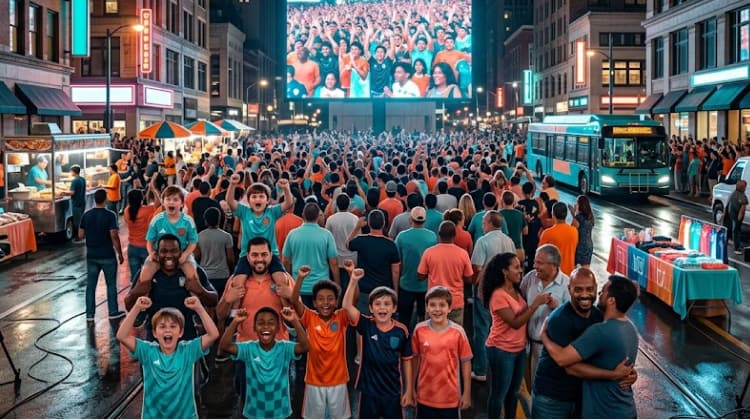
The United States, Canada and Mexico hosted the first 48-team FIFA World Cup, placing football in front of enormous domestic and international audiences throughout North America.
MLS benefited from that attention before the tournament even began, but the post-World Cup question is whether increased visibility becomes permanent football culture.
Müller’s comments suggest that the tournament accelerated a trend that was already underway.
The arrival of global stars has been particularly important. Lionel Messi’s move to Inter Miami transformed the league’s international visibility, while 2026 has brought additional internationally established names into MLS. Müller specifically highlighted Griezmann, Casemiro and Lewandowski when discussing the league’s increasing prestige.
Antoine Griezmann’s early impact with Orlando City illustrates the point. In his first four matches, he had recorded two goals and one assist, including a goal and MVP performance against Monterrey in the Leagues Cup in front of more than 25,000 spectators at Inter&Co Stadium.
The significance is not simply that famous players are arriving.
It is that these players are entering MLS while still capable of influencing competitive matches.
MLS Is Becoming More Than A Retirement Destination
For decades, one of the most persistent criticisms of MLS was that the league primarily attracted established European stars at the end of their careers.
That perception was never completely accurate, but it was difficult to dismiss when the most recognizable international players were often older veterans.
The current model is becoming more complicated.
Müller is 36. Messi is 39. Their presence still carries enormous commercial value, but the league’s current player ecosystem also includes younger international players, academy graduates and established professionals in their prime.
MLS’s own 2026 player overview illustrates that broader mix. The league highlighted players ranging from Messi and Müller to younger talents such as Real Salt Lake’s Diego Luna and established international contributors including FC Dallas forward Petar Musa.
That mixture is important because prestige is ultimately determined by the quality of the competition rather than the fame of its oldest stars.
A league becomes globally respected when its players are good enough, its clubs are competitive enough, and its matches matter enough to attract sustained international attention.
International Stars Are Raising The Competitive Standard
The presence of players such as Müller, Messi and Griezmann also creates a less obvious benefit.
They raise the daily standards surrounding their teammates.

Young players now train alongside footballers who have competed in World Cup finals, Champions League matches and European title races. Coaches can use those players as tactical references, while younger teammates gain exposure to professional habits developed at elite clubs.
Müller’s Vancouver experience is a strong example.
The Whitecaps did not simply sign a famous player. They added a footballer whose movement, positional intelligence and experience could influence younger teammates.
His performance against St. Louis CITY SC in 2026 demonstrated that influence could still translate onto the field. Müller scored the winning goal in a 3-2 Vancouver victory and recorded three shots, three successful duels, seven recoveries and eight passes into the final third.
That type of contribution matters more to MLS’s reputation than celebrity alone.
The Leagues Cup Provides A Real Test
If MLS wants global prestige, its clubs must demonstrate that they can compete against strong teams from outside the league.
That is where the Leagues Cup becomes increasingly important.
Müller specifically referenced the competition when discussing MLS’s demanding schedule and the opportunity to face Mexican clubs.
The competition creates a direct comparison between MLS and Liga MX.
Instead of debating which league is stronger through hypothetical comparisons, clubs have an opportunity to demonstrate their level on the field.
This matters because global prestige depends heavily on international performance.
A domestic league can have impressive stadiums, large sponsorship deals and famous players, but repeated success against external competition provides a much stronger sporting argument.
MLS Still Has A Significant Quality Gap To Close
Müller’s optimism should not be interpreted as proof that MLS has already reached the level of Europe’s elite domestic competitions.
The league still has structural limitations.
Roster rules restrict spending compared with Europe’s biggest clubs. Travel distances are extraordinary. The competition calendar remains unusual compared with international football. MLS clubs also continue to develop their tactical and sporting infrastructure.
The incoming MLS commissioner, Larry Berg, has already identified quality improvement and youth development as major priorities for the next era. Reuters reported that Berg wants to strengthen MLS academies and MLS NEXT Pro as pathways into first-team football while improving the talent pool available to the United States and Canadian national teams.
That strategy directly addresses the biggest challenge facing MLS.
Global prestige cannot depend indefinitely on importing established stars.
The league needs to produce players who become internationally recognized because of what they accomplish in MLS.
American Talent Will Ultimately Determine MLS’s Reputation
The most important test of the post-World Cup MLS era will be domestic player development.
If American and Canadian players increasingly emerge from MLS academies, become first-team regulars and eventually perform at international level, the league’s reputation changes fundamentally.
Instead of being known primarily for attracting foreign stars, MLS can become known as a league that develops footballers capable of competing globally.
That process is already visible.
MLS academies have become more sophisticated, clubs have invested in development infrastructure, and MLS NEXT Pro has created another professional pathway between youth football and the first team.
Berg’s stated intention to expand those pathways indicates that league leadership understands where the long-term opportunity lies.
Müller’s comments therefore fit into a larger transition.
The stars attract attention.
The young players create sustainability.
The clubs provide the infrastructure.
And international competitions provide the measurement.
Global Prestige Requires More Than The World Cup Effect
The 2026 World Cup gave MLS something it could not manufacture itself: worldwide attention concentrated directly on the league’s home markets.
But attention is temporary.
Prestige is earned over time.
The challenge now is converting the World Cup’s visibility into stronger attendance, higher-quality players, improved academy systems, better international performances and greater global media interest.
The league cannot assume that World Cup enthusiasm will automatically carry into every future season.
Instead, MLS must use the moment to strengthen the football product.
Müller’s comments are encouraging because they suggest that someone with an elite European football background can already feel the difference.
But his assessment should be viewed as a milestone rather than a final verdict.
Müller’s Verdict Is A Starting Point, Not The Finish Line
Thomas Müller has effectively given MLS a vote of confidence at a critical moment.
His view is supported by tangible developments: global stars are entering the league, the 2026 World Cup dramatically increased football’s visibility across North America, MLS clubs are investing in youth development, and international competitions are becoming more meaningful measures of league quality.
Yet the next stage will be harder.
MLS must prove that the prestige created by the World Cup can survive after the tournament disappears from the daily news cycle. It must show that global stars can coexist with a strong domestic development pipeline. And its clubs must become increasingly competitive against Liga MX and other international opponents.
The most revealing measure may ultimately be what happens to players who are teenagers today.
If the next generation of American and Canadian footballers develops inside MLS, becomes internationally relevant and helps national teams compete deep into future World Cups, Müller’s assessment will look less like optimism and more like an early recognition of a structural change.
The 2026 World Cup may have given American soccer its biggest global spotlight yet.
The next decade will determine whether MLS was ready to turn that spotlight into lasting prestige.