
Remember when football was simpler? When full-backs just overlapped and center-backs stayed put like obedient chess pieces?
Those days are as dead as the traditional number 9. The beautiful game has become a beautiful mind game.
Modern football has evolved from relying on individual brilliance to sophisticated systems where roles are fluid. We’re talking about inverted full-backs who tuck inside like midfield maestros.
Center-backs now drive forward like liberos from the 70s on steroids. False nines drop deep to create chaos like tactical ghosts.
Teams like Manchester City and Liverpool show how this innovation creates advantages. It’s not just about teaching positions anymore.
It’s about teaching how to break conventions. The smartest athletes – not necessarily the most gifted – become the most valuable assets.
Who needs individual brilliance when you can have collective intelligence?
Tactical Drills
Remember when football training was all about the same old drills? Those days are gone. Now, we focus on making players think like chess masters, even when they’re running fast.
Studies show big improvements in decision-making with tactical training. Players see a 2.63 point jump in their game. This isn’t just better – it’s a whole new level.
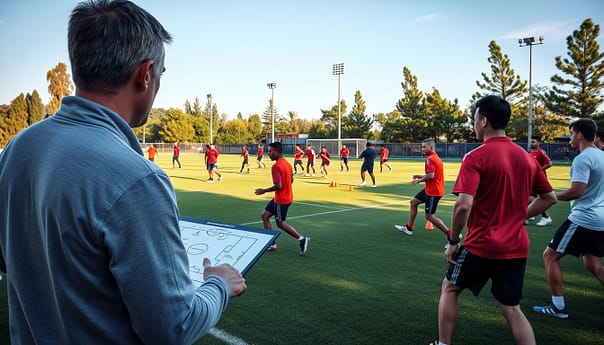
So, what makes drills effective? It’s moving from telling players what to do to letting them find their own solutions. It’s like teaching someone to fish versus teaching them about the whole ecosystem.
The best drills today include:
- Possession exercises that force quick decisions
- Positioning work that improves spatial awareness
- Completion practices that build muscle memory
These drills are like puzzles with cleats. They create a controlled chaos that pushes players to adapt and innovate. Why practice perfect scenarios when real games are full of surprises?
For coaches wanting to try these methods, our soccer tactical models drills guide is here to help. We aim to make players who can solve complex problems, not just follow orders.
The way we think about football has changed. We’re moving from “do this” to “what if?” And it’s making the game smarter.
Using Video and Stats for Feedback
Remember when video analysis meant squinting at blurry VHS tapes? Those days are gone. Today, technology turns every coach into Sherlock Holmes with a tactical magnifying glass.
Modern youth player analysis isn’t just about watching replays. It’s about decoding the game’s DNA. We’re talking about tools that track movement patterns, passing accuracy, and decision-making in real time.
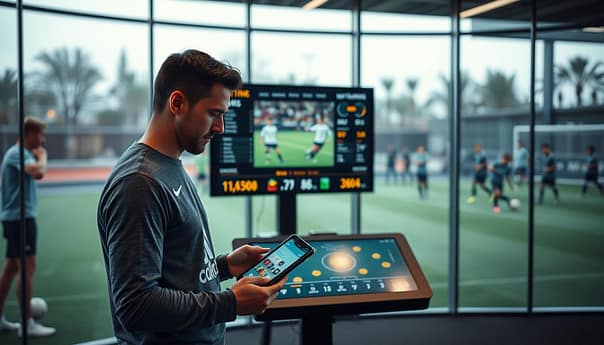
The numbers tell a compelling story. Studies show young athletes improve their tactical efficiency by 41% when using proper video analysis. That’s not just improvement – that’s transformation.
But here’s the real magic: The best coaches don’t just show players what they did wrong. They use video to ask better questions. “Why that pass?” “What did you see?” “What could you have seen?”
This approach turns video sessions into philosophy classes. It’s forensic analysis meets critical thinking. Players don’t just see mistakes – they understand why they happened.
Today’s analysis tools offer incredible features:
- Performance assessment with detailed metrics
- Tactical planning through visual annotations
- Data integration from multiple sources
- Custom tagging for specific skill evaluation
The beauty of modern video analysis? It’s not just for elite academies anymore. With today’s technology, every coach can access these powerful tools.
Stats have evolved from cold numbers to compelling stories. They reveal patterns, highlight opportunities, and show growth areas. The right analysis turns data into actionable insights.
Think of it as having a tactical MRI scanner. It shows the hidden patterns, the missed opportunities, the subtle movements that separate good decisions from great ones.
The future of player development is here. It’s intelligent, accessible, and incredibly effective. The question isn’t whether to use video analysis – it’s how soon you can start.
Manager-Player Interaction
The way coaches and players work together has changed a lot. No longer is it like a military command. Today, top coaches see their role as a partnership, not a dictatorship.
This change is like what teachers call socio-constructivist theory. Coaches are no longer just teachers. They help players learn by doing and thinking about what they did. It’s like teaching someone to fish, not just giving them a fish.
The Teaching Strategy that Promotes Critical Thinking (TPCT) is a big part of this change. Coaches now ask questions like “What did you see there?” or “How could we exploit that space?” This makes training sessions more like group problem-solving, where players help shape their own learning.
Studies show this method really helps players think better and understand the game more. Players become like chess masters, able to think on their feet without needing to be told what to do. They learn to play the game in a way that goes beyond just following rules.
This way of working together also makes players feel more valued and safe. They see themselves as part of the decision-making process, not just following orders. It’s a mix of leadership and football philosophy that works really well.
| Traditional Coaching | Modern Approach | Impact on Player Development |
|---|---|---|
| Direct commands | Guided questions | Develops independent thinking |
| Rote repetition | Problem-solving scenarios | Enhances tactical adaptability |
| Coach-centered | Player-centered | Builds confidence and ownership |
| Fixed solutions | Multiple possibilities | Encourages creativity |
| Compliance-focused | Understanding-focused | Deepens game intelligence |
This change in how coaches and players work together is a big step forward. By seeing players as partners, coaches can help them grow in ways old methods couldn’t. Players learn to understand the game, not just play it.
Next Generation Talent
The game of football is evolving, much like chess grandmasters outsmarting checkers players. Today, football training focuses on mental challenges, not just physical drills. Young players learn to solve puzzles quickly.
This new era values mental skills over physical strength. The next generation is learning to control chaos on the field. They’re not just about passing the ball; they’re about making smart moves.
Studies with U-14 players show a shift in training methods. Traditional drills make players skilled, but new methods make them strategic thinkers. This aligns with Jarryd Dent’s idea of building holistic development pathways where creativity in tactics comes naturally.
The future stars will see opportunities before they happen. Training must start early to develop this vision. Young athletes will become strategic thinkers, ready to outmaneuver opponents like chess grandmasters.