
MLS NEXT Pro has become one of the clearest reference points for judging how Major League Soccer clubs develop players between the academy level and the first team. Launched in 2022, the league was designed to connect MLS NEXT youth competition with senior professional football, giving clubs a competitive platform for teenagers, reserve players, late developers, and selected independent clubs.
The importance of the competition is not limited to match results. Its value sits in player evaluation, roster planning, tactical education, and the ability to place academy players in professional matches before they are asked to handle MLS minutes. In a country where the development pathway has often shifted between academy football, college soccer, USL competition, and MLS reserve structures, the league gives affiliated clubs a more direct internal route.
By September 10, 2026, the competition had completed most of its fifth season. The research available for this profile records 30 clubs in 2026, including 27 MLS-affiliated teams and three independent clubs: Carolina Core FC, Chattanooga FC, and CT United FC. That mix matters because it keeps the league tied to MLS development while also giving non-MLS organizations access to a professional setting.
Why MLS NEXT Pro Matters In The Pathway
MLS NEXT Pro Between Academy And First Team
The official league description states that it was launched by Major League Soccer in 2022 to complete the player pathway from MLS NEXT to MLS first teams, according to the league’s official overview. That purpose explains why clubs use the competition differently from a conventional lower-division league. Winning still matters, but the main measurement is whether players are learning how to perform against older, stronger, and tactically sharper opponents.
For academy players, the jump from youth matches to senior football can be large. Professional defenders close space faster, midfielders punish loose first touches, and attackers must make decisions with less time. A development league narrows that gap by allowing clubs to test players in match conditions while still keeping them inside the club’s technical structure.
The 2026 League Footprint
As of 2026, MLS NEXT Pro featured 30 teams. The 27 MLS-affiliated sides gave first teams a practical reserve platform, while Carolina Core FC, Chattanooga FC, and CT United FC represented the independent component. The presence of independent clubs changes the competitive feel because not every team is working from the same roster logic. Some sides are built primarily around academy and reserve minutes; others have a broader club-building purpose.
The 2026 regular season began on February 27, 2026. Each club was scheduled for 28 matches, split into 14 home and 14 away fixtures, across a 30-week span. That created a 420-match regular-season schedule. By September 10, 2026, the season had reached its late stage, with the research record noting 386 matches played out of the scheduled total.
How The Development Model Works
Match Minutes As A Selection Tool
For MLS NEXT Pro, the main value is practical evidence. Training can show technical level and coachability, but matches show whether a player can handle physical duels, pressure after mistakes, travel, tactical changes, and repeated workloads. A full-back who dominates academy matches may be asked to defend more direct wingers. A central midfielder may need to receive under pressure and play forward rather than recycling possession safely.
That evidence helps first-team staffs decide which players are ready for training call-ups, short-term movement, or full contracts. It also helps clubs identify where a player needs work. A forward may score regularly but still need to improve pressing angles. A center-back may be physically ready but need better timing when stepping out of the line. Those are development details that become clearer in professional competition.
Why Independent Clubs Matter
The independent clubs also give the league a different competitive edge. An MLS-affiliated team may prioritize minutes for a 17-year-old academy player, while an independent club may lean more heavily on players selected to win and establish the club. That contrast can be useful. Prospects benefit from facing opponents with different incentives, different age profiles, and different tactical plans.
For those interested in seeing how player development is compared in different sports within the same network, they might check the insights offered at FS Golf. Soccer’s development pathway is unique, integrating youth scouting, academy coaching, second-team experience, and senior roster management all within one framework.
First-Team Movement And Player Examples
Judah Siqueira And The Revolution Pathway
First-team signings are the most visible proof that the structure can work. On August 19, 2026, New England Revolution signed 17-year-old Judah Siqueira to the first team after he played for Revolution II, with the club report noting 23 MLS NEXT Pro appearances, three goals, and one assist before the move, as detailed by the Revolution pathway report.
Siqueira’s case is useful because it shows how a second team can function as more than a holding place. A young player can move from academy recognition into professional matches, build a sample of performances, and then earn a senior contract when the club believes the timing is right. Not every player will follow the same pace, but the existence of a defined route reduces uncertainty.
Academy Integration Across Clubs
The broader research record shows more than 1,300 MLS NEXT Academy players have appeared in league matches since 2022. It also records more than 200 players who competed in the league and later signed with MLS first teams. Those figures support the idea that the competition is not simply a reserve schedule; it is being used as a recurring development step across clubs.
The academy relationship also matters at national-team level. Research for the 2026 FIFA World Cup connection listed 42 current or former MLS players at the tournament who developed through MLS club academies and the league pathway, including 19 who had appeared in the competition itself. For broader context on the academy influence behind the national-team player pool, our related analysis of MLS academies and U.S. player development covers the same structural shift from a national-team angle.
Competition Context And Open Cup Value
The 2026 Regular Season Frame
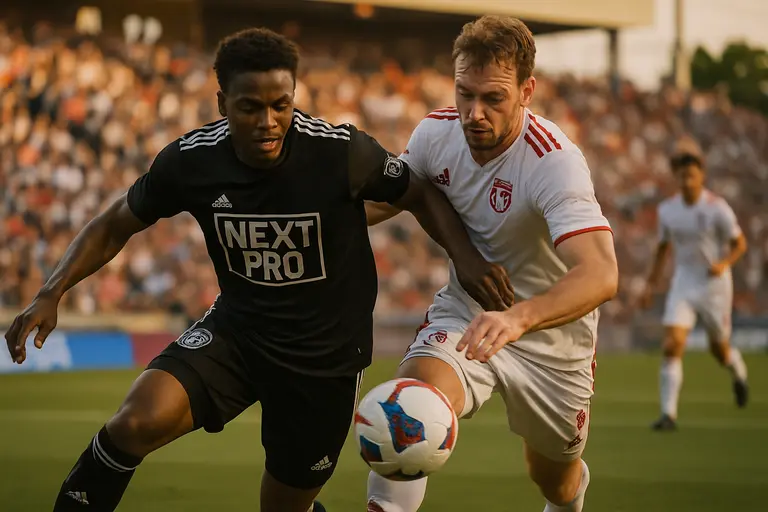
The 2026 schedule format gave clubs a long enough sample to judge progress without fully mirroring an MLS campaign. A 28-match season provides repeated tests against varied opponents, but it still allows clubs to manage academy call-ups, first-team loans, and training needs. That balance is central to development football. Too few matches make evaluation uneven; too many can overload young players who are still adapting physically and tactically.
Because teams play both home and away matches, the format also introduces travel and venue changes. Those are often overlooked parts of professional readiness. Young players must learn how to prepare away from familiar environments, recover between fixtures, and execute tactical plans when match rhythm is less comfortable.
Cup Matches And Senior Tests
The 2026 Lamar Hunt U.S. Open Cup added another layer. The research record lists 17 teams from the league as participants in the 111th edition of the competition, which ran on a March-to-October calendar. Cup football is valuable because it can place younger players against opponents with different styles and priorities. A knockout match can also reveal decision-making under pressure in ways that regular-season development fixtures may not.
For MLS-affiliated sides, cup participation can intersect with first-team needs. Some players may move between environments depending on availability, eligibility, and club planning. For independent clubs, the Open Cup can provide a national competitive stage and a chance to measure the team outside the league’s regular opponents.
MLS NEXT Pro In U.S. Soccer Development
MLS NEXT Pro now occupies a defined place in the American player pathway. It is not the academy level, and it is not the senior MLS first team. Its importance comes from being the competitive middle layer where clubs can convert potential into evidence. A player’s technical quality, tactical discipline, physical readiness, and mentality are all tested in matches that matter to the club’s development plan.
The model also gives clubs more control over timing. A player does not need to be rushed into MLS before he is prepared, but he also does not need to wait without meaningful professional minutes. That is especially important for teenagers who have outgrown youth competition but still need coaching, repetition, and game situations before taking on senior roles.
By September 10, 2026, the league’s fifth season had already shown why development leagues have become central to U.S. soccer’s structure. The next measurement will not be one headline signing or one strong season. It will be whether clubs continue producing players who can move from academy football into professional competition and then sustain careers at MLS level and beyond.