
The 2026 FIFA World Cup represented a defining moment for the relationship between Major League Soccer development systems and the United States Men’s National Team. For decades, American players often relied on college soccer, late professional development, or European opportunities to reach international competition. The 2026 cycle revealed a different pathway: MLS academies, professional youth environments, and domestic development structures became a major foundation for the national team player pool.
The evolution was visible across the USMNT roster construction, where several players benefited from MLS development before moving into elite European competitions. Clubs invested heavily in academy infrastructure, second-team systems, and professional environments designed to prepare young players for international football demands.
This transformation does not mean MLS replaced European development. Instead, the league became a more effective launching platform, producing players with earlier exposure to professional tactical concepts, physical preparation, and competitive environments. The 2026 World Cup showcased how domestic development helped create greater squad depth and increased tactical options for Mauricio Pochettino.
MLS Academies Became A Foundation For USMNT Depth
The biggest structural change in American player development has been the growth of MLS academy systems. Clubs moved away from traditional youth identification models and created integrated pathways connecting youth teams, professional environments, and first-team opportunities.
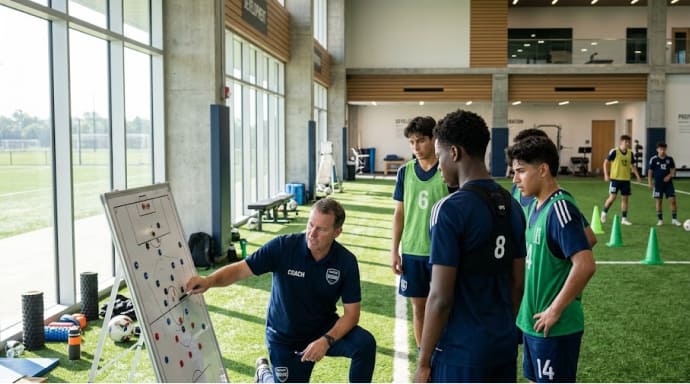
Organizations such as FC Dallas, Philadelphia Union, LAFC, and New York Red Bulls invested heavily in youth development infrastructure. These programs created environments where teenage players could train with professional standards before entering senior competition.
FC Dallas became one of the strongest examples of this model. The club developed players including Weston McKennie, Chris Richards, and Ricardo Pepi, demonstrating that MLS academies could produce footballers capable of competing internationally.
The development pathway has become increasingly similar to European academy structures, where tactical education begins at younger ages. Players are exposed to positional concepts, pressing systems, and decision-making principles before reaching professional football.
This shift aligns with broader trends analyzed by MLS player development programs, where clubs increasingly focus on producing technically prepared players rather than relying primarily on external recruitment.
The result was a deeper USMNT talent pool entering the 2026 cycle. Instead of depending on a small group of internationally experienced players, the national team had access to multiple generations developed through professional domestic systems.
Club Development Models Influenced National Team Tactics
MLS development changed not only the number of available players but also the tactical characteristics of the USMNT player pool.
Earlier generations of American players were often identified through physical qualities: speed, athleticism, and endurance. The 2026 generation showed stronger tactical profiles, including positional awareness, pressing coordination, and technical ability under pressure.
This development was important for Mauricio Pochettino’s tactical approach. Modern international football requires players capable of switching between defensive and attacking responsibilities within seconds.
Players developed in MLS environments increasingly arrived with experience in:
- Structured pressing systems
- Positional rotations
- Build-up patterns
- Transition management
These concepts became central to the USMNT’s tactical identity during the 2026 World Cup cycle.
| Development Area | MLS Influence | USMNT Benefit |
|---|---|---|
| Youth academies | Earlier professional training | Larger talent pool |
| First-team minutes | Competitive experience | More international-ready players |
| Tactical education | Modern positional concepts | Greater system flexibility |
| Player transfers | Stronger MLS-Europe pathway | Better prepared prospects |
The importance of tactical education was especially visible in midfield positions. Players needed more than physical ability; they needed the ability to interpret space, manage tempo, and understand defensive responsibilities.
The MLS To Europe Pipeline Changed Player Preparation
One of the most important changes in American football development has been the improved MLS-to-Europe pathway. Historically, American players often moved overseas before receiving significant professional experience. By 2026, MLS clubs increasingly provided competitive environments that prepared players for European leagues.

Young players developed in MLS benefited from regular first-team minutes, tactical coaching, and exposure to physical professional football. When transfers to Europe occurred, these players arrived with greater tactical awareness and match experience.
Christian Pulisic, Tyler Adams, Weston McKennie, and Gio Reyna represent earlier examples of American players who transitioned through domestic development pathways before establishing European careers. The 2026 generation continued this trend with players arriving overseas better prepared for elite competition.
The pathway created several advantages:
- Players received professional minutes earlier
- Clubs maintained stronger development relationships
- National team coaches gained access to more experienced young talent
- Competition for USMNT positions increased
The relationship between MLS and European football became less about exporting unfinished prospects and more about developing complete players capable of adapting quickly.
A similar pattern has been observed globally, where domestic leagues serve as preparation environments before elite transfers. Research from FIFA’s football development initiatives highlights the importance of structured youth development systems in creating stronger national teams.
MLS Clubs Created More Competitive National Team Selection
The growth of MLS development also changed the internal competition for USMNT places. A decade earlier, several positions lacked depth, forcing coaches to rely heavily on specific players.
By 2026, the player pool became significantly broader.
Goalkeeper development improved through professional academy structures. Defensive depth expanded through younger players receiving first-team opportunities earlier. Midfield competition increased as more players developed technical profiles suitable for international systems.
This increased competition benefited the national team because players had to consistently perform at club level to maintain their positions.
The influence of MLS clubs such as LAFC, FC Dallas, and Philadelphia Union demonstrated that player development success was becoming a competitive advantage rather than simply a financial investment.
The relationship between club development and national team success is explored further through USMNT tactical evolution analysis, where player profiles and tactical requirements intersect at international level.
MLS Stadiums And Facilities Improved Development Conditions
Infrastructure investment also played an important role in changing American player development.
MLS clubs improved:
- Training facilities
- Sports science departments
- Youth coaching resources
- Data analysis systems
- Player performance monitoring
These improvements created environments closer to those found at established European clubs.
The development gap between American and European football became smaller because young players were receiving higher-quality daily preparation before international transfers.
The growth of facilities also helped clubs retain talented players longer, allowing them to develop physically and tactically before moving abroad.
This approach benefited both clubs and the national team. MLS organizations gained transfer value, while USMNT coaches received players with stronger professional backgrounds.
The Future Of The USMNT Depends On Development Continuity
The 2026 World Cup demonstrated that MLS development became a central component of American football growth. The league’s contribution was not limited to producing individual stars; it created a sustainable ecosystem capable of generating international-level players.
The next challenge is maintaining this progress. Development systems require continued investment, improved coaching education, and stronger competition between clubs.
MLS has reached a stage where producing professional players is no longer the primary challenge. The next objective is producing players capable of becoming decisive performers against the strongest national teams.
The 2026 USMNT player pool reflected this evolution. Players developed through American systems entered the tournament with greater tactical preparation, stronger professional backgrounds, and more diverse skill sets than previous generations.
The connection between MLS and the national team has become one of the defining factors in the growth of American football, creating a foundation that will influence future World Cup cycles.