
The 2026 FIFA World Cup represented both an opportunity and a turning point for the United States Men’s National Team. Hosting the tournament created historic expectations, but the competition also exposed the areas requiring improvement before the next international cycle. For Mauricio Pochettino, the challenge extends beyond immediate results. His task is to create a sustainable football identity capable of competing against the strongest national teams through the 2030 World Cup cycle.
The USMNT entered the tournament with a talented generation featuring players established in major European leagues, including Christian Pulisic, Weston McKennie, and Tyler Adams. The next phase requires integrating younger players while maintaining competitive standards. Pochettino’s rebuilding process will depend on tactical evolution, improved squad depth, and the continued development of American talent through both MLS and European pathways.
The future of the national team will not be determined by replacing one generation with another. It will depend on creating a system where emerging players understand their roles, adapt to international football demands, and compete within a clear tactical framework.
Mauricio Pochettino’s Tactical Identity For The Next Cycle
Mauricio Pochettino arrived with a reputation built around aggressive pressing, defensive organization, and developing young players. His previous work with clubs such as Tottenham Hotspur, Paris Saint-Germain, and Chelsea demonstrated his ability to construct competitive teams around tactical discipline and physical intensity.
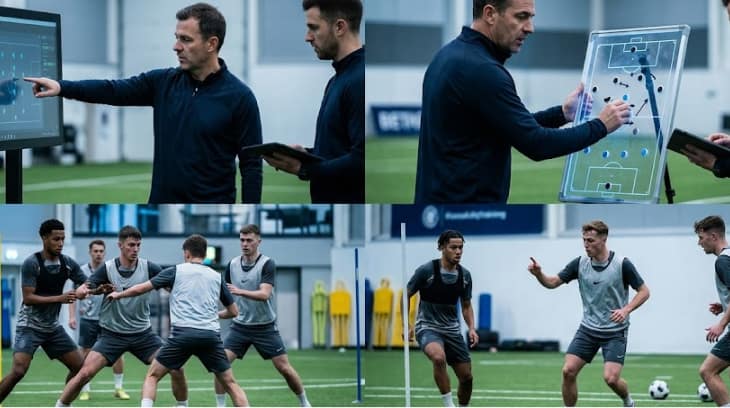
The USMNT project requires adapting those principles to the characteristics of American players.
International football presents different challenges compared with club competition. National teams have limited preparation time, meaning tactical systems must be simple enough to execute quickly while maintaining flexibility against different opponents.
Pochettino’s potential USMNT identity could revolve around three major concepts:
- Coordinated pressing after possession loss
- Faster vertical progression through midfield
- Greater positional flexibility between defensive and attacking phases
These principles were visible throughout his coaching career. At Tottenham, his teams became known for aggressive pressing and quick transitions. At PSG and Chelsea, he worked with young players while managing expectations at elite levels.
The evolution of the USMNT tactical model will likely require balancing attacking ambition with defensive control. Previous tournament performances showed that the United States could compete physically with top nations but needed greater consistency against structured opponents.
A detailed review of USMNT tactical evolution highlights how the national team’s playing style has shifted toward greater tactical flexibility and positional awareness.
Replacing Experience Without Losing Competitive Identity
The next USMNT cycle will involve managing the transition away from complete dependence on the core group that carried the team through multiple tournaments.
Players such as Christian Pulisic, Weston McKennie, and Tyler Adams established the competitive foundation of the modern American team. Their experience in European football provided leadership during difficult international matches.
The challenge for Pochettino is identifying the players capable of becoming the next leadership group.
| Position Group | Current Generation Influence | Future Development Focus |
|---|---|---|
| Attack | Christian Pulisic leadership | More creative attacking options |
| Midfield | McKennie and Adams experience | Tactical versatility and depth |
| Defense | International experience | Ball progression and defensive stability |
| Goalkeeper | Tournament experience | Long-term consistency |
Young players entering the national team environment will need more than technical ability. They must understand international match management, pressure situations, and tactical responsibilities.
The next generation includes players developing through MLS academies and European clubs. The combination of domestic development and overseas experience gives Pochettino a larger group to evaluate compared with previous cycles.
According to FIFA technical development resources, successful national teams increasingly depend on structured development systems that create players capable of adapting to modern tactical demands.
The Role Of MLS Development In The Rebuild
MLS will remain an important component of the USMNT rebuild. The league’s investment in academies, coaching education, and professional pathways created a stronger domestic talent pipeline.
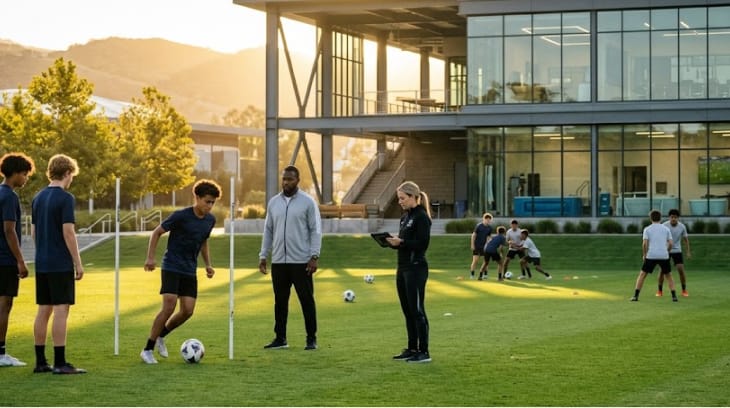
Clubs such as FC Dallas, Philadelphia Union, LAFC, and New York Red Bulls developed players who reached international competition through structured environments.
This matters for Pochettino because national team coaches need depth. A successful World Cup squad requires more than eleven elite players. It requires alternatives capable of performing in different tactical situations.
MLS development provides several advantages:
- Players receive professional experience earlier
- Coaches can monitor domestic talent consistently
- Young players develop tactical habits before international competition
- Competition for national team positions increases
The growth of MLS does not replace European development. Instead, it creates another pathway for players to reach higher levels.
The relationship between MLS and the USMNT became especially important during the 2026 cycle because tournament preparation required a deeper player pool. Injuries, fatigue, and tactical adjustments made squad flexibility one of the most valuable assets.
Building A More Complete Midfield Structure
One of the biggest areas of focus for the USMNT rebuild will be midfield development.
Modern international football is increasingly decided in central areas. Teams must control transitions, resist pressing pressure, and create advantages between defensive and midfield lines.
The United States has produced talented midfielders, but the next step requires developing players capable of controlling matches against elite opponents.
Pochettino’s system typically demands midfielders who can perform multiple responsibilities:
- Recover possession quickly
- Progress the ball under pressure
- Support defensive transitions
- Create numerical advantages
The emergence of younger midfield profiles gives the coach opportunities to build a more balanced structure.
Instead of relying primarily on physical intensity, the future USMNT midfield must combine athletic ability with tactical intelligence.
This adjustment could determine whether the United States remains competitive against European and South American teams during future tournaments.
Developing A More Flexible Attacking System
The USMNT’s attacking identity will also require evolution.
The team has produced dangerous wide players, but international opponents increasingly defend spaces rather than individual players. Breaking down organized defenses requires more movement between positions and better control of attacking zones.
Pochettino’s previous teams often relied on attackers who could interchange positions and create uncertainty for defenders.
Future USMNT attackers will need to contribute through:
- Movement without the ball
- Combination play
- Pressing responsibility
- Decision-making in limited spaces
The next generation of American attackers must complement individual creativity with collective attacking principles.
This approach would help the United States become less predictable against opponents that defend with compact structures.
The Road Toward The 2030 World Cup Cycle
The USMNT rebuild after 2026 will be measured by progress rather than immediate transformation. Building a competitive national team requires identifying the right players, developing tactical consistency, and creating a strong football culture.
Pochettino’s greatest contribution may come from establishing a clear identity that continues beyond individual players.
The United States has reached a point where talent production is no longer the primary challenge. The next objective is converting talent into tournament-level performance.
The 2030 World Cup cycle will test whether American football development systems can produce players capable of competing consistently against the world’s strongest teams.
Mauricio Pochettino’s project will depend on combining experienced leaders, emerging MLS talent, and internationally developed players into a unified tactical structure. If successful, the next USMNT generation could enter the next World Cup cycle with greater depth, stronger tactical understanding, and a clearer competitive identity.