
The United States Men’s National Team’s 2026 FIFA World Cup campaign ended with a 4–1 defeat against Belgium in the Round of 16, creating a defining tactical evaluation point for Mauricio Pochettino’s project. After advancing from the group stage with renewed expectations surrounding the program, the knockout elimination exposed several structural challenges that remain unresolved against elite international opponents.
The match represented a contrast between two tactical identities. The United States attempted to impose intensity through pressing phases, aggressive midfield positioning, and rapid attacking transitions. Belgium responded with controlled possession, positional rotations, and efficient exploitation of defensive gaps. The difference was not simply individual quality; it reflected how each team managed space, tempo, and tactical adjustments during critical moments.
The defeat provides important lessons for the next stage of USMNT development. The team has progressed beyond relying exclusively on athletic advantages and direct attacking speed, but competing consistently against European powers requires greater control during possession phases, improved defensive transition management, and more adaptable in-game solutions.
Belgium’s Positional Control Exposed USMNT Defensive Gaps
Belgium’s victory was built around controlling central areas and forcing the United States into uncomfortable defensive movements. Instead of attacking through predictable wide progression, Belgium created overloads between midfield and defensive lines, forcing USMNT players to make repeated lateral adjustments.
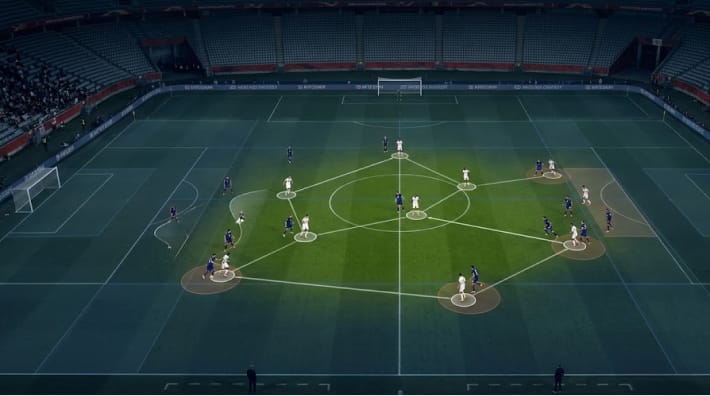
The United States entered the match with a pressing structure designed to disrupt Belgium’s buildup. The objective was clear: force rushed decisions, recover possession higher up the pitch, and create immediate attacking opportunities. Early pressure generated promising moments, but Belgium’s midfielders gradually adapted by using quicker circulation and positional rotations.
Kevin De Bruyne’s influence was central to Belgium’s tactical advantage. His ability to receive between lines created uncertainty for the USMNT defensive structure. When American midfielders stepped forward to close him down, Belgium exploited the space behind the press. When the United States maintained defensive shape, Belgium used patient circulation to advance into attacking areas.
This tactical problem reflects a recurring challenge in international football. High pressing systems require perfect coordination because a single delayed movement can create significant spaces for elite opponents. The match highlighted similar themes discussed in World Cup tactical analysis, where defensive compactness and transition control determine success during knockout matches.
According to technical analysis from FIFA Technical Study Group, modern tournament teams increasingly depend on coordinated pressing structures rather than isolated defensive effort. The USMNT’s challenge is improving synchronization between forwards, midfielders, and defenders when pressing against possession-oriented teams.
Attacking Transitions Need More Variation
The United States entered the tournament with transition speed as one of its strongest attacking characteristics. Players such as Christian Pulisic, Folarin Balogun, and Timothy Weah provide the acceleration needed to punish defensive mistakes.
Against Belgium, those strengths were limited because Belgium reduced transition opportunities through controlled possession and immediate defensive organization after losing the ball.
The USMNT frequently attempted vertical attacks after recovery, but Belgium’s defensive structure prevented clean breakaways. Without enough support arriving from midfield, attackers often received the ball with limited passing options.
This exposed a broader tactical requirement: elite international teams must create chances through multiple attacking methods.
A team cannot depend only on transition moments because knockout opponents often prepare specifically to remove those opportunities. The United States must continue improving:
- Controlled possession against compact defenses
- Combination play around the penalty area
- Third-man attacking movements
- Late midfield arrivals into scoring zones
The development of these attacking patterns will determine whether future USMNT squads can break down teams that refuse to play in open spaces.
Midfield Balance Remains The Biggest Tactical Challenge
The midfield battle against Belgium revealed the most significant area requiring improvement. The United States possesses athletic midfield profiles, but controlling matches against elite opponents requires more than defensive coverage and running capacity.
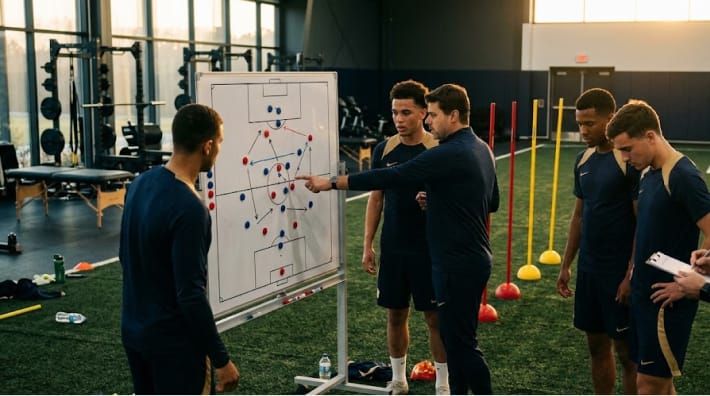
Tyler Adams remains one of the team’s most important defensive stabilizers, but Belgium’s ability to create numerical advantages around him limited his influence. Weston McKennie provided physical presence and attacking movement, yet the USMNT struggled to consistently maintain possession after recovering the ball.
The issue was not effort. The problem was maintaining control after defensive success. Several promising recoveries ended with immediate turnovers because passing options were limited or attacking players were isolated.
A stronger knockout-stage midfield requires three complementary qualities:
- A defensive midfielder capable of protecting transitions
- A progressive passer who can break pressure lines
- A creator who can operate between defensive structures
The United States has developed players capable of fulfilling these roles individually, but integrating them into a consistent international structure remains the next tactical challenge.
| Midfield Area | Belgium Advantage | USMNT Lesson |
|---|---|---|
| Central progression | Faster passing combinations | Improve press resistance |
| Defensive transitions | Immediate recovery after possession loss | Maintain better rest defense |
| Final-third creation | More players between lines | Increase positional rotations |
The evolution of the USMNT midfield will likely determine whether the program can move from competitive performances into consistent deep tournament runs.
Defensive Transition Problems Changed The Match Momentum
The 4–1 scoreline was influenced heavily by moments immediately after possession changes. Belgium repeatedly targeted spaces created when the United States committed players forward.
This issue became more visible as the match progressed. The USMNT’s pressing intensity decreased, while Belgium gained additional time to select attacking passes. Once Belgium established territorial control, the United States struggled to regain the rhythm seen earlier in the match.
Modern international football places enormous importance on what coaches call “rest defense”: the positioning of players during attacking phases to prevent counterattacks.
The USMNT’s attacking structure often left insufficient protection behind the ball. Full-backs advanced aggressively, midfielders moved forward to support attacks, and Belgium found opportunities to attack exposed spaces.
This tactical area connects directly with the broader discussion of international football tactics, where successful knockout teams balance attacking ambition with defensive security.
Improving rest defense does not mean becoming more conservative. It means creating better positional insurance so teams can attack while maintaining protection against rapid counters.
Mauricio Pochettino’s Next Tactical Development Phase
Mauricio Pochettino inherited a talented generation of American players with experience in major European leagues, but the Belgium defeat demonstrated that talent alone does not guarantee tournament progression.
The next phase of the project involves refining tactical maturity. The United States must become more comfortable controlling difficult matches rather than relying on momentum swings.
Several areas will define Pochettino’s continued work:
| Development Priority | Tactical Objective |
|---|---|
| Possession structure | Maintain control against elite pressing teams |
| Midfield combinations | Improve progression through central areas |
| Defensive transitions | Reduce vulnerability after attacks |
| Squad flexibility | Adapt systems based on opponent strengths |
The 2026 World Cup exit should be evaluated within the context of a larger development cycle. The United States reached the knockout phase and demonstrated competitiveness, but the Belgium match showed the distance remaining between being a talented team and being a consistently elite tournament team.
The future success of the USMNT will depend on converting physical advantages into tactical advantages. The program has developed players capable of competing at the highest level; the next challenge is creating a collective structure capable of matching the tactical precision of Europe’s strongest nations.
The Belgium defeat provided a clear tactical blueprint of what must improve: stronger midfield control, more varied attacking solutions, and greater defensive stability during transition moments. Those adjustments will define whether the next generation of American players can transform World Cup participation into sustained knockout success.