
The 2026 FIFA World Cup marks a structural turning point for CONCACAF nations, with the United States, Mexico, and Canada operating in a radically different tactical environment compared to previous editions. The expanded 48-team format, combined with hosting responsibilities across North America, has accelerated tactical modernization within the region. Teams that once relied heavily on physicality and direct play now adopt more structured build-up systems, higher pressing coordination, and refined transition control.
The shift is not cosmetic. It reflects long-term development pipelines influenced by MLS tactical evolution, European coaching imports, and increased exposure to high-level international competition. The result is a CONCACAF identity that blends athletic intensity with structured positional discipline, particularly in midfield organization and defensive spacing. Matches in the 2026 knockout phase highlight this transformation against European and South American opponents who historically dictated tactical tempo.
From Direct Play to Structured Build-Up Systems
Historically, CONCACAF teams leaned on vertical directness, long-ball progression, and transitional speed as primary attacking mechanisms. In 2026, that identity has evolved into a hybrid system where controlled build-up phases are integrated into earlier attacking sequences. The United States Men’s National Team has been central in this transition, using midfielders capable of receiving under pressure and progressing play through central corridors.
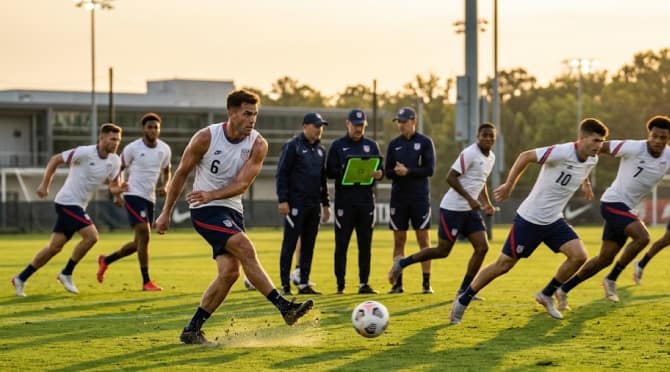
Mexico’s structural evolution under modern tactical frameworks also reflects this shift. Instead of relying exclusively on wide combinations and individual creativity, the team now incorporates inverted full-backs and staggered midfield triangles to maintain possession stability. Canada, meanwhile, continues to refine a counter-pressing system built around compact midfield spacing and fast recovery transitions.
This tactical progression aligns with broader global trends documented in modern World Cup tactical evolution, where vertical systems are no longer isolated strategies but integrated with positional structures designed to survive high-intensity knockout phases.
The shift is particularly visible in early tournament matches, where CONCACAF teams demonstrate improved passing completion rates under pressure. Rather than defaulting to clearance-based defending, defenders now initiate structured build-up phases even when pressed high, reducing territorial loss and improving transition stability.
Data trends reported by FIFA technical match reports highlight a measurable increase in progressive passing sequences from CONCACAF teams compared to previous World Cup cycles, indicating systemic tactical development rather than isolated performance spikes.
Midfield Compression and Pressing Coordination
The defining tactical evolution in CONCACAF football lies in midfield structure. Earlier generations relied heavily on physical coverage and reactive pressing. The 2026 cycle shows a shift toward coordinated pressing triggers, synchronized movement, and spatial compression in central zones.
The United States exemplifies this change through a midfield structure built around Tyler Adams, Weston McKennie, and emerging hybrid role players capable of both ball recovery and progressive distribution. Mexico’s midfield adaptation focuses on tighter spacing between lines, reducing exposure during defensive transitions. Canada’s system emphasizes compactness and disciplined positional blocks that restrict opposition central penetration.
This transformation becomes especially relevant in knockout matches against European opposition, where structured possession systems test defensive discipline. CONCACAF teams now rely less on individual duels and more on collective movement patterns to close passing lanes and force lateral circulation.
A comparative tactical framework can be found in international tournament performance analysis, where midfield control is identified as the strongest predictor of progression in knockout football scenarios.
European teams often respond to CONCACAF pressing with quicker ball circulation and third-man combinations, forcing defensive units to shift laterally. The effectiveness of CONCACAF systems depends on maintaining compactness during these lateral shifts, preventing gaps between midfield and defensive lines.
Transitional Efficiency and Counterattacking Evolution
Transition phases remain a core strength of CONCACAF football, but their execution has become more structured. Instead of relying solely on speed and direct runs, teams now incorporate layered transition sequences involving coordinated forward movement, wide support positioning, and secondary passing options.
The United States leads this evolution with vertical transition systems that prioritize immediate forward penetration after ball recovery. Mexico integrates controlled transitions that allow midfield stabilization before accelerating attacks. Canada adopts a more conservative transition model, focusing on defensive stability before initiating forward movement.
These differences reflect tactical diversification within the region rather than a single identity model. Each system maintains a shared principle: exploiting disorganized defensive structures immediately after possession change.
According to tracking data from Opta Sports analytics, teams that successfully execute transitions within six seconds of ball recovery generate significantly higher expected goal probability compared to delayed buildup sequences. This reinforces the strategic importance of transition efficiency in CONCACAF tactical planning.
| Phase | CONCACAF Approach | Tactical Objective |
|---|---|---|
| Defensive Recovery | Compact midfield regrouping | Reduce central space access |
| Ball Win | Immediate forward scanning | Identify vertical lanes |
| Transition Attack | Rapid progression or controlled reset | Exploit defensive imbalance |
The effectiveness of this system depends heavily on decision-making speed in midfield zones, where players must choose between direct penetration and structured buildup within seconds.
Wide Zone Utilization and Structural Stretching
Wide areas remain a critical component of CONCACAF attacking strategy, though their usage has evolved significantly. Instead of relying solely on crossing volume, teams now use wide zones to stretch opposition defensive blocks horizontally before initiating central penetration.
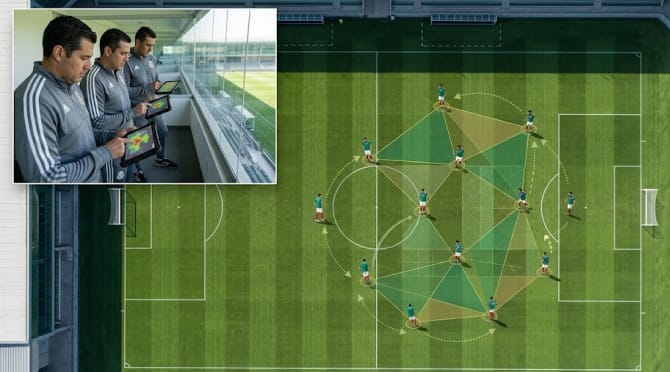
Full-backs play an increasingly important role in this structure. Their ability to overlap or invert into midfield creates numerical flexibility that disrupts opponent defensive organization. Wingers are tasked not only with dribbling but also with creating spatial separation between defensive lines.
European and South American opponents often counter this by maintaining narrow defensive blocks and forcing CONCACAF teams into low-percentage wide deliveries. As a result, effectiveness depends more on timing and positional rotation than sustained wing possession.
The United States in particular has refined diagonal switching patterns that shift defensive attention rapidly across the pitch. This creates brief moments of imbalance that can be exploited by late-arriving midfield runners.
This tactical principle aligns with broader analysis of elite football spacing systems, where width manipulation is directly linked to central penetration success rates in high-level tournament football.
Tactical Identity Consolidation Under Tournament Pressure
The 2026 World Cup introduces environmental and structural pressures that directly influence tactical execution. Travel distances across North America, varying climatic conditions, and reduced recovery cycles contribute to fatigue accumulation, which affects pressing intensity and decision-making speed.
CONCACAF teams benefit from familiarity with these conditions, particularly altitude variation and climate diversity. However, maintaining tactical consistency across multiple high-intensity matches remains a challenge. Pressing systems become less effective as fatigue increases, forcing greater reliance on positional discipline and structured defensive organization.
Mexico’s experience in high-altitude and heat conditions provides a competitive advantage in early tournament phases. The United States benefits from squad depth and rotational flexibility, while Canada relies on compact defensive structure to compensate for reduced possession dominance in late-match phases.
The broader tactical evolution of CONCACAF football reflects a shift from reactive systems to structured competitive models. Rather than relying on isolated physical attributes, teams now operate within defined tactical frameworks that emphasize spacing, transition control, and coordinated pressing behavior.
This transformation does not eliminate traditional strengths but integrates them into more sophisticated systems capable of competing against elite European and South American tactical models. The 2026 World Cup serves as a benchmark for this evolution, revealing how far CONCACAF football has progressed in tactical identity and structural consistency under knockout pressure.