
The Round of 32 clash between Brazil and Japan on June 29, 2026 in the expanded FIFA World Cup format presents a sharp tactical contrast between two systems that rarely converge at full intensity in knockout football. Brazil arrives with a model built on rapid vertical progression, wide overloads, and fast attacking transitions that reduce reliance on prolonged possession phases. Japan enters with one of the most structured pressing frameworks in international football, built on synchronized movement, compact spacing, and coordinated triggers that force opponents into predictable passing lanes. The matchup reflects a broader shift in the 2026 tournament, where structured mid-block systems are increasingly tested against teams that prioritize immediate forward penetration rather than controlled build-up cycles.
Brazil’s approach in this tournament cycle has moved further away from traditional possession dominance and closer to direct vertical attacks designed to exploit disorganized defensive shapes. Japan, by contrast, continues to refine a pressing model that compresses space between midfield and defensive lines, reducing central progression and forcing wide circulation. The collision of these systems turns midfield control into the defining battleground, particularly in second-ball recovery zones and transitional moments immediately after possession changes.
Brazil’s Vertical Progression Model and Structural Shifts
Brazil’s attacking identity in 2026 reflects a consistent prioritization of verticality over patience in build-up. Rather than circulating possession through multiple phases, the team frequently seeks early forward passes into advanced zones, often bypassing midfield congestion entirely. This approach becomes more pronounced against structured pressing opponents like Japan, where prolonged build-up increases turnover risk.
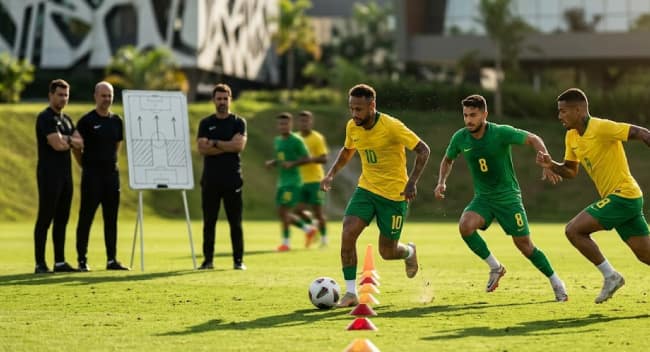
The role of wide forwards and attacking midfielders becomes central in this system. Brazil often stretches opposition lines horizontally before delivering vertical passes into half-space channels. This creates isolated attacking duels, especially against compact defensive blocks that rely on numerical superiority rather than individual marking. The speed of transition remains the defining trait, with Brazil attempting to capitalize on even brief structural disorganization in the opponent’s defensive shape.
A deeper tactical reference point can be found in broader discussions of modern international tactical frameworks, where vertical transition systems have become more effective in condensed tournament schedules. The reduced recovery time between matches in the 48-team World Cup amplifies the value of teams that minimize possession phases and maximize direct attacking efficiency.
Japan’s pressing structure is designed specifically to counter this type of vertical progression. Instead of reacting to possession, Japan anticipates passing lanes and compresses space before forward progression becomes stable. This leads to frequent forced lateral passes, which delay Brazil’s transition rhythm and allow Japan’s midfield line to reset compactly.
According to performance tracking methodologies highlighted by FBref team analytics, teams facing high-intensity pressing systems show a measurable drop in progressive passes when forced to operate under sustained pressure in central zones. This statistical trend is particularly relevant to Brazil’s approach, where central penetration is a primary attacking objective.
Japan’s Structured Pressing Triggers and Midfield Compression
Japan’s tactical identity is anchored in synchronized pressing movements that activate based on ball position, body orientation, and passing angle cues. Unlike reactive pressing systems, Japan’s structure is pre-loaded with triggers that dictate when and where pressure is applied. This creates a predictable yet highly effective defensive rhythm that disrupts opposition tempo.
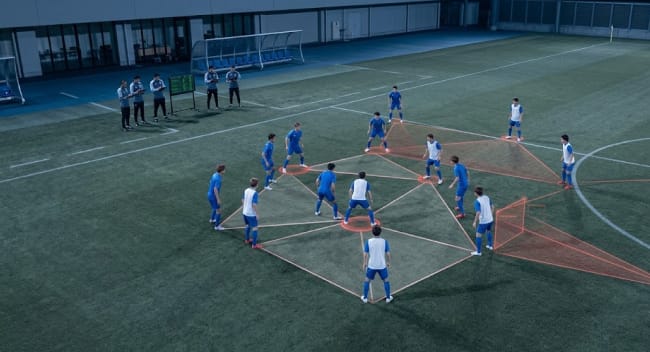
The midfield line plays a central role in compressing available space. Japan frequently shifts its midfield into narrow corridors, forcing opponents to circulate possession into wider areas where defensive traps are easier to execute. Once the ball enters these zones, pressing intensity increases rapidly, often isolating the ball carrier and limiting passing options.
Brazil’s vertical system faces structural friction in these moments. Quick forward progression becomes difficult when passing lanes into attacking midfield zones are repeatedly closed off. Japan’s compactness reduces the time available for decision-making, forcing Brazil into wider and less efficient attacking routes.
A useful comparative framework appears in analysis of elite pressing systems documented by The Athletic football analysis, where structured pressing teams consistently reduce opponent entry passes into central attacking zones by maintaining narrow defensive spacing and coordinated forward pressure.
Japan’s defensive discipline also extends into transitional defense. When possession is lost, the nearest players immediately engage counter-pressing actions, preventing Brazil from establishing rhythm in fast-break situations. This dual-layer structure—pressing plus counter-pressing—creates sustained pressure cycles that test Brazil’s decision speed.
Tactical Midfield Battle and Transition Control
The midfield zone becomes the decisive battlefield in this matchup. Brazil’s preference for rapid vertical distribution depends on clean first passes from deep positions. Japan’s pressing model specifically targets these early outlets, often forcing Brazil’s defenders to play under immediate pressure.
Once Brazil bypasses the first pressing line, Japan transitions into a compact mid-block, designed to reduce space between defensive lines and restrict forward runs into central channels. This forces Brazil to rely more heavily on wide progression and individual dribbling in isolated situations.
The interaction between both systems produces a match rhythm defined by short bursts of control rather than sustained dominance. Brazil seeks acceleration moments; Japan seeks interruption cycles. The team that better manages these transitions gains structural control of the match tempo.
| Tactical Phase | Brazil Execution | Japan Response |
|---|---|---|
| Build-up | Direct vertical passes into midfield gaps | Pressing traps on first and second pass |
| Midfield Control | Rapid forward progression through half-spaces | Narrow compact block limiting central access |
| Transition Attack | Immediate forward runs behind defensive line | Counter-pressing to delay progression |
These structural clashes define modern knockout football, where possession value is less important than transition efficiency. Teams capable of controlling second-ball recovery zones often dictate match flow, particularly in compressed tournament schedules where fatigue reduces technical precision.
Wide Channel Exploitation and Defensive Stretching
Brazil’s most consistent attacking outlet against structured pressing systems lies in wide channel exploitation. By stretching Japan’s defensive block horizontally, Brazil attempts to open narrow gaps between full-backs and central defenders. These gaps become entry points for diagonal passes or late midfield runs into the penalty area.
Japan’s response relies on coordinated lateral shifts. The defensive block moves as a single unit, reducing isolated duels on the flanks. This movement prevents Brazil from creating sustained overloads, forcing repeated recycling of possession rather than direct penetration.
Set patterns in similar high-intensity matchups have shown that wide overloads lose effectiveness when defensive units maintain synchronized lateral movement. Tactical breakdowns of similar systems in elite tournament match structures highlight how compact width control reduces expected goal probability from wide crosses and cutbacks.
Japan’s discipline in defending wide zones also reduces Brazil’s ability to isolate 1v1 attackers in dangerous positions. Without isolation, Brazil’s vertical system loses one of its most efficient progression tools, forcing reliance on secondary buildup phases.
Match Tempo, Fatigue Cycles, and Knockout Constraints
The 2026 World Cup format introduces a physical constraint that directly influences tactical execution. The expanded 48-team structure increases match count, compresses recovery time, and introduces varied environmental conditions across venues in North America. This affects both Brazil and Japan, though in different ways.
Brazil’s vertical system benefits from reduced possession phases, limiting sustained defensive exposure. However, repeated high-intensity transitions increase physical load on attacking players. Japan’s pressing system demands synchronized movement cycles that also become harder to sustain under fatigue.
The tactical balance often shifts in later stages of matches, where pressing intensity drops slightly and vertical opportunities increase. This creates a late-match window where Brazil’s direct attacking style becomes more dangerous, particularly against slightly fatigued defensive blocks.
Japan’s ability to maintain structural compactness under fatigue becomes a defining factor. If spacing breaks between midfield and defense lines, Brazil’s vertical passing gains immediate penetration value.
The match ultimately reflects a broader tactical evolution in international football: systems built on structured pressure versus systems built on rapid vertical disruption. Neither model guarantees dominance, but the interaction between them defines how modern knockout football is decided in the 48-team World Cup era.