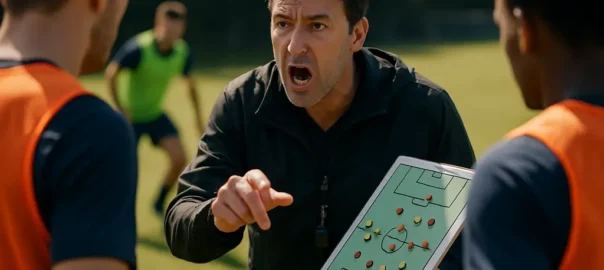
Post-2026 Tactics became easier to define after the FIFA World Cup staged from June 11 to July 19, 2026, in Canada, the United States and Mexico. The tournament had ended by July 19, 2026, and FIFA’s Technical Study Group later framed two themes as especially significant: the value of immediate counter-pressing after losing possession, and the rising influence of goalkeepers in build-up play.
Those themes were not separate ideas. Teams that pressed aggressively after turnovers often needed goalkeepers who could punish pressure with longer distribution or help circulate the ball when opponents refused to retreat. Spain, the champions, were identified in FIFA’s post-tournament work as especially effective at converting lost possession into fast attacking moments before the opponent could reorganise. FIFA also described goalkeepers as increasingly influential in build-up and distribution phases in its post-tournament report.
Post-2026 Tactics And Counter-Pressing
Post-2026 Tactics In The First Five Seconds
Counter-pressing is not simply running at the ball after losing it. At World Cup level, it depends on spacing before the turnover, the distance between midfielders and forwards, and whether the nearest player can delay the first pass. The 2026 tournament showed how much value teams placed on those first seconds after possession changed hands.
In the group stage, which covered 72 matches and had concluded by June 30, 2026, the United States ranked first and Canada second in the percentage of out-of-possession time spent in the counter-pressing phase. Ecuador and Cabo Verde were also noted among teams setting high standards. That data did not mean every team pressed in the same way. Some pressed from a higher starting point, while others used short bursts after losing the ball in specific zones.
For Post-2026 Tactics, the lesson was that counter-pressing worked best when it was built into the attacking structure. If full-backs, midfielders and wide forwards were already close enough to the ball when an attack broke down, the team could challenge immediately. If the attack had stretched too far, the counter-press became a chase rather than a trap.
Spain And The Value Of Immediate Recovery
Spain’s title run gave the trend a clear reference point. Their counter-pressing was linked to their ability to turn lost possession into immediate attacking opportunities. That mattered because it reduced the opponent’s chance to break into open space, but it also allowed Spain to attack against unsettled defensive shapes.
Uruguay’s numbers after the first two rounds illustrated the same wider trend from a different angle. In those matches, 59% of their attacking transitions came via pressing or counter-pressing, compared with a tournament average of about 41.5%. The figure showed that pressing was not only a defensive act. It was also a way to create attacks without needing a long spell of possession.
Cabo Verde offered another notable example. Across the tournament, they moved from a lower defensive block toward a more proactive approach higher up the pitch. Their games against Uruguay and Saudi Arabia in the group stage, and their Round of 32 match against Argentina, were cited as part of that development. A team could begin cautiously and still adjust its height and pressing intent as the tournament progressed.
Goalkeepers As First Playmakers
Build-Up Started Away From The Goalkeeper
The goalkeeper trend was one of the clearest tactical markers from 2026. During the group stage, only 52% of goal kicks were taken by goalkeepers, down from 91% at the 2022 World Cup. Teams increasingly asked centre-backs to start play, which gave goalkeepers more time, better angles and more options after the first pass.
This changed the opponent’s pressing decisions. If the goalkeeper no longer had to take every goal kick, the pressing team had to decide whether to jump toward a centre-back, hold shape, or leave the goalkeeper free as the spare player. Each choice created a different risk. Press too high, and the goalkeeper could clip a pass beyond the first line. Stay passive, and the possession team could build with less pressure.
Japan’s Zion Suzuki, Belgium’s Thibaut Courtois, England’s Jordan Pickford and Cabo Verde’s Vozinha were noted for their ability to bypass pressure with long or penetrating passes. Their distribution made them more than shot-stoppers during build-up. They functioned as passing options who could change the point of attack or force the opponent’s press to retreat.
Ronwen Williams And The Touch Record
The clearest single-match example came in the Round of 32. South Africa goalkeeper Ronwen Williams recorded 92 touches and completed 85 passes in a 1-0 loss to Canada, the most by a goalkeeper in a single World Cup match since 1966, according to FIFA’s goalkeeper review. The result still went against South Africa, but the match showed how central a goalkeeper could become in possession.
That number mattered tactically because it reflected more than safe circulation. A goalkeeper with that level of involvement changes the geometry of a team’s build-up. Centre-backs can split wider, midfielders can pull opponents away from central lanes, and full-backs can position themselves higher without leaving the first phase short of passing options.
| Trend | 2026 Example | Tactical Meaning |
|---|---|---|
| Counter-pressing after loss | Spain turning turnovers into attacks | Immediate recovery became an attacking weapon |
| High share of transition attacks | Uruguay at 59% after two rounds | Pressing created direct attacking chances |
| Centre-backs taking goal kicks | 52% goalkeeper-taken goal kicks in the group stage | Build-up structures shifted the goalkeeper’s role |
| Goalkeeper as passing hub | Ronwen Williams with 92 touches | The goalkeeper became part of ball progression |
Transition Risk And Defensive Trade-Offs
The Press Could Expose Space
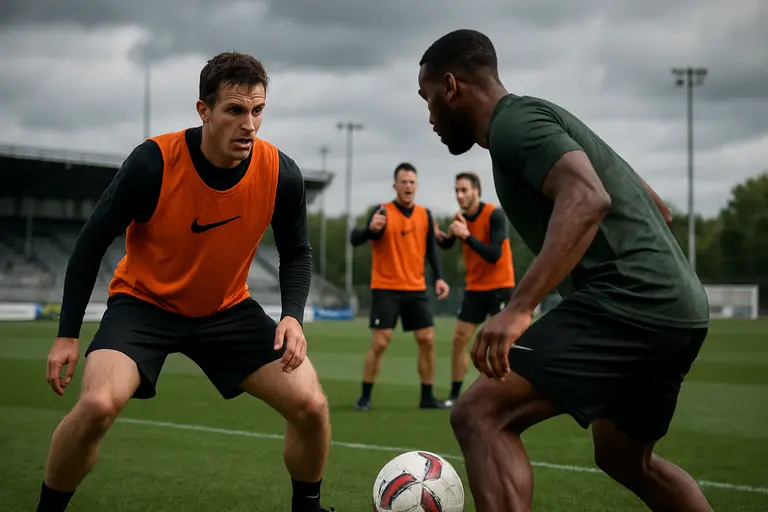
Post-2026 Tactics also showed the cost of aggressive recovery attempts. Counter-pressing carried clear attacking value, but it became risky when the first wave failed. If an opponent escaped the pressure, the pressing team could be left with defenders isolated, midfield lines stretched and wide zones exposed.
That is why some teams still chose disciplined low or mid-blocks combined with rapid transitions. This was not necessarily conservative football. It was a different calculation. Instead of trying to win the ball immediately after losing it, those teams protected central spaces, waited for the opponent to overcommit, and attacked quickly after regain moments.
The tactical divide was not between pressing and defending. It was between how teams managed risk. A high counter-press offered shorter routes to goal but demanded coordination across the whole side. A mid-block offered more protection but often required cleaner execution when counter-attacking chances appeared.
How Goalkeepers Changed Pressing Choices
Goalkeepers with strong distribution made counter-pressing more complicated for opponents. A team could not press only the nearest centre-back and ignore the player in goal. If the goalkeeper was comfortable receiving under pressure, the pressing side needed a plan for covering both short and long exits.
This affected front lines. Strikers had to curve their runs to block passes into midfield while still forcing play toward a trap. Wide players had to decide whether to jump toward full-backs or protect the next pass inside. Midfielders had to stay close enough to contest second balls if the goalkeeper went long.
For readers interested in linking these tactical insights to individual players’ attributes, platforms like World Football Idol offer in-depth profiles that connect player strengths to the evolving demands of international football. The same logic applies to national-team analysis, including the United States’ pressing and possession questions discussed in USMNT World Cup stats.
Post-2026 Tactics After The World Cup
What Carried Forward From 2026
Post-2026 Tactics were shaped by a tournament in which pressing, possession and goalkeeper involvement became closely linked. The best counter-pressing teams did not treat the tactic as a separate defensive instruction. They built attacking structures that allowed immediate pressure after losing the ball.
The goalkeeper shift was just as significant. A goalkeeper who can pass through or over pressure changes how a team starts attacks and how the opponent presses. The drop from 91% goalkeeper-taken goal kicks in 2022 to 52% in the 2026 group stage showed how teams adapted restarts to create better build-up conditions.
The lasting lesson of Post-2026 Tactics is that control came from connected phases. Counter-pressing protected attacks. Goalkeepers supported build-up. Centre-backs became more involved at restarts. Teams that linked those elements could keep pressure on opponents without relying only on possession percentage or defensive depth.