
Imagine 22 top athletes chasing a ball while 3.5 billion people watch. The FIFA World Cup is more than a game. It’s our shared ritual, a four-year epic where heroes and villains are made.
Lionel Messi’s journey is like a myth. He won two Golden Balls and the 2022 final. Neymar’s story is a mix of genius and drama. We follow them because they show us our deepest desires.
Pelé’s goals and Zidane’s famous headbutt show the World Cup’s magic. It’s where big money meets passion. Calculated moves meet instinct. In this mix, we find the truth: football legends are created by our love for the game.
Brief History of the World Cup
The World Cup’s story is full of surprises, from underdog wins to big falls. It started in 1930 with Uruguay hosting 13 teams. Only four European teams showed up, making it a unique event.
Imagine the 1920s in America, but in Uruguay, football was changing. They created jogo bonito, a beautiful game style, long before Brazil made it famous.
In 1950, the Maracanazo happened. Brazil’s fans watched as Uruguay beat them, a huge upset. It was like a national crisis, with samba music playing in the background.
The New York Times called it a major football disaster. It’s a moment that Brazilians over 60 remember well.
Brazil later won five World Cups, a record that stands strong. Their yellow jerseys are as famous as Coca-Cola’s red. But how did we get from Uruguay to Qatar? Three big changes happened:
- War & Politics: In 1938, Mussolini used the tournament for his own gain. The 1966 final was like a Cold War battle, with England beating West Germany.
- Television: The 1970 Brazil team won and performed for millions. Pelé became a football icon overnight.
- Globalization: Qatar 2022 spent $220 billion on the tournament. That’s enough to fund NASA’s Mars mission twice.
The World Cup is a true test of skill. Small countries like Croatia have made it to the semifinals. The U.S. even shocked England in 1950. Germany has rebuilt their team like their economy after the Wall.
Today, the World Cup shows more than just football. It highlights issues like migrant labor and climate change. But at its heart, it’s about 22 players chasing a ball, creating drama every four years.
What Makes a World Cup Legend?
World Cup immortality is not something you can learn from a book. It’s a mix of stats and cultural magic. This mix turns athletes into legendary figures.
Beyond Goals – The Anatomy of Immortality
Diego Maradona and Lionel Messi both have impressive World Cup stats. But only Maradona feels like a god. What makes the difference? It’s three key things:
- Iconic Villainy: Maradona’s 1986 Hand of God was more than cheating. It was a drama with a soccer ball
- Cultural Resonance: Pelé didn’t just win three World Cups. He became a symbol of Brazil
- Moment Magnification: Zidane’s career was marked by 108 international matches. But we remember the headbutt
Statistical Alchemy vs Cultural Impact
Miroslav Klose scored 16 World Cup goals, the most ever. But do people paint murals of accountants? Roberto Baggio’s 1994 penalty miss is a different story. It’s a moment that’s part of Italy’s history.
Here’s a look at stats versus legend:
- Gianluigi Buffon: 0 World Cup trophies but 178 international caps
- Garrincha: 2 World Cup wins and a stadium named after him
Legends are made when stats meet the moment. It’s why the best footballers of all time aren’t always the most decorated football players. It’s those who make tournaments unforgettable.
Iconic World Cup Performances
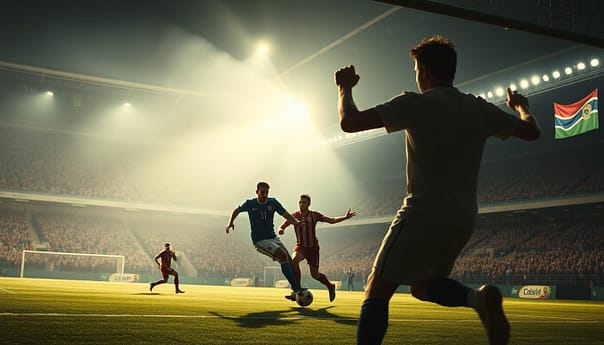
What makes athletes into mythological figures every four years? The World Cup is more than football matches. It’s a stage for operatic dramas where careers are made or broken by split-second choices. This mix of Shakespearean tragedy and sporting immortality creates stories with flawed heroes, divine interventions, and twists that rival telenovelas.
When Football Became Theater
The tournament’s magic turns technical brilliance into cultural folklore. Let’s look at two moments that changed how we see player achievements. One was through divine inspiration, the other through jaw-dropping self-destruction.
1986: Maradona’s One-Man Show
Diego Maradona didn’t just win the 1986 World Cup—he revolutionized it. In the quarterfinals against England, he scored the Hand of God goal and then the Goal of the Century. He dribbled past half the English team like they were traffic cones.
This 4-minute performance became the standard for unforgettable moments. Maradona didn’t just bend rules—he rewrote physics. As this ranking of greatest individual performances shows, no one has matched his genius and mischief on the biggest stage.
2006: Zidane’s Headbutt Heard Round the World
Zinedine Zidane’s career ended in Greek tragedy. In his last game, he headbutted Marco Materazzi with the precision of a bullfighter. The red card turned the 2006 final into a Rorschach test—was it pride or self-sabotage?
What’s fascinating is the 22 seconds of madness that overshadowed his career. Zidane’s earlier dominance, including a Panenka penalty in the final, became footnotes to his Homeric exit. The World Cup gives legacies, but it also takes them away.
These moments show that at the World Cup, immortality comes from unforgettable moments, not consistency. Who needs a lifetime of brilliance when you can have four minutes of alchemy?
Statistical Leaders by Tournament
If World Cup numbers were movies, some would be blockbusters, others cult classics. Let’s look at the numbers that make football stars. But remember, stats can hide the truth.
Numbers Don’t Lie (But They Omit Context)
Miroslav Klose scored 16 career World Cup goals. Gerd Müller scored 10.5 goals per tournament in the 70s. That’s like climbing Everest without oxygen.
Cristiano Ronaldo averages 0.62 goals per match. But he faces defenses as fast as TikTok trends. Just Fontaine scored 13 goals in 1958. But he played in a time when stats were different.
Golden Boot Controversies Through the Ages
The Golden Boot often goes to football’s best supporting actors. Paolo Rossi’s 1982 hat-trick was a Hollywood story. It overshadowed Zico’s consistent play.
Oleg Salenko scored five goals against Cameroon in 1994. It was like winning a participation trophy. These stories show how stats can be misleading.
| Year | Golden Boot Winner | Goals | The Asterisk |
|---|---|---|---|
| 1982 | Paolo Rossi | 6 | Scored 0 in group stage |
| 1994 | Oleg Salenko | 6 | 5 vs. Cameroon (eliminated) |
| 2010 | Thomas Müller | 5 | 3 assists as tiebreaker |
These aren’t just flukes. They show a system that rewards timing over consistency. The top football goal scorers list is more about luck than greatness.
Memorable World Cup Records
While trophies gather dust, World Cup oddities live rent-free in football’s collective memory. Let’s explore achievements that make NFTs look predictable.
The Hall of Oddities
Football history isn’t just written by winners – sometimes it’s scribbled by the statistically bizarre. Consider Mexico’s 16 straight group stage exits (1994-2018). This streak is so reliably disappointing, it makes Charlie Brown’s kite-flying look triumphant.
Fastest Goals & Slowest Burns
Turkey’s Hakan Şükür scored in 11 seconds against South Korea (2002). This is faster than most TikTok trends go viral. On the other hand, England’s 56-year “It’s Coming Home” chant remains football’s ultimate slow-burn delusion.
- Oleg Salenko’s 5-goal rampage (Russia vs Cameroon, 1994) – the only player to score a World Cup quintuple…and never play internationally again
- Cafu’s three-final trilogy (1994-2002) – the Brazilian right-back attended more championship matches than most fans watch replays
These records prove football’s magic lies not just in golden trophies, but in the bronze-medal moments that defy logic. After all, what’s sport without a little healthy absurdity?
Star Players from Different Continents
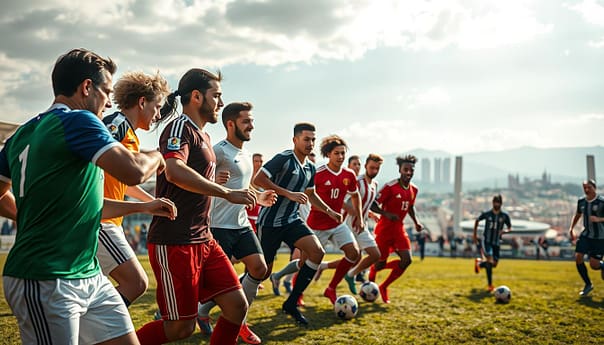
Imagine FIFA tournaments as Spotify playlists. South America would be a samba remix of Pelé’s tracks. Europe would be a Bach symphony. Africa would be an Afrobeats drop that makes defenders stumble.
Continental Style Breakdown
Football is more than a game—it’s a cultural study with cleats. The world’s top international football stars didn’t just learn tactics. They captured their homeland’s spirit and spread it on the field like Champagne.
South America’s Flair Factory
Brazilian fullbacks don’t just defend; they choreograph. From Garrincha’s swerves to Neymar’s nutmegs, South American futbol is fueled by sugarcane and boldness. The continent won 9 of the first 12 World Cups, not by studying, but by loving every touch.
- The Maradona Doctrine: Why dribble past one when you can humiliate six?
- Argentine Dark Arts: Masterclasses in strategic fouls and tantrums
- Colombian Calculus: James Rodríguez’s 2014 volley—geometry meets graffiti art
Europe’s Tactical Laboratories
If South America plays jazz, Europe composes fugues. Germany’s 2014 team was precise, while Spain’s 2010 team passed opponents into crises. Europe’s football legends focus on strategy over dance.
| Tactic | South America | Europe |
|---|---|---|
| Defending | Improvised samba steps | IKEA assembly instructions |
| Celebrations | Shirtless conga lines | Polite handshakes |
| Philosophy | “Why walk when you can backheel?” | “Risk assessment forms available at the door” |
When styles meet, like Neymar’s flicks versus Manuel Neuer’s moves, we get a Michelin-star fusion. The 2026 World Cup will be a cultural mix like a Brooklyn coffee shop.
The Evolution of Participation
World Cup growth is like a rocket compared to Silicon Valley startups. What started as a small club has grown into a global event. But, as FIFA’s guest list grew from 13 teams to 48, we wonder: When does inclusion become dilution?
From 13 Teams to 48
The tournament’s growth is more than numbers. It’s a big show of politics and sports. Here are some key moments:
- 1930: More countries turned down invites than joined, fearing the Atlantic journey
- 1982: Algeria’s team almost beat West Germany, showing Europe’s talent gap
- 2026: Three host countries will need Google Maps for 104 matches
Today’s football transfers market fuels this growth. The USMNT now looks for talent in Serie A, like Apple finds engineers. Even Qatar’s 2022 team, built through naturalization, showed money can buy success.
The Globalization Paradox
More teams mean more underdog stories…and more big wins. The 2026 World Cup expansion will see Canada’s Alphonso Davies face players from countries without stadiums. But, this diversity creates magic – like Senegal’s 2002 upset of France.
Zagallo’s journey from player to manager in 1958 and 1970 shows this change. Today’s coaches deal with more than tactics. They navigate passport laws and money politics. The game is now a global talent market where nationality is flexible, like Neymar’s moves.
World Cup and Player Legacies
Football immortality has two sides. One shines with World Cup gold, the other is shadowed by club career paradoxes. The tournament doesn’t just shape legends—it rewrites them, often with twists that would stump Shakespeare.
Eternal Glory vs Club Success
Pelé’s three World Cup trophies are like stars in football’s galaxy, outshining Messi’s 2022 crown. But, club dominance doesn’t always lead to international fame. Look at the most decorated football players:
- Cristiano Ronaldo: 5 Champions Leagues vs 0 World Cup finals
- Johan Cruyff: 3 Ballon d’Ors vs 1 World Cup final loss
- Lev Yashin: Soviet icon with zero Mundial appearances
Why does World Cup success stick to careers like permanent glitter? It’s because it’s humanity’s largest shared experience. More people watched Mbappé’s 2018 final than the moon landing.
The Mundial Curse
There’s also a dark side. Paolo Rossi’s 1982 heroics made him Italy’s golden boy—and a commercial pitchman. By 1986? Finished at 29. The World Cup gives fame, then takes it away.
Maradona’s 1986 deification contrasts with Roberto Baggio’s 1994 penalty miss. Both moments define their careers, but only one gets street murals. Zidane’s 2006 headbutt? Cemented his rebel genius status while reducing Materazzi to “that guy who got headbutted.”
| Player | World Cup Legacy | Club Aftermath |
|---|---|---|
| Pelé | God-Emperor | Retired at 36 with NY Cosmos |
| James Rodríguez | 2014 Golden Boot | 7 clubs in 9 years post-Brazil |
| Gotze | 2014 Final hero | Chronic metabolic issues at 28 |
The cruel truth? World Cup glory ages like wine—club success like milk. Ask Kylian Mbappé: his PSG contract could buy Monaco, but history will measure him by how many times he lifts that golden trophy.
Upcoming Stars to Watch
The World Cup is all about passing the torch to the next generation. As Lionel Messi moves to Miami, scouts are searching for the next big thing. Who will make it through the tough world of football transfers?
The Next Generation’s Launchpad
Kylian Mbappé burst onto the scene in 2018, showing how fast World Cups can make stars. Now 25, he’s guiding young PSG player Warren Zaïre-Emery. This 17-year-old plays like he’s solving Rubik’s cubes blindfolded.
South America has its own young talent, like Argentina’s Julián Álvarez. He plays for Manchester City and shows the skill of Sergio Agüero without the showy celebrations.
Post-Messi Power Vacuum
Brazil’s Endrick, 17, is already making waves with his skills, scoring his first goal before he’s even out of his teens. Spain’s Lamine Yamal, 16, is breaking records at Barcelona like they’re piñatas. And England’s Jude Bellingham, 20, is dominating Real Madrid’s midfield like a Bond villain.
These young stars face a harsh reality: World Cup success can erase all past mistakes. But a group-stage exit can rewrite their legacies in an instant.
The 2026 World Cup is set to be a thrilling show. Will Mbappé’s high salary lead to World Cup glory? Can Álvarez shine without being overshadowed by Messi? Get ready for a generational shift that will be more exciting than any TV show.