
As of September 3, 2026, the U-20 Women’s roster gives the United States a defined blend of professional experience, college competition, and youth international minutes before the 2026 FIFA U-20 Women’s World Cup in Poland. Head coach Vicky Jepson named a 21-player squad with eight professional players from the NWSL and 13 college players, according to the U.S. Soccer roster announcement.
The roster is not built around one development lane. It draws from players already training in professional environments and players still competing in the college game. That split matters in a U-20 World Cup, where tournament rhythm, physical recovery, and short-turnaround decisions can be as important as individual talent. For a broader perspective on soccer player profiles, World Football Idol offers insights into careers across the sport’s landscape. Check their detailed tracking on World Football Idol.
U-20 Women’s Roster Structure And Player Base
The clearest structural feature is the professional-college split. Eight NWSL players make up more than one-third of the squad, while 13 college players keep the roster tied to the traditional American development route. At this age level, that balance can affect match readiness in different ways. Professional players may have more daily exposure to senior-level training demands. College players may bring regular match responsibility and minutes in competitive team roles.
Why The U-20 Women’s Roster Mix Matters
The U-20 Women’s roster is not simply a list of prospects. It is a tournament squad with specific constraints. With 21 players, every position group must cover three group-stage matches in seven days. That requires enough flexibility for substitutions, potential rotation, and tactical adjustment against three different opponents. A roster dominated by one pathway would carry a different risk profile; this group instead combines players who have been challenged in separate competitive settings.
The listed position spread is also conventional for a FIFA youth tournament roster: three goalkeepers, seven defenders, six midfielders, and five forwards. The three goalkeepers are Caroline Birkel, Evan O’Steen, and Kealey Titmuss. The outfield distribution gives the staff room to protect central areas while still carrying enough attacking options to change matches late.
Age Eligibility And Roster Shape
The tournament eligibility cutoff is players born on or after January 1, 2006. Research notes supplied for this roster report an average age of about 18.8 years, but the listed birth-year breakdown in those notes exceeds the 21-player squad total. The safe roster point is that the team sits within the standard U-20 age band and includes players young enough to represent different stages of the same development cycle.
Caps And Experience In The Tournament Context
The squad has 128 total U-20 caps, averaging just over six caps per player. That is enough experience to suggest that the group is not starting from scratch, but it also shows that this is still a youth team rather than a settled senior-style core. At this level, caps can be unevenly distributed: a few players often carry the heaviest international workload while others enter the tournament with fewer appearances.
Caps Leaders And Reported Uncertainty
Research notes list Emeri Adames with 17 U-20 caps and Katie Scott with 11, while Aven Alvarez is reported at 12 among the squad leaders. A separate note identifies Caroline Birkel among the double-digit cap players. Because those two notes do not fully align, the more reliable interpretation is broader: the United States has a small experienced core rather than a roster full of high-cap players.
That core can be valuable in the opening match against Italy on September 6, 2026, because tournament starts often test decision-making as much as form. Players who have already been in U.S. youth national team camps and matches can help set tempo, manage difficult periods, and give the staff a clearer read on roles.
World Cup Returnees
Ten players have prior World Cup experience at U-17 and/or U-20 level. Caroline Birkel and Emeri Adames were part of the U.S. squad at the 2024 FIFA U-20 Women’s World Cup in Colombia. Adames started all seven matches in that tournament and recorded a team-high four assists. That past tournament workload gives her one of the more defined reference points in the squad.
Previous World Cup exposure is not a guarantee of performance in Poland, but it reduces one unknown. Players who have already seen the travel schedule, condensed preparation, and tournament atmosphere can better understand the difference between a normal youth international window and a global championship.
Qualifying Form And Recent Scoring Indicators
Eight players on the roster also appeared for the United States at the 2025 Concacaf Women’s U-20 Championship, the tournament that secured the U.S. berth to Poland 2026. Five of those players — Kennedy Fuller, Linda Ullmark, Emma Johnson, Katie Scott, and Sealey Strawn — scored in that competition. That matters because youth World Cups can be shaped by contributions from defenders and midfielders, not only forwards.
Concacaf Carryover
The Concacaf group provides continuity from qualifying to the World Cup. In a short tournament, coaches often value players who already understand spacing, pressing cues, rest-defense responsibilities, and set-piece assignments. The five scorers from qualifying also show that the squad has had goals from multiple areas of the pitch. Katie Scott’s presence among the scorers is notable because she is listed as a defender in the research notes.
Recent Match Signals
Recent results in 2026 offer useful but limited indicators. On June 5, 2026, the United States defeated France U-23 5-0 in Spain, with Linda Ullmark scoring a hat trick. In April 2026, the U.S. beat Brazil 2-0 in Kansas City with goals from Ullmark and Kimmi Ascanio. Those results suggest attacking confidence, though youth friendlies do not replicate a World Cup group.
Individual production also points toward Ullmark as one of the clearer form players. Research notes credit her with six goals in seven U-20 caps. Micayla Johnson is listed with two goals in four caps, and Katie Scott with one goal in 11 caps. In roster terms, those figures show where recent end product has come from, but they should be read within the small-sample nature of youth international football.
Group Stage Format Pressure In Poland
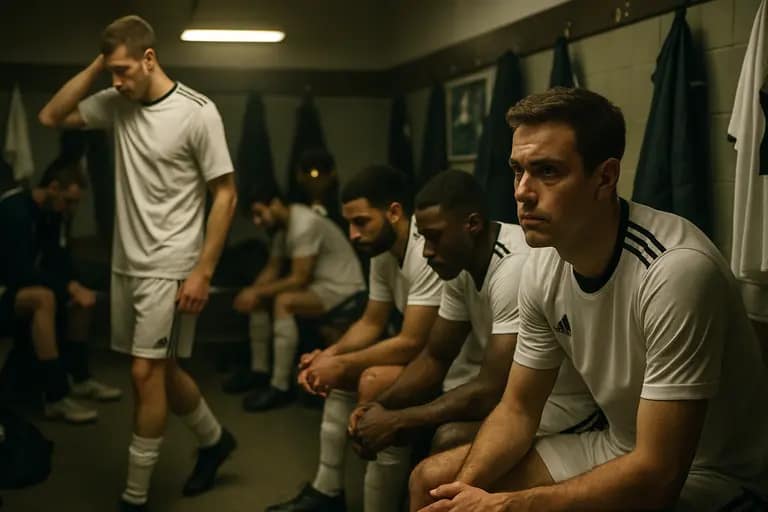
The United States opens Group C against Italy on September 6, 2026, in Lodz. The second match is against Japan on September 9, also in Lodz. The final group match is against New Zealand on September 12 in Sosnowiec. Three matches across seven days will test depth, recovery, and the staff’s willingness to adjust personnel.
Dates And Venues
The first two matches being in Lodz gives the United States some location stability before moving to Sosnowiec for the third group game. For the U-20 Women’s roster, that schedule places added value on players who can cover multiple roles or enter from the bench without a drop in structure. In youth tournaments, the third group match can require different choices depending on the standings after the first two fixtures.
Italy, Japan, and New Zealand also offer different stylistic questions. The research notes do not provide tactical profiles for those opponents, so any detailed claim about their 2026 approach would be unsupported here. The confirmed point is the sequence: Italy first, Japan second, New Zealand third. That order makes the opening six days especially demanding because the U.S. must move from preparation into recovery almost immediately.
U.S. U-20 Women’s Team Roster Assessment
The squad selected for Poland 2026 is best understood as a balanced youth tournament group rather than a star-only selection. The professional players give the team senior training exposure. The college players keep the roster grounded in competitive match environments. The returning World Cup players add memory from prior global tournaments. The Concacaf scorers and recent friendly contributors give the staff several attacking reference points.
For this U-20 Women’s roster, the main question is how quickly those parts function together across the group stage. The United States has enough experience to avoid being treated as an unknown group, but the cap distribution shows that much of the squad is still early in its international development. Poland 2026 will measure not just individual prospects, but how efficiently the roster handles tournament pressure, rotation, and the shift from preparation matches to World Cup football.