
What makes athletes into cultural deities? Is it just the numbers, or the thrill of a last-minute goal? We’re exploring the world of soccer legends, where Pelé’s skill meets Maradona’s flaws. It’s like Zeus and Walter White debating who’s the greatest.
Today, fans argue over stats and “you had to be there” moments. FourFourTwo’s 2022 list sparked debate, mixing Messi’s win with Cruyff’s tactics. But winning isn’t everything. It’s the alchemy of myth-making that makes a player immortal.
Think of soccer like Money Heist. Some players are like The Professor, planning every move. Others are like Nairobi, changing the game with their unpredictability. The 2022 World Cup showed us Mbappé’s speed and Modrić’s experience.
So, how do we separate human excellence from sporting divinity? Let’s find out as we explore soccer’s greatest.
Defining a Legend: What Makes a Football Icon?
Is a football legend made by Champions League wins or by moments that spark debate for years? Let’s break down greatness like FIFA’s secret recipe. Instead of speed and skill, we mix legacy ingredients that even Gordon Ramsay can’t perfect.
FourFourTwo’s formula for immortality isn’t just about football player stats or medals (though they count). It’s like a four-layer cake:
| Ingredient | Weight | Example |
|---|---|---|
| Trophy Haul | 40% | Zidane’s 14 major honors |
| Highlight Reel | 30% | Ronaldinho’s no-look passes |
| Cultural Impact | 20% | Beckham’s global brand |
| Mythos | 10% | Maradona’s “Hand of God” |
The most decorated football players often lead in trophy counts. But true iconic players excel in all areas. Diego Maradona’s 1986 World Cup was more than goals. It was a mix of genius, politics, and a bit of divine help.
The football hall of fame looks at what you did and what you represent. Pelé’s stats are incredible, but his real impact was making soccer a global language during the Cold War.
Today’s legends face even higher standards. Cristiano Ronaldo has many trophies, but does his style bring joy like Messi’s creativity? The debate shows why both are legends. They’ve changed how we see greatness.
Pelé: The Pioneer
Pelé didn’t just play football; he made it a cosmic phenomenon. At 17, he became the youngest World Cup champion in history. This record is as high as Everest in cleats.
By the time he retired, he had changed the game. He showed you could be a global star before social media and TikTok.
Let’s look at his stats: 3 World Cup trophies, 1,281 career goals, and a Santos contract at 15. That’s not a résumé – it’s a superhero origin story. His 1958 debut was football’s Big Bang moment, creating galaxies of fans worldwide.
| Metric | Pelé | Modern Equivalent |
|---|---|---|
| Global Reach | Pre-internet cultural saturation | 500M Instagram followers |
| Brand Value | Pioneered athlete endorsements | $1B lifetime deals |
| Legacy | “Beautiful Game” philosophy | Curated social media personas |
The irony? Pelé’s NASL years with the New York Cosmos made Beckham’s MLS move look like amateur hour. He turned exhibition matches into geopolitical events, all while maintaining a grin that said, “I invented swagger.”
Here’s the kicker: Pelé’s magic came from pure artistry. His “beautiful game” ethos wasn’t a marketing slogan – it was rocket science disguised as sport. The ball obeyed him like Newton’s apple, yet he made physics look optional.
So next time you see an athlete’s branded Instagram post, remember: Pelé trended worldwide using 1960s technology. No filters. No algorithms. Just a kid from Santos who turned goal celebrations into gravitational waves.
Diego Maradona: The Magician
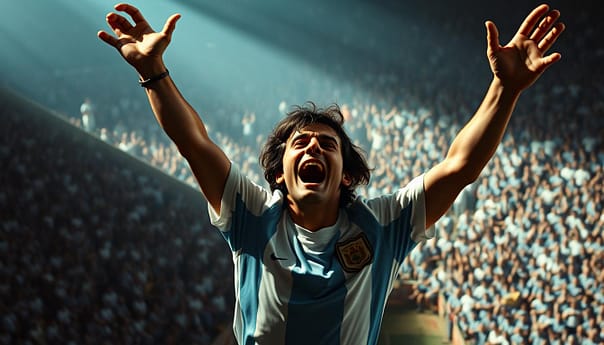
Imagine a player so gifted he could turn a handball into folklore and a slalom through England into legend. Diego Maradona didn’t just play football—he staged one-act plays with a ball. He mixed street-smart cunning with balletic precision. His 1986 World Cup performance is a mix of divine “Goal of the Century” genius and the “Hand of God” mischief.
| Statistic | 1986 World Cup | Napoli Career (1984-1991) |
|---|---|---|
| Goals | 5 | 115 |
| Assists | 5 | 62 |
| Trophies Won | 1 World Cup | 2 Serie A Titles |
Before Maradona arrived in Naples, the city’s trophy cabinet was dusty. Seven seasons later, he transformed SSC Napoli into champions. This was the ultimate underdog story in a country that treats football like opera. Local murals show him as San Diego, the patron saint of stolen glory.
But Maradona’s brilliance was always mixed with self-sabotage. His cocaine-fueled implosions and mafia entanglements were like Godfather subplots. Yet, this 5’5″ anarchist remains immortal. He mirrored life’s messy contradictions—flawed, electric, unforgettable.
Was there ever a clearer case of genius refusing to behave? The man who gave us both the dazzling 60-yard dribble against Belgium and the infamous “party lifestyle” blueprint for modern athletes? For better and worse, Maradona wrote football’s most compelling tragedy—with Naples as his Shakespearean stage.
Johan Cruyff and Total Football
Johan Cruyff didn’t just play football; he revolutionized it. Unlike other soccer legends, he saw the game as a place to innovate. He introduced Total Football, where every player could play any position.
This approach made the game unpredictable and efficient. It was like a Swiss Army knife for football.
At Barcelona, Cruyff’s ideas became the norm. He turned the club into a place for new tactics. The tiki-taka style we see today? That’s Cruyff’s vision from the 1970s.
Total Football vs. Positionless Basketball: A Tactical Showdown
| Total Football | Positionless Basketball | |
|---|---|---|
| Core Principle | Fluid positional rotation | Versatile player roles |
| Innovation Era | 1970s | 2010s |
| Key Architect | Johan Cruyff | NBA analytics teams |
| Cultural Impact | Revolutionized global soccer | Trendy but derivative |
Basketball’s “positionless” trend reminds us of Cruyff’s ideas. Cruyff’s tactics were ahead of their time by 40 years. NBA teams are just updating Total Football with new styles.
Cruyff was more than a coach; he was a leader. He showed teams how to use space as a weapon. Today, coaches follow his advice, saying quality without results is pointless.
Franz Beckenbauer: The Kaiser
If football defenders had a Mount Rushmore, Beckenbauer’s stone-carved smirk would be giving side-eye to every slide-tackling mortal below. He didn’t just redefine defensive play – he turned it into a mix of ballet and battle strategy. Imagine a James Bond villain who chose cleats over laser beams, leading attacks with style.
Beckenbauer made the impossible look easy. While others crashed into defenders, he moved like a chess master. His famous move? The “Libero Leap” – gliding past opponents and delivering passes that would impress even GPS.
Let’s look at his career:
- He changed the sweeper role into a playmaking headquarters
- Won three European Cups with Bayern Munich (1974-76)
- He led West Germany to World Cup wins as a player (1974) and manager (1990)
His tackles in the 1970s were legendary. Modern referees would need therapy after seeing them. Beckenbauer treated challenges like punctuation marks, ending opponents’ sentences. Yet, he also created, scoring 14 goals as a defender. That’s impressive in any FIFA game.
He retired to MLS before Beckham made it cool. Beckenbauer became New York’s coolest soccer import. He didn’t just belong in the football hall of fame – he changed its design.
Modern Era Legends: Zidane, Ronaldinho, Ronaldo
YouTube and PlayStation have made football legends out of the ordinary. The digital age turned amazing plays into hits. Zinedine Zidane, Ronaldinho, and Cristiano Ronaldo are icons who left a mark in a world where attention is short.
Zidane’s 2006 World Cup headbutt is a moment that’s unforgettable. It’s like a “Ctrl+Z” in sports history. Ronaldinho’s smile during an elastico is like the Mona Lisa of football. Their fame isn’t just about skill, but also about being memorable.
Ronaldo’s robot celebration shows perfection in the digital age. The CR7/Messi rivalry is like Apple vs. Microsoft in football. Ronaldo has scored over 450 goals, while Messi is known for his incredible dribbling.
Neymar is the TikTok star of football. His story is like a Netflix drama. He went from a Santos wonderkid to a PSG star for $263M. He shows that today’s legends are as much about engagement metrics as they are about trophies.
These players didn’t just fit into the digital age—they used it to their advantage. Ronaldinho’s tricks were shared before “viral” was a word. Zidane’s flaws made him relatable in HD. Ronaldo is like the Terminator of set-piece physics. The PlayStation generation didn’t just watch football—they simulated it, remixed it, and asked for more.
Criteria: Comparing Across Eras
Imagine Pelé from 1970 in today’s Champions League final. Would he shine or get lost in the modern game? This debate is more than just talk. It’s about understanding football history and stats.
- Athletic Evolution: Today’s players run 40% more than those in the 1960s. Could Bobby Charlton keep up with Mohamed Salah’s speed?
- Tackle Mythology: 1970s defenders were known for their tough tackles. But today, there are 22% more fouls per 90 minutes. It’s different, but the impact is the same.
- Data Dueling: Assist tracking started in 1985. How do we compare players from different eras when the rules change?
Modern data shows why “they played through broken legs” is a myth. 1980s Serie A had 35% fewer sprints than today’s Premier League. Today’s athletes aren’t tougher; they play a different game.
Comparing eras is a win for us. It lets us see the genius of Cruyff and Messi side by side. Klopp’s tactics meet Beckenbauer’s in our minds. It shows greatness isn’t just about winning; it’s about redefining the possible.
Breaking Down Career Statistics
Imagine Cristiano Ronaldo’s 850+ career goals as Instagram followers. He’d barely make the top 500 influencers. Modern football metrics are like campaign promises – they look good but don’t mean much.
It’s important to distinguish between career-defining stats and social media confetti. For example, progressive carries per 90 minutes show a midfielder’s real impact. This is unlike jersey sales or TikTok views, which focus more on marketing than actual performance.
| Stat Type | Hall of Famer Example | Vanity Metric Counterpart |
|---|---|---|
| Non-penalty goals | Messi (672) | Verified Twitter checkmarks |
| Chances created | Kevin De Bruyne (1,200+) | FIFA video game ratings |
| Tackles won % | N’Golo Kanté (63%) | Instagram hashtag campaigns |
The football player awards scene is like a circus. The Ballon d’Or started as a French magazine’s idea in 1956. Today, it’s like the Oscars’ “Best Popular Film” category, where PR wins over talent.
IFFHS data shows the top football goal scorers list considers competition difficulty. Scoring against San Marino is like getting a participation trophy. But scoring in Champions League finals? That’s building a legacy.
Great stats should explain greatness, not just list it. Zinedine Zidane retired with 156 goals but dominated 73% of big games. His real impact? Leaving defenders confused.
Their Lasting Influence on the Game

Legacies in football aren’t just about trophies. They’re in every clever move on the field. Today’s players draw inspiration from the greats, just like hip-hop artists do from classic songs. The Cruyff turn, for example, has moved from the 1970s to today’s games and even FIFA Ultimate Team.
Erling Haaland’s goal-scoring is a nod to Pelé’s legacy. It’s a reminder that greatness is contagious. This influence isn’t just in the game itself but also in how it’s run.
Legends like Neymar have changed the game’s economics. His 2017 move to PSG set new records, affecting the sport’s finances. It’s like a black hole in the world of football. Analysts now compare soccer deals to tech IPOs, trying to keep up with the game’s fast pace.
Want to see the impact? Look at how Cristiano Ronaldo’s career has influenced jersey sales and global interest.
| Transfer Era | Average Fee (Millions) | Global Sponsorship Impact |
|---|---|---|
| Pre-Neymar (2010-2016) | $45 | +18% |
| Post-Neymar (2017-2023) | $89 | +42% |
World Cup football players are more than athletes. They’re cultural icons. Maradona’s “Hand of God” and Beckenbauer’s defensive strategies are studied and adapted today.
Managers don’t just look at tactics. They study the joy and creativity of legends like Pelé and Zidane. It’s like they’re solving ancient puzzles.
So, when you see a young player try a tricky move or a big transfer, remember. Football’s past is alive and shaping the game every day.
Honoring Football Immortals
FourFourTwo’s rankings show the tough choice in picking the best footballers of all time. It’s like trying to decide between Picasso and Banksy with a timer. We choose icons based on numbers and memories.
The most decorated athletes are like Rorschach tests. Do you see genius in Cruyff’s style or Maradona’s rule-breaking?
Our list is like a football Valhalla with broken AC. Pelé’s 1,283 goals face off against Messi’s MLS stint. Beckenbauer’s precision meets Ronaldinho’s joy.
Modern stats try to measure greatness, but they miss Maradona’s Napoli rise or Cruyff’s tactics. We judge by trophies and stats, but true greatness is in inspiring others.
Who defines your football legacy? It’s hidden in numbers and cheers. Grab a pint, review the facts, and get ready to argue. Just skip talking about Messi’s MLS stats.