
USMNT Tactical Adjustments after the World Cup centered on structure, pressing, and the placement of elite attacking talent. Under Mauricio Pochettino, the United States men’s national team was described in the research record as moving toward a 3-4-2-1 base, using wing-backs to stretch the pitch and asking Christian Pulisic to influence play from a more central attacking position. The available evidence supports a tactical reading focused on shape and player roles rather than a full match-by-match record.
The shift matters because international football gives coaches limited training time. A national team cannot simply copy a club model over a long season. It must create repeatable principles that players can understand quickly: where pressure starts, how the back line is protected, how the first pass out of defence is found, and where the main creators receive the ball. Pochettino’s adjustments appear to have aimed at giving the United States clearer mechanisms in possession while making the side more aggressive without the ball.
USMNT Tactical Adjustments And The 3-4-2-1 Base
Why USMNT Tactical Adjustments Began With Shape
The most visible structural change in the research notes is the move toward a 3-4-2-1. That shape places three central defenders behind a midfield line that can become either a four or a five, depending on the height of the wing-backs. Sports Illustrated described Pochettino’s use of a 3-4-2-1 and the emphasis on aggressive pressing in its United States preview Sports Illustrated USMNT preview.
In practical terms, the system changes the reference points for almost every line of the team. The outside center-backs must defend wider zones than they would in a back four. The central defender often becomes the spare player against one-striker systems, though that spare-player advantage can disappear when opponents push two forwards high. The wing-backs carry major responsibility because they are asked to provide width in attack and recover quickly when possession is lost.
Those USMNT Tactical Adjustments made the side less dependent on traditional wingers staying wide. Instead, attacking width could come from advanced full-backs or wing-backs, while the two players behind the striker could occupy half-spaces. This is a common modern solution for teams trying to combine wide penetration with central creativity. It can also give a coach easier access to pressing traps near the touchline because the wing-back, outside center-back, and nearest attacking midfielder can close around the ball.
Wing-Back Width And Defensive Trade-Offs
The benefit of the 3-4-2-1 is clear: it can place more players between opposition lines without leaving the pitch narrow. The cost is just as clear. If the wing-backs are caught high and the first wave of pressure is beaten, the outside center-backs can be pulled into wide recovery runs. Against top international sides, those moments are dangerous because the opponent’s first pass forward may turn an attacking shape into an emergency defensive phase.
Antonee Robinson fits the broad profile described in the research because his forward running can give the United States a direct outlet on the left. The tactical question is not whether an attacking full-back can help the team; it is how the midfield and back three rotate behind him. If the near-side midfielder slides across too early, central space opens. If he stays central too long, the wing-back may be isolated. That balance is central to the system.
Christian Pulisic And The Central No. 10 Brief
Pulisic Between The Lines
The research notes describe Christian Pulisic being repositioned from the left wing into a free-roaming No. 10 role. Soccer Times Now framed that change as part of Pochettino’s 2026 tactical plan, with Pulisic given more freedom to affect attacks from central areas Pulisic central role analysis.
That adjustment has a clear tactical logic. From the left wing, Pulisic can attack full-backs, cut inside, and combine near the box. From a central pocket, he can receive on the half-turn, connect both sides of the attack, and force opposing midfielders to decide whether to step out or protect deeper zones. A free-roaming No. 10 can also help a lone striker by getting closer to second balls and lay-offs.
The risk is that a central attacking role often reduces the natural defensive protection on one side of the pitch. If Pulisic drifts left or right to create overloads, the nearest central midfielder may need to cover behind him. That can affect counter-pressing distances. For the United States, the role can raise attacking ceiling, but only if the rest defence behind the ball remains organized.
Central Creativity Versus Positional Discipline
The research also points to a preference for more creativity in midfield, with Gio Reyna cited as the type of player who can increase attacking quality. This is a classic selection tension. A technically gifted midfielder can help break pressure, find forward passes, and combine in tight spaces. A more defensive midfielder may give better cover in transition but offer less incision against a compact block.
Pochettino’s challenge, based on the available notes, is to build a midfield that can support Pulisic without leaving the central defenders exposed. If the double pivot is too cautious, the No. 10 becomes isolated. If both midfielders advance, the team may struggle to stop counters through the center. The best version of the setup likely depends on staggering: one midfielder offers a passing lane, the other secures the space behind the attack.
Pressing, Possession, And Defensive Risk
High Pressing As A Team Rule
A high press is not simply a demand for energy. It is a sequence of cues. The striker may close the goalkeeper or one center-back, the two attacking midfielders block passes into midfield, and the wing-backs step high enough to challenge full-backs. If one player jumps without the others following, the press becomes a broken line. That is why pressing systems can make a team look powerful on one night and exposed on another.
The United States’ post-tournament direction, as described in the research, put greater emphasis on regaining possession quickly and disrupting build-up play. That suits a squad with athletic profiles across several positions. It also suits a 3-4-2-1 because the front three can lock onto central and wide passing lanes while the wing-backs step up. The pressure must be paired with compact distances, otherwise opponents can play through the first line and attack the space behind midfield.
Possession From The Back
The notes also describe a focus on possession-based play and building attacks from the back. In a three-center-back system, the goalkeeper and central defenders can form a strong first line against pressure. The outside center-backs can split wide, giving the wing-backs freedom to move higher. That creates passing angles into midfield and can draw opponents forward.
The weakness appears when the first pass into midfield is not clean. If possession is lost with wing-backs high and the attacking midfielders ahead of the ball, the nearest holding player has to delay the counterattack immediately. This is where the defensive vulnerabilities mentioned in the research become tactically relevant. Clean sheets are not only a reflection of defenders winning duels; they depend on ball security, pressing after loss, and spacing in possession.
For readers interested in broader sports context, this network also extends its coverage to different sports planning strategies. A related site, FS Golf, looks at sport-specific planning beyond football, offering a wider perspective within the same network.
Midfield Selection And Match Management
Formation Flexibility During Matches
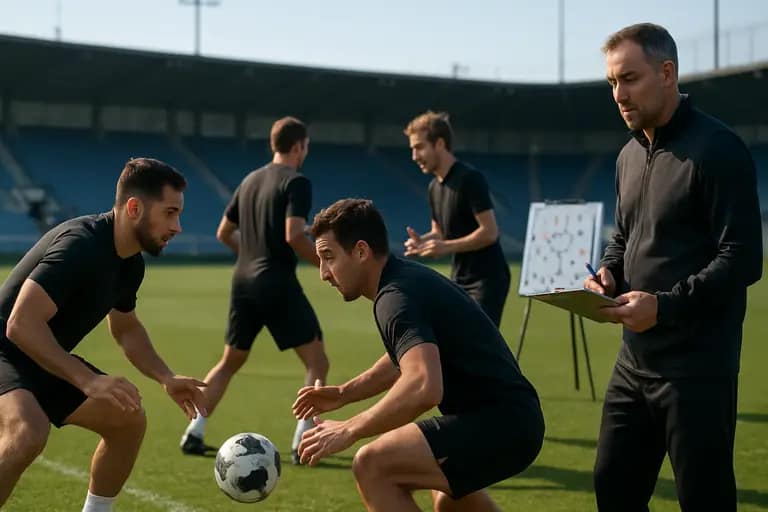
The research notes describe adaptability between shapes such as 4-3-3 and 3-5-2. That type of flexibility can occur through small positional changes rather than full substitutions. A wing-back can drop to create a back four. One of the attacking midfielders can move closer to the striker, forming a front two. A central midfielder can step higher to press, temporarily turning the midfield line into a three.
These shifts are valuable because tournament football punishes predictability. Opponents prepare for tendencies, and a team must be able to solve different problems: a low block, a pressing side, a direct opponent, or a team that overloads midfield. For the United States, the key is whether flexibility improves control or creates confusion. International sides with limited training time need clear rules for each phase, not just a menu of formations.
The tactical context also connects with wider discussion of tournament-era planning, including the demands described in World Cup tactics in the 48-team era. More matches and varied opponents place a premium on controlled rotation, repeatable pressing schemes, and players who can handle more than one role.
Depth And The Limits Of A System
A system can improve a team, but it cannot fully hide depth issues. The research notes raise concern about the United States maintaining performance levels when key players are absent. That point matters in any tactical assessment. A 3-4-2-1 depends on specialist demands: center-backs who can defend space, wing-backs who can run both ways, midfielders who can play under pressure, and attacking midfielders who can create without abandoning defensive tasks.
If the replacements have different strengths, the coach may need to adjust the height of the press, the width of the wing-backs, or the amount of risk in possession. This is where Pochettino’s post-World Cup work is best judged as a squad project, not only a shape change. The formation is the visible frame; the player pool determines how much of the plan survives against stronger opposition.
USMNT Tactical Adjustments In Reference Context
USMNT Tactical Adjustments should be read as a move toward greater attacking ambition and clearer pressing identity. The 3-4-2-1 base gives the team width through wing-backs, central access through attacking midfielders, and an extra defender in the first line. Pulisic’s central role can increase influence in the most valuable areas of the pitch, while a creative midfield can help the United States break lines rather than rely only on transition attacks.
The unanswered question is defensive balance. High pressing, advanced wing-backs, and central creators can all improve chance creation, but they also require precise coverage behind the ball. If the midfield spacing is loose or the first press is bypassed, the back line faces larger spaces. If the structure holds, the United States gains a platform for more assertive football against high-level opponents.
As a reference point, the post-World Cup record provided here supports a measured conclusion: Pochettino’s tactical direction was not a single tweak but a connected set of choices. Shape, pressing, Pulisic’s role, wing-back usage, and midfield selection all belong to the same tactical idea. Because USMNT Tactical Adjustments affect every line of the team, their success depends less on the diagram itself than on timing, spacing, and the suitability of the selected players.