
The 2026 FIFA World Cup marked a major stage in the growth of American soccer, but the next challenge arrives immediately after the tournament. The United States will enter the 2030 World Cup cycle with a deeper talent pool, a stronger domestic development structure, and a generation of young players prepared to compete for international roles.
The previous generation established a foundation built around players such as Christian Pulisic, Weston McKennie, Tyler Adams, and Tim Weah. Their success changed expectations for American players competing at the highest level. The next cycle will depend on whether younger footballers can transform potential into consistent international performances.
The growth of MLS academies, improved youth competitions, and increased opportunities in European leagues created a new environment for American prospects. Players who were teenagers during the 2026 World Cup cycle will become central figures between 2028 and 2030, creating competition for positions across the national team.
The 2030 USMNT project will not be a complete rebuild. It will be an evolution built around a wider group of technically prepared players.
Young Attackers Could Transform The USMNT Offensive Identity
The United States has historically searched for consistent attacking depth, but the development of younger forwards and creative players provides new possibilities.
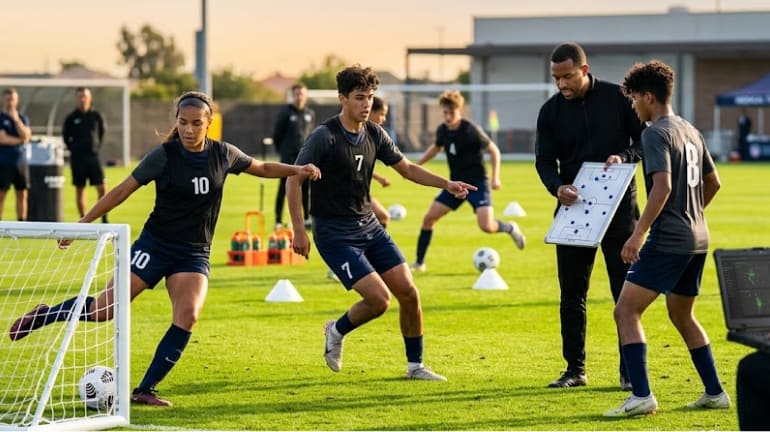
Players such as Gio Reyna, Ricardo Pepi, Folarin Balogun, and emerging MLS talents represent different attacking profiles. Some provide creativity between the lines, others offer physical presence inside the penalty area, and others bring direct speed in transition.
The future attacking structure will likely become more flexible. Modern international football requires forwards who can press, create chances, and adapt to different tactical systems.
The previous article USMNT future leaders analyzed how leadership responsibilities will change after the 2026 cycle. The attacking generation will be a major part of that transition.
| Player Profile | Tactical Value | Development Focus |
|---|---|---|
| Creative attacker | Chance creation and progression | Consistency at club level |
| Mobile striker | Pressing and finishing | Physical adaptation |
| Wide forward | One-on-one ability | Decision-making in final third |
| Second striker | Link play and movement | Tactical versatility |
The national team’s attacking future depends on having multiple solutions rather than relying on one primary scorer.
European Experience Will Shape The Next Generation
One of the biggest changes in American soccer development has been the increasing number of young players gaining experience outside MLS.
European football provides different challenges, including higher tactical demands, intense competition for starting positions, and exposure to different playing styles.
Players developing in leagues such as the Bundesliga, Premier League, Serie A, and Eredivisie benefit from environments where technical execution and tactical discipline are required every week.
The U.S. Soccer player development pathway has increasingly focused on creating environments where young players can progress through multiple levels of competition.
The presence of American players abroad also influences the national team’s tactical identity. Coaches can select players who already understand different football philosophies, making it easier to implement complex systems.
The 2030 cycle could feature a USMNT squad where many players have experience against elite European opposition before reaching their prime international years.
Midfield Competition Could Become The Strongest Area
The USMNT midfield has already experienced significant improvement, but the next generation could create even more depth.
The traditional American midfield identity was often associated with physical strength and defensive work. Modern midfielders must provide technical quality, positional intelligence, and the ability to control matches.
Players developing through MLS and European systems are increasingly comfortable receiving the ball under pressure and progressing possession.
The future midfield competition may include different profiles:
- Defensive midfielders capable of controlling transitions
- Box-to-box players with tactical flexibility
- Creative midfielders who operate between defensive lines
The emergence of multiple midfield options would allow the national team to adjust its approach depending on the opponent.
A stronger midfield group could help the United States compete against teams that traditionally dominate possession.
MLS Academies Will Continue Producing International-Level Talent
The expansion of MLS academy systems changed the foundation of American player development.
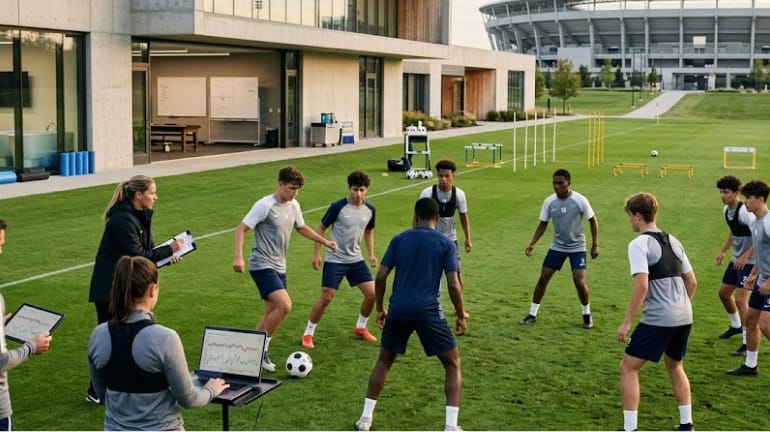
Clubs including FC Dallas, Philadelphia Union, New York Red Bulls, and LAFC invested in scouting networks and professional youth structures. These organizations created direct pathways from youth football to professional competition.
The result has been a larger number of players entering MLS with technical preparation and tactical awareness.
The academy model also gives clubs more control over development. Instead of waiting for players to emerge through college soccer, teams can work with prospects earlier and create personalized development plans.
| MLS Development Area | Impact On Future USMNT Players |
|---|---|
| Academy systems | Earlier professional preparation |
| MLS Next competitions | Higher-level youth competition |
| First-team opportunities | Faster adaptation to professional football |
| Sports science investment | Improved physical development |
This system will continue influencing the 2030 player pool.
Young players entering MLS today could become national team contributors by the end of the decade.
Defensive Development Remains A Major Priority
The next generation of American defenders will face one of the most demanding challenges in international football.
Modern defenders must defend large spaces, contribute during possession phases, and handle elite attackers in one-on-one situations.
Players such as Chris Richards and younger defenders developing through MLS and European clubs represent the changing profile of American center-backs.
The emphasis has shifted from purely physical defenders toward players capable of building attacks and making tactical decisions.
Full-back development has also become increasingly important. Modern systems require wide defenders who can operate as traditional full-backs, inverted midfielders, or attacking contributors.
The 2030 cycle will likely feature defenders who are comfortable participating in multiple tactical structures.
Mauricio Pochettino’s Influence On The Next Generation
The appointment of Mauricio Pochettino created expectations that the USMNT would continue moving toward a more aggressive and tactically flexible identity.
Pochettino’s coaching philosophy has historically emphasized pressing, positional organization, and player development. His influence could be especially significant for younger players entering the national team environment.
A younger generation benefits from having a clear tactical framework. Players who understand their responsibilities within a system can adapt faster at international level.
The next cycle will test how effectively the United States can combine individual talent with collective structure.
The challenge will not only be finding talented players. It will be creating a team capable of competing consistently against the strongest football nations.
The 2030 World Cup Cycle Will Test American Soccer Progress
The development of the next generation represents the strongest indicator of how far American soccer has progressed.
Previous eras often focused on finding individual breakthroughs. The current system is focused on producing groups of players capable of competing at the highest level.
The 2030 World Cup cycle will feature a different type of USMNT squad:
- More players developed through professional academies
- More athletes with international club experience
- More tactical flexibility across positions
- Greater competition for national team roles
The foundation created before and during the 2026 World Cup will determine whether the United States can move from being a developing football nation into a consistent international contender.
The young players emerging today will decide whether the progress of American soccer becomes a temporary moment or a permanent shift in global football relevance.