
What do Shakespearean drama and soccer have in common? Both show us the human side through conflict and art. FC Barcelona is more than a football team—it’s a mirror of culture. It stands for Catalan pride and a socialist dream in sports.
Founded by a Swiss immigrant in 1899, Barcelona has grown into a global force. Joan Gamper’s vision makes real madrid history seem like a royal pastime.
Barça’s story is one of rebellion. Unlike Madrid, which got support from the aristocracy, Barcelona was for the people. It was a symbol of Catalan identity during a time when speaking Catalan was banned.
Today, Barcelona’s motto—més que un club (more than a club)—is both a marketing success and a political statement. Their La Masia academy creates not just football stars but also cultural ambassadors. But can their ideals survive in a world of big money and sponsorships?
We’ll explore how this humble team became a football giant. It’s a story of vision and reality distortion. Get ready for a deep dive into how sports shape history.
Origins and Founding Story
Imagine a Swiss misfit, a leather ball, and a city full of Catalan pride. Joan Gamper didn’t just create FC Barcelona in 1899—he Frankensteined it into existence. He used immigrant hustle and neighborhood rivalries.
While Bayern Munich and Juventus focused on strategy, Barça was born in dockside taverns. Workers debated futbol tactics over vermouth.
Joan Gamper and the Roots of FC Barcelona
Gamper was football’s punk-rock DIY pioneer. He arrived in Barcelona as Hans Kamper, later changing his name. He gathered a team from:
- English expats who missed weekend kickabouts
- Catalan students hungry for rebellion
- Swiss/German immigrants craving community
Their first match was a 1-0 loss. Their first trophy was a copa won with donated jerseys. This wasn’t a club born in a palace, but in the back alleys of Carrer Industria.
Early Years and Club Identity
While Real Madrid aligned with Spanish royalty, Barça became the people’s megaphone. By 1922, their Les Corts stadium echoed with Catalan chants banned elsewhere. Their rise compared to European peers:
| Club | Founding Energy | Early Supporters |
|---|---|---|
| FC Barcelona | Immigrant grit + political defiance | Dockworkers, students, activists |
| Bayern Munich | Gymnastics club spin-off | Munich’s bourgeoisie |
| Juventus | Turin’s industrial elite | Factory owners |
Barça’s crest, with the Catalan flag and St. George’s Cross, signaled regional pride. When Franco banned Catalan, the stadium became a 60,000-seat protest. Mes que un club? More like a cultural bunker with corner kicks.
Key Historical Milestones
Barcelona’s history is not just about winning trophies. It’s about changing the game. From turning farm kids into football stars to changing how the game is played, these barca milestones show why this club is more than a sports team.
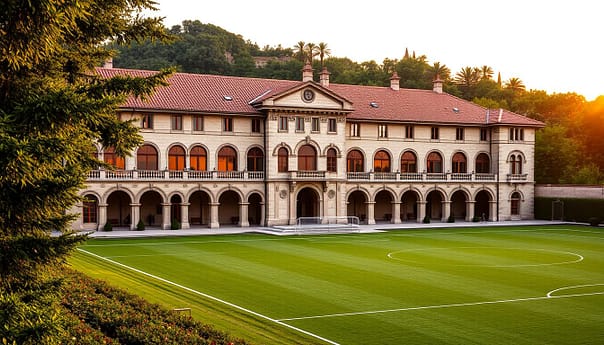
The Rise of La Masia
Imagine Hogwarts teaching football instead of magic. That’s la masia academy. It started in 1979 as a farmhouse. Here, Xavi learned math and Messi’s left foot became magical.
This place wasn’t just for young players. It was where dreams came true. Here, 14-year-olds became players who saw the game in a new way.
The Cruyff Revolution and Tiki-Taka Era
In 1988, Johan Cruyff came to Barcelona. He didn’t just coach; he changed the game. He taught players to pass, not just kick the ball.
His tiki-taka style became Barça’s identity. It was all about passing and strategy, not just physical strength.
| Pre-Cruyff | Post-Cruyff |
|---|---|
| Direct play | Positional chess |
| Physicality | Technical obsession |
| 1 trophy/season | 4 Champions Leagues |
Pep Guardiola later took this style to new heights. In the 2011 UCL final, Barça passed the ball 782 times. It was like a football poem.
Recent Triumphs and Challenges
The 2015 MSN trio (Messi-Suárez-Neymar) was like Barcelona’s Avengers. But then, financial rules hit hard. It was like a Piqué tackle.
- €1.35B debt by 2021
- Neymar’s exit triggered big transfers (Coutinho’s €160M flop)
- La Liga’s strict salary caps forced Messi to leave
But there’s hope. Young players like Gavi and Balde show la masia academy is ready for the next generation. At Barça, every crisis is a chance for rebirth.
Club Management & Ownership
Imagine a Fortune 500 company run by a mix of librarians, poets, and your quirky uncle. That’s FC Barcelona’s way—a democratic test that’s more complex than the U.N. While PSG uses Qatari money, Barça deals with Catalan pride and member votes. It’s like jazz, not spreadsheets.
Political Influence and Socio Model
Barça’s system lets over 140,000 members choose the president. It’s like a Catalan identity manifesto in club management. Elections are filled with Catalan flags, showing the club’s political side.
PSG gets money from the state, but Barça rejects big deals to keep its values. This creates a unique mix of politics and football. Members want Champions League wins and to protect Catalan culture.
Iconic Presidents and Modern Leadership
Josep Lluís Núñez built Camp Nou into a symbol. Joan Laporta (2003-2010; 2021-present) balances politics and signings. They’re not just leaders; they’re cultural custodians.
Modern presidents face tough choices. They must please fans and respect tradition. Laporta’s deals show Barça’s mix of old and new. It’s like flamenco meets the robot dance.
| President | Era | Signature Move |
|---|---|---|
| Joan Gamper | 1899-1930 | Founded club in a newspaper ad |
| Josep Sunyol | 1935-1936 | Martyred during Spanish Civil War |
| Joan Laporta | 2003-2010 2021-present |
Signed Ronaldinho, backed Catalan independence |
Today, leaders face big questions. Can a member-owned club beat state-backed rivals? Should they take money that goes against their values? The answers will shape Barça’s future.
Camp Nou: Past, Present & Future
If stadiums had résumés, Camp Nou’s would be like a Nobel laureate’s. It’s overqualified and full of stories that make historians swoon. From Messi’s incredible plays to the 2017 Remontada, where PSG faced “football terrorism,” it’s seen it all.

Stadium Stories and Upgrades
Opened in 1957, Camp Nou was once a concrete giant. Now, after a $1.5 billion makeover, it’s a marvel. The Espai Barça renovation added a retractable roof and more tech than you can shake a stick at. It’s like the Sistine Chapel, but with Apple’s design team.
Unlike Anfield, Camp Nou’s magic is in its collective gasp. Imagine 99,000 people holding their breath as Gavi nutmegs a defender. It’s pure theater.
| Era | Milestone | Cultural Impact |
|---|---|---|
| 1957-1982 | Original Construction | Symbol of post-war Catalan pride |
| 1982 | World Cup Upgrades | Global spotlight on Barcelona |
| 2026 (Planned) | Espai Barça Completion | Fusing heritage with holographic tech |
The renovations are more than just luxury and Wi-Fi. They’re about keeping a socio-owned gem in a world where money builds stadiums easily. Camp Nou is the people’s colosseum, where every seat says, “This is ours.”
Club Rivalries
Imagine the Cold War, but with soccer cleats: El Clásico divides Spain like no other fixture. It’s not just sports; it’s a clash of ideologies. Catalan independence faces off Spanish centralism in every match.
Every Lionel Messi free kick and Sergio Ramos red card carries the weight of over 100 years of tension.
Galácticos vs La Masia: A Clash of Civilizations
Real Madrid’s history is like a Bond villain’s playbook – they buy the best players and dominate. Their Galácticos era gave us Beckham’s haircuts and Zidane’s moves. But, they often lacked team unity.
Barcelona, on the other hand, focuses on developing local talent through La Masia. They turn local kids into skilled players.
| Barcelona | Real Madrid | |
|---|---|---|
| Philosophy | System > Stars | Stars = System |
| 2017 UCL Comeback | 6-1 vs PSG (Messi) | Back-to-back titles (Ronaldo) |
| Cultural Identity | Catalan Resistance | Spanish Crown |
Barça’s 6-1 win over PSG was more than a comeback. It was a statement against Madrid’s spending. Barcelona showed you can win with pride, not just money.
The numbers tell their own story:
- 128+ official Clásicos played
- 35% of matches decided by 1 goal margin
- 19 red cards in last decade’s fixtures
Today’s matches are filled with history. Ansu Fati vs Vinícius Jr. is more than a soccer game. It’s a battle of ideologies. You’ll need antacids by halftime.
Famous Derbies and Rivalries
Espanyol vs. Barça is more than a game. It’s a clash of politics and passion. While El Clásico gets all the attention, this derby is just as intense. It’s like Game of Thrones, but with soccer and big money.
Espanyol Rivals and More
Espanyol is Barça’s mirror. Founded in 1929, they stand for Madrid’s power in Barcelona. It’s not just about money; it’s about culture and politics.
Milan’s Derby della Madonnina is different. AC Milan and Inter share a stadium but have different fans. Espanyol vs. Barça is more than a game; it’s a battle of ideas.
Here’s why this rivalry lasts:
- Geography as grenade: Their stadiums are just 7 miles apart
- Class warfare: Barça vs. Espanyol’s working-class fans
- Schadenfreude specials: Espanyol’s 2009 win over Barça was huge
Barça needs Espanyol to stay sharp. Without them, they might lose their edge. Espanyol fans see themselves as the underdog, and their 2-2 draw in 2022 was a big win. This derby is more than soccer; it’s about identity.
Season Reviews
If football seasons were Netflix series, Barça’s 2010s run would’ve crashed streaming servers. It’s not just about trophies—it’s about moments that turned soccer into high art. Opponents became bewildered extras. Let’s explore the decades when Barça didn’t just win, but rewrote the playbook.
1980s: Maradona, Chaos, and the Foundation of Greatness
The ‘80s were Barça’s leather-jacket phase—rebellious, messy, and cool. Diego Maradona’s brief tenure (1982-84) was like a meteor: dazzling, controversial, and gone too soon. Yet, this era planted seeds for future dominance:
- Johan Cruyff’s arrival as manager in 1988—the architect meets his canvas
- The 1989 European Cup Winners’ Cup triumph—a appetizer before the 1990s feast
- La Masia’s quiet evolution from dormitory to talent factory
2010s: When Barça Became Football’s Quantum Physicists
Guardiola’s 2008-2012 squad didn’t just play football—they solved it. Xavi and Iniesta moved like chess grandmasters on Adderall, while Messi became the algorithm that broke FIFA’s code. Here are their 2010s barca milestones:
| Season | Trophies | Goals Scored | Cultural Impact |
|---|---|---|---|
| 2010/11 | La Liga, UCL | 95 | Made “tiki-taka” a global verb |
| 2014/15 | Treble | 110 | MSN trio outscored 80% of European nations |
| 2018/19 | La Liga | 90 | Messi’s Panenka vs Betis broke physics |
Of course, even Picasso had off days. Chelsea’s 2012 Champions League ambush—football’s equivalent of stealing the Mona Lisa with a forklift—haunts Camp Nou nightmares. But here’s the twist: Barça’s 2010s dominance was so absolute, their “down years” were just as impressive. They won league titles and Messi hat-tricks that trended harder than TikTok challenges.
Current News & Updates
FC Barcelona’s story is like a Catalan soap opera: money troubles, young stars, and power struggles. While PSG buys stars like Mbappé, Barça relies on its youth academy. Gavi and Pedri are the hope to bring back the team’s spirit.
President Joan Laporta walks a thin line, keeping the club’s spirit alive while following UEFA rules. The renovation of Camp Nou is slow, like a Gaudí project. Transfer rumors are as fast as a Catalan festival.
The club’s social model is its guiding light. Unlike state-backed teams, Barça stays true to Catalonia’s culture. Debates over jerseys and NFTs test this commitment. Can the club make money without losing its soul?
Young players like Ansu Fati and Ferran Torres face huge pressure. Their performances are under constant scrutiny. Real Madrid’s success is a constant reminder of the challenge ahead.
Barça’s journey is far from over. Will the club’s identity win over financial pressures? Can the academy’s talent beat the money of Qatar-backed teams? Get ready for an exciting season.