
Colombia’s return to the FIFA World Cup stage in 2026 has been defined by a tactical identity built around flexibility, defensive stability, and collective decision-making. Under head coach Néstor Lorenzo, the Colombian national team has moved away from depending exclusively on individual brilliance and developed a structure where multiple players can change roles during matches.
The team entered the tournament with established names such as Luis Díaz and James Rodríguez, but its strongest feature has been the ability to adjust against different opponents. Colombia’s unbeaten start at the 2026 World Cup, combined with only one goal conceded before the knockout stage, reflects a balanced approach that combines attacking quality with disciplined defensive organization. FIFA World Cup 2026 Colombia profile highlights the importance of Lorenzo’s squad construction, including a deep midfield group that provides multiple tactical options.
Néstor Lorenzo’s Tactical Philosophy Prioritizes Game Intelligence
Néstor Lorenzo has built Colombia around a principle that every player must understand different phases of a match. Instead of maintaining a single rigid formation, the team frequently changes its positioning depending on whether it controls possession, defends space, or searches for transitions.
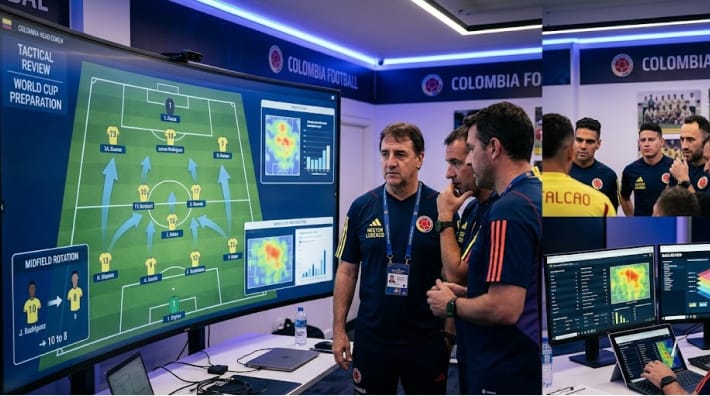
The structure often resembles a 4-2-3-1 formation, but the movements inside that system create different shapes. Full-backs can move higher into attacking areas, midfielders rotate positions, and wide players can operate closer to central zones when Colombia needs more control.
This approach has helped Colombia compete across different environments during the 2026 tournament. The team has played in Mexico, the United States, and Canada, facing changes in climate, travel demands, and opponent styles. Lorenzo has emphasized that adaptability has been essential for maintaining consistency during a tournament with expanded travel requirements.
| Tactical Element | Colombia’s Approach |
|---|---|
| Defensive Structure | Compact lines with controlled pressing moments |
| Midfield Strategy | Multiple players capable of defensive and creative roles |
| Attack Formation | Flexible rotations around wide attackers |
| Match Management | Adjustments based on opponent strengths |
Luis Díaz And James Rodríguez Remain Important, But Colombia No Longer Depends On One Star
Colombia’s previous generations often relied heavily on their biggest attacking figures. The current squad still benefits from elite talent, but Lorenzo has created a structure where contributions come from multiple areas.
Luis Díaz remains the most dangerous attacking outlet because of his acceleration, one-on-one ability, and capacity to create defensive problems on the left side. James Rodríguez continues to provide experience, passing quality, and leadership, especially when Colombia needs control in possession.
However, the difference in 2026 is the supporting cast. Players such as Daniel Muñoz, Richard Ríos, Jefferson Lerma, and Jhon Arias allow Colombia to change its rhythm without losing tactical structure.
This depth became particularly important in a tournament featuring 48 teams and a longer knockout pathway. Squad management has become a decisive factor, and Colombia’s ability to rotate responsibilities has provided an advantage.
For more analysis about how teams are changing their approaches during the expanded tournament, readers can explore World Cup 2026 tactical evolution.
Colombia’s Defensive Balance Became Its Biggest Strength
Colombia’s biggest improvement at World Cup 2026 has been defensive reliability. Historically recognized for producing creative attacking players, the national team has added stronger organization without sacrificing offensive quality.
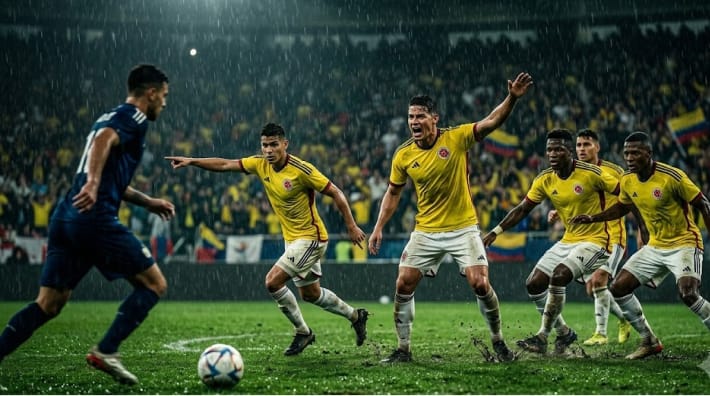
The central defensive partnership has provided stability, with players such as Jhon Lucumí and Dávinson Sánchez offering physical presence and composure during difficult moments. Behind them, goalkeeper Camilo Vargas has benefited from a system that limits clear scoring opportunities rather than relying on constant emergency saves.
The team’s defensive success comes from coordinated movements. Colombia does not always press aggressively for 90 minutes. Instead, the team selects moments to increase pressure, forcing opponents into uncomfortable decisions while preserving energy for attacking transitions.
This tactical maturity has been especially valuable in the knockout format, where small mistakes can eliminate teams immediately. Colombia’s ability to reduce opponent opportunities has allowed its attacking players to influence matches without carrying the entire responsibility.
The Midfield Revolution Behind Colombia’s Flexibility
The foundation of Colombia’s tactical balance is its midfield. Lorenzo selected a squad with numerous midfield options because the modern World Cup requires teams to handle different match situations.
Against teams that defend deeply, Colombia can use technical midfielders to create passing combinations. Against aggressive opponents, the team can rely on physical players who recover possession and accelerate counterattacks.
Richard Ríos has become one of the examples of Colombia’s changing identity. His ability to carry the ball forward, compete defensively, and support attacking moves gives the team another transition option.
Jefferson Lerma provides a different profile, offering defensive protection and experience in high-pressure moments. Together, these midfield options allow Colombia to avoid predictable patterns.
| Player | Tactical Contribution |
| Richard Ríos | Ball progression and transition support |
| Jefferson Lerma | Defensive coverage and midfield balance |
| James Rodríguez | Creativity and final-pass ability |
| Jhon Arias | Movement between midfield and attack |
Colombia’s Adaptability Matches The Demands Of The 48-Team World Cup
The 2026 World Cup has introduced a new competitive environment. With 48 teams participating, tactical preparation has become more complicated because teams face opponents with different playing styles from multiple football regions.
Colombia’s ability to adjust has helped it avoid becoming predictable. The team can slow matches down when necessary, accelerate through wing attacks, or defend deeper depending on the scoreline.
The expanded format also increases the importance of squad depth. Teams reaching the later rounds must manage fatigue, injuries, and travel across North America. Colombia’s tactical flexibility provides options without requiring major structural changes.
The tournament has also demonstrated that successful teams are not always those with the highest possession numbers or the most attacking statistics. Balance between defensive control and offensive efficiency has become a defining characteristic among contenders.
Tactical Adjustments Define Colombia’s Knockout Ambitions
As Colombia advances through the knockout phase, tactical adaptability will remain the foundation of its World Cup campaign. The team’s upcoming challenges require preparation for opponents with different strengths, including organized defensive blocks and high-quality attacking transitions.
Lorenzo’s greatest achievement has been creating a squad capable of understanding different moments of a match. Players recognize when to press, when to protect space, and when to accelerate attacks.
Colombia’s identity at World Cup 2026 is not based on a single formation or one individual performance. It is based on collective interpretation, positional flexibility, and a group prepared to solve different tactical problems.
That balance has transformed Colombia into one of the most complete teams in the tournament and positioned the country as a serious contender during the final stages of the competition.