
In a sport filled with stats, like expected goals and pass completion rates, timing the fastest goals football seems simple. But it’s not. Measuring the “fastest goal” is more about dealing with disputed seconds and debates than using stopwatches.
What marks the start of a game? Is it the referee’s whistle, the first touch, or the ball’s movement? FIFA doesn’t use a stopwatch. We depend on broadcast times or detailed analysis, like for a 2.1-second wonder like Gavin Stokes’s goal. The official system is as reliable as a rainy day in Manchester.
Controversy is common. Take Nawaf Al-Abed’s goal timed at 2.4 seconds for Saudi Arabia. It was a record, but the match was erased from records because of ineligible players. It’s not just about timing; it’s about the legitimacy of the game. For more on the fastest goals, check out the records in association.
This search for the fastest goal is more than just timing. It shows football’s beautiful, yet frustrating, subjectivity. We’re not just counting seconds. We’re exploring the start of a game, where a tiny fraction of time can make a goal legendary or forgotten.
Top 20 fastest goals
When a match starts, some players score before the other team can even react. The list of the fastest goals in football is not just a ranking. It’s about quick thinking and seizing the moment.
This list shows how fast players can react and score. It’s a mix of luck, skill, and being in the right place at the right time. Each goal has its own story of a chance taken.
The Sub-3 Second Club: A Rarified Bracket
This club is the most exclusive in football. Scoring in under three seconds is not just about speed. It’s about being in the right place at the right time.
Goals like Gavin Stokes’s 2.1-second strike for Maryhill are in this club. They are quick and unexpected, like an ambush.
The Controversial & The Voided
This elite group has its controversies. Records are sometimes disputed. For example, Nawaf Al-Abed’s 2-second goal for Al Hilal in 2009 was later voided.
This shows how fast goals can be made or unmade. It’s a mix of skill and official decisions.
The 3-5 Second Barrage
The 3-5 second range is for the quick thinkers. It’s where a long pass meets a striker with great awareness. This is like a quick attack before the defense can react.
The Established League of the Quick
Goals in this range are legendary. Ricardo Olivera’s 2.8-second strike is an example. These goals are high-risk but high-reward.
They turn the kickoff into a real set-piece. It’s a thrilling start to a match.
Beyond 5 Seconds: The “Slow” Fast Goals
To most fans, a goal in under 10 seconds is fast. But in record-keeping, 5-10 seconds is a big difference. Goals like Shane Long’s 7.69-second strike are considered fast.
These goals are about quick pressure and seizing opportunities. They are fast in the game but slow in records.
The Modern Era’s Precision
The game has changed, and so have the fast goals. Today, goals like Rafael Leão’s 6.76-second goal for AC Milan are about precision. It’s a mix of speed and tactical play.
This is the modern fast break. It’s calculated and efficient. It shows how speed and strategy can work together.
Match context analysis
A goal scored in a Sunday league and one in a Champions League semi-final are different. They’re not just about how fast they were scored. They’re about the big moments they happened in. Each goal has its own story, shaped by where, when, and the pressure it was scored under.
The data shows us the fastest goals in football. Damian Mori scored in 3.69 seconds in the Australian NSL. Christoph Baumgartner scored in 6 seconds for Austria. They’re close in time, but their stories are unique. Mori’s goal is a legend in Australia, while Baumgartner’s is a national treasure in Austria.
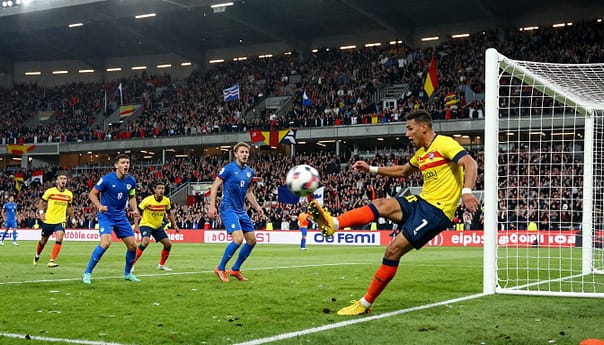
The Weight of the Shirt: From Sunday League to the World Stage
Every goal has its own story, thanks to the context. A 3-second goal in a local game is amazing. But a 6-second goal in a World Cup is historic. The pressure of the moment makes a goal more than just a score.
Goals like Megan Searson’s 3-second strike are huge in women’s football. But the league and stage matter a lot. Goals in different leagues have different stories. A goal in a Serbian 3rd tier is special, while a Premier League goal is legendary.
Amateur Glory vs. Professional Legend
The fastest goals are for everyone. They can happen anywhere, from junior matches to Champions League games. The clock is the same, but the story changes with the context. Mori’s goal is a domestic legend, while Baumgartner’s is a national record.
Analyzing goals shows us their true value. A goal in a cup qualifier is exciting, but in a World Cup semi-final, it’s unforgettable. The pressure and audience make a goal legendary. When we talk about the fastest goals, we’re not just counting seconds. We’re telling stories of pressure, history, and drama.
Kickoff strategies
In football, the kickoff is more than just the start. It’s a chance to win the game quickly. Some teams see it as a way to score fast, using a special kickoff play.
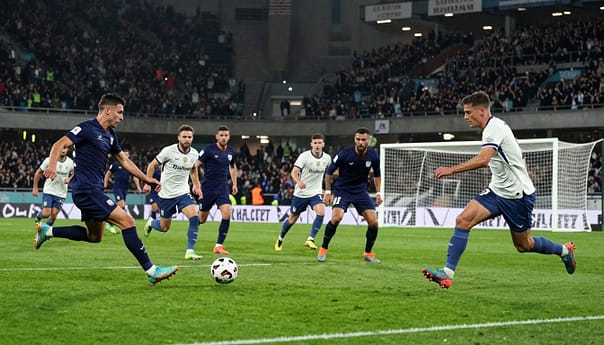
This isn’t just a punt. It’s a precise play, like a chess move. Players like Gavin Stokes and Vuk Bakic scored in just 7 seconds. Their goals were quick, like a “Fool’s Mate” in chess.
The plan is simple but hard to do. It starts with a light pass to a forward. The forward then shoots or passes to a winger. This whole play needs three things:
- Surprise: The other team is not ready yet.
- Precision: The first pass and touch must be perfect.
- Telegraphing: Everyone knows their role in this set-piece.
This strategy is risky but can be very rewarding. If it fails, it can leave you open. But if it works, it’s a big win, showing the opponent they’re outsmarted.
Here are some examples of this strategy:
| Player | Club | Time (seconds) | Note |
|---|---|---|---|
| Gavin Stokes | AFC Wimbledon | 7 | Direct from kickoff, 2004 |
| Vuk Bakic | Partizan | 7 | Scored directly from kickoff |
| Marc Burrows | Cowes Sports | 2-3 | One of the fastest recorded |
This isn’t luck; it’s a strategy. It takes advantage of the usual post-whistle routine. In that moment, the team scores quickly. Players who scored fast didn’t just get lucky. They had a plan to turn a routine moment into a big chance.
So, don’t look away at the next kickoff. You might see the whole game decided before you even sit down.
Timing controversies
The world’s fastest goals are not just about the clock. They’re about the clock-watchers. Football has no official timing system. We use broadcast timers, referee notes, and analysis, each with errors.
This isn’t just about seconds. It’s a mess where a few milliseconds can make a goal the fastest. The timing is so uncertain, it’s like trying to find a needle in a haystack.
The Guinness World Record for the fastest goal has changed many times. It depends on when a match is officially said to start. Nawaf Al-Abed’s 2-second goal was erased because the match was voided.
There’s a big debate: is a 2-second goal in a Sunday league as valid as one in the Premier League? The answer is not clear-cut.
This controversy is not a mistake. It’s a part of football. It’s like Schrödinger’s goal: a record that exists and doesn’t exist at the same time. This is the biggest timing controversy in football’s quest for the fastest goals.