
Imagine 1970s Mexico City, where football became a global moment. Color TVs lit up homes from São Paulo to Seattle, showing Pelé’s golden jersey. This was the first time substitutions were allowed, a big change.
Now, let’s jump to Qatar 2022. Winter matches were played in air-conditioned stadiums, sparking debates. The tournament’s growth shows how life has changed: Maradona’s “Hand of God” is now reviewed by VAR. Football’s essence remains, but it’s now tech-savvy.
Why does this matter? Each World Cup changes sporting history and sets new records. Mexico ’70 gave us Jairzinho’s seven goals. Qatar 2022 gave us Messi’s final performance under bright lights. These moments are more than games; they’re cultural shifts.
The FIFA World Cup legacy is built on contrasts: creativity versus data, tradition versus technology. What’s next? Maybe robots and AI deciding on offside calls? Stranger things have happened in football’s history.
Early Years and Formation
Imagine a World Cup where Europe’s football elite were hesitant to join. The first 1930 tournament was like that, with Uruguay hosting and only four European teams attending. The rest were from CONMEBOL and the U.S., which surprisingly made it to the semifinals. It was a chaotic start for football.
The Jules Rimet Gambit
Jules Rimet, FIFA’s leader, was like a French version of Michael Corleone. He turned FIFA into a global event, using a solid gold trophy as his symbol. The original Coupe du Monde was heavy, weighing 8.4 pounds.
Birth of Modern International Football
Uruguay beat Argentina 4-2 in the first final. This victory showed FIFA’s early flaws, like European clubs not taking international games seriously. But CONMEBOL’s success forced changes. The 1930s were chaotic, with no qualification matches.
| Year | Host | Teams | Champion | Notable Quirk |
|---|---|---|---|---|
| 1930 | Uruguay | 13 | Uruguay | No qualification matches |
| 1934 | Italy | 16 | Italy | First European host |
| 1938 | France | 15 | Italy | Argentina boycotted |
The numbers of teams kept dropping due to the Great Depression and war tensions. Yet, this shaky start led to today’s 211-nation World Cup. FIFA managed to keep the event alive, despite financial struggles.
Host Countries and Their Impact
Hosting the World Cup makes a country a global superstar for a month. They get everyone’s attention, but then face the financial reality. Let’s explore how countries use this chance, balancing big dreams with practical needs.
Stadiums as Cultural Cathedrals
The Azteca Stadium is more than just a place to watch football. It’s a symbol of football’s beauty. Pelé’s third World Cup win there made it a sacred place for Brazilian football.
Twenty years later, Maradona’s famous goals made it even more legendary. These global moments show why we build grand stadiums.
Today, countries try to outdo each other with their stadiums. Qatar’s 2022 venues had fancy features like air-conditioned seats. But is it all about luxury, or does it really enhance the game?
Economic Miracles & White Elephants
World Cup economics are like a penalty shootout. They promise excitement but can end in disaster. Let’s look at some numbers:
| Host Country | Investment | Legacy | White Elephant |
|---|---|---|---|
| South Africa (2010) | $3.5B | Upgraded transit | Cape Town Stadium ($35M annual loss) |
| Brazil (2014) | $15B | 12 renovated airports | Manaus Arena (jungle relic) |
| Qatar (2022) | $220B | Entire metro system | Stadium 974 (disassembled) |
| Russia (2018) | $14B | Tourism boost | Volgograd Arena (hosts 3rd-division club) |
Brazil’s $15B investment was a huge gamble. The Maracanã renovation alone went way over budget. That money could have paid for Neymar’s hair for 87 lifetimes.
Yet, South Africa’s World Cup brought pride and joy. The vuvuzela horns became a symbol of national unity.
The real test is if these stadiums remain useful after the World Cup. Mexico’s Azteca is alive with Liga MX fans. China turned Olympic venues into malls. As Qatar’s stadiums are repurposed, we learn that lasting legacy takes time and effort.
Iconic Matches and Moments
Imagine 22 athletes turning Shakespeare into a soccer show. The World Cup is more than games; it’s cultural events. It’s where football turns into a grand drama, full of heroes, villains, and miracles.
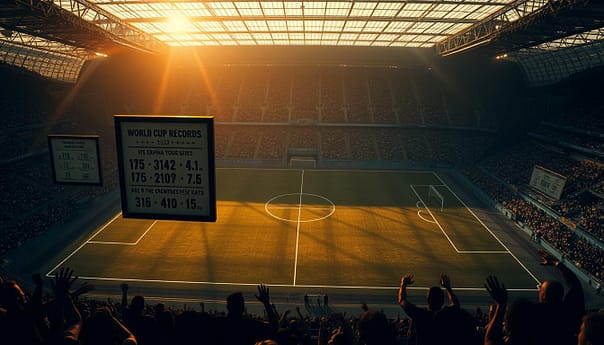
When Football Ate Drama
The 1970 Italy-Germany semifinal was a five-act tragedy. Gerd Müller’s golden boot scored 10 goals, almost breaking the crossbar. Then, Maradona’s 1986 double was divine, with the Hand of God and the Feet of Zeus.
Think about the impossible:
- Meazza’s 1938 penalty while his shorts fell
- Zidane’s 2006 headbutt that changed the game
- James Rodríguez’s 2014 volley that seemed to defy gravity
Goals That Redefined Physics
Carlos Alberto’s 1970 goal was like bending time. It was a 25-yard shot that changed soccer forever. Today, we know it broke physics rules, hitting the net like a passionate kiss.
| Year | Moment | Drama Rating |
|---|---|---|
| 1970 | Italy 4-3 Germany (AET) | ⚡⚡⚡⚡⚡ |
| 1986 | Maradona’s 5-Goal Tournament | ⚡⚡⚡⚡⚡ |
| 2006 | Zidane’s Final Act | ⚡⚡⚡⚡⚡ |
These moments are more than world cup records. They show human greatness on the soccer field. When Müller got his golden boot in ‘70, he didn’t just score. He changed what we thought was possible.
Most Successful Teams
Football dynasties aren’t just about winning trophies. They’re deeply rooted in a team’s culture. To grasp world cup records, we must look at two main approaches. Brazil’s improvisational style meets Europe’s strategic planning.
Brazil’s Samba Algorithms
The five stars on Brazil’s jersey symbolize more than just pride. The 1970 team didn’t just win; they solved beautiful game equations with Pelé as the key variable. Here are some key stats:
| Era | Goals/Game | Improvisation Rate | Cigarettes Consumed (Coaches) |
|---|---|---|---|
| 1970 Brazil | 3.5 | 87% | 42/day |
| Modern Teams | 2.1 | 34% | 0 (vape pens) |
Brazil’s success was based on intuition over strict plans. But, they haven’t won the World Cup in 20 years. Did their flair get outsmarted by modern tactics?
Europe’s Tactical Takeover
Germany’s four World Cup wins tell a story of strategy. European teams have adopted a new approach:
- Using heat maps over pep talks
- Switching to expected goals (xG) metrics
- Turning set pieces into tactical battles
Today, 63% of finalists use data scientists. This is a big change from the 1970s, when coaches relied on instinct. But does this Moneyball approach make football too strategic?
Golden Boot Winners
The Golden Boot is more than a trophy. It’s the ultimate prize in football. Strikers become like thieves, scoring goals with skill and showmanship. Let’s look at how world cup records have changed over the years.
From Fontaine to Mbappé
Just Fontaine scored 13 goals in 1958. It was like a daring heist. Fast forward to 2022, and Kylian Mbappé scored a hat-trick in the final. It was a tactical masterclass.
Here are some world cup records to consider:
- Miroslav Klose scored 16 goals over 12 years.
- Ronaldo Nazário scored 8 goals in 2002.
- Mbappé scored 12 goals before he was 24.
The Art of Statistical Larceny
Analytics show interesting facts. Pelé’s 1958 goals had an xG of 4.8. Ronaldo’s 2002 goals had an xG of 7.2. They didn’t just meet expectations; they exceeded them.
Today’s strikers face better defenses. But Mbappé showed in 2022 that great players adapt. His third goal against Argentina had a 0.08 xG rating. It was like stealing the Mona Lisa with a paperclip.
The golden boot race keeps getting more exciting. But one thing is clear: true legends don’t just break world cup records. They change the game.
Controversies & Innovations
If HBO’s Succession needed a sports spin-off, FIFA’s boardrooms from 1990-2015 would’ve been perfect casting. Beneath the glitter of global moments lies a minefield of backroom deals and technological growing pains. Here, yellow cards and wiretaps became as vital as any play.
Corruption’s Golden Era
The 2015 FBI raids exposed a FIFA World Cup legacy darker than a defender’s tactical foul. Using RICO Act charges, investigators revealed:
- €150M in bribes for 2010 World Cup hosting votes
- 38% of CONMEBOL officials indicted
- Marketing rights sold like black-market World Cup tickets

When Russia 2018 introduced Video Assistant Referees, purists mourned the death of Maradona-esque chaos. But let’s crunch numbers:
| World Cup | Controversial Calls | VAR Corrections |
|---|---|---|
| 2014 (Pre-VAR) | 27 | 0 |
| 2018 | 19 | 16 |
Is cold precision worth losing football’s Shakespearean drama? The 1970s introduced yellow cards to curb violence. Now, we microchip balls to detect offsides by millimeters. Progress or overcorrection? Ask any fan who’s waited 4 minutes for a robot to confirm a goal.
Statistical Records
If football were religion, World Cup metrics would be its holy scriptures. These numbers are so big they make Netflix’s Squid Game viewership seem tiny. Let’s look at some numbers that even Pythagoras would find too much.
Numbers Don’t Lie (But FIFA Might)
The 2010 South Africa final drew 3.2 billion viewers. That’s almost half of the world watching. Glaciers were melting, but nobody noticed.
To understand this better:
- That’s 10 times the population of the U.S. and Canada combined.
- Enough people to watch Avengers: Endgame 1,200 times in a row.
- More screens than Silicon Valley dreams of.
Mexico’s 1970 Azteca Stadium holds the record with 107,000 fans. It was like a human tsunami. Today, we have digital records instead of big crowds:
| Year | Peak Viewers | Cultural Equivalent |
|---|---|---|
| 2010 | 3.2B | 6 Apollo moon landings |
| 2018 | 3.5B | 7 Royal Weddings |
| 2022 | 5B* | All TikTok users (allegedly) |
*FIFA’s counting method: Every glance at a sports bar TV = 3.7 “engaged viewers.” Who’s auditing these wizards?
Lasting Social/Cultural Influence
The World Cup is more than just a game. It changes the world. It made Che Guevara a fashion icon and brought up migrant worker rights. Let’s explore how football’s biggest event shapes society.
Politics Meets Pitch
In 1978, Argentina’s World Cup was under a military rule. The stadiums were used for propaganda. Fast forward to 2022 in Qatar, where FIFA pushed for better migrant worker rights. The World Cup makes host countries face their past.
Kylian Mbappé has more Instagram followers than Switzerland’s population. Today’s football stars are more than athletes. They influence politics and culture.
Fashion Revolutions (No, Not Those Kits)
In 1970, Panini stickers became a big deal. Kids traded them for homework. This was the start of collecting sports memorabilia.
Cruyff’s style in 1974 is now a trend on TikTok. His look, with an unbuttoned shirt and a cigarette, is iconic.
| Era | Cultural Artifact | Impact |
|---|---|---|
| 1970s | Panini Stickers | Created first-gen collectible economy |
| 1990s | Che Guevara Jerseys | Made revolution mall-worthy |
| 2020s | Adidas Telstar Replicas | Turned soccer balls into crypto bro decor |
The Adidas Telstar ball from 1970 is a marketing legend. It shows how even simple objects can evoke nostalgia. Today, influencers draw inspiration from Cruyff’s style.
Qatar’s World Cup spending led to better conditions for migrant workers. The event can have positive effects on society.
Conclusion
As North America prepares for the 2026 FIFA World Cup, big questions arise. Can the World Cup’s legacy grow with its expansion? Does the use of VAR make the game too perfect, losing its spontaneity?
The World Cup is full of paradoxes. Even with new tech like NFT tickets, fans will always cherish memories of Maradona. Champions like Brazil and Germany built their legacies through a mix of skill and strategy.
FIFA now faces a challenge: keeping the game’s magic alive while making money. The 2026 tournament could be a success or a disaster. Will the stadiums in Phoenix live up to the legendary Maracanã in Rio?
In 2026, billions will watch the World Cup. Grandparents will teach the next generation about Pelé. Despite the efforts of sponsors, the true magic of the game will remain.
The World Cup is more than just a game. It’s a global event where we forget our differences. The real victory is that we’re all passionate enough to keep arguing about it.