
Imagine a hall of fame where numbers outshine trophies. Cristiano Ronaldo’s 220 international appearances are more than just stats. They’re endurance poetry written in grass stains and penalty kicks. This isn’t fantasy football; it’s the real-world Olympics of grit.
Why obsess over these achievements? Italy’s 37-match undefeated streak isn’t just a nice round number. It’s the football equivalent of the Borg Collective assimilating European pitches. The Azzurri didn’t just play matches between 2018-2021; they conducted a masterclass in tactical inevitability.
While club competitions sparkle with Champions League glamour, international football measures greatness against existential stakes. Kazuyoshi Miura’s 35-year career arc – from Reagan-era debuts to playing at 56 – proves longevity isn’t about genetics. It’s about outlasting hairstyle trends and entire footballing eras.
We’ll decode why Ronaldo’s 138 international goals matter more than Ballon d’Or counts, using World Cup statistics as our decoder ring. Because when history books get written, they won’t care about your FIFA Ultimate Team rating. They’ll ask how you rewrote the rules of sporting immortality.
Why Records Resonate
Football records are like sacred relics in sports. They are both cold facts and stories passed down through generations. Pele’s three World Cup wins are seen as myths, and Maradona’s 1986 campaign is like a telenovela from the gods. But why do we care? Numbers alone are just math. But numbers with stories become the heart of our culture.
Just Fontaine’s 13 goals in 1958 are more than just a record. They are a challenge to Mbappé before every Euros. And Buffon’s 500+ clean sheets are not just stats. They are Italy’s comfort during penalty shootouts. These records are not just facts; they are emotional algorithms that touch our hearts.
| Player | Achievement | Cultural Metaphor | Lasting Impact |
|---|---|---|---|
| Pelé | 3 World Cup titles | Football messiah complex | Brazil’s eternal swagger |
| Maradona | 1986 ‘Hand of God’ | Rebellion personified | Argentina’s underdog blueprint |
| Fontaine | 13 goals (1958 WC) | Phantom of ‘58 | France’s unfinished business |
| Buffon | 500+ clean sheets | Italian fortress myth | Euro records as therapy |
Moneyball meets Homer’s Odyssey here. Analytics show us how records were made. But myths tell us why they matter. The FIFA World Cup doesn’t just make heroes. It creates gods with great endorsement deals.
Today’s players are not just chasing records. They are fighting against history. When Mbappé looks at Euro records, he sees Fontaine’s legacy. This is the power of records: they turn athletes into legends and games into time travel.
Top International Appearances
Cristiano Ronaldo’s 220 caps get a lot of attention. But soccer’s true iron men are often overlooked. They play in places like Cairo and Kawasaki, facing challenges like political changes and new tactics.
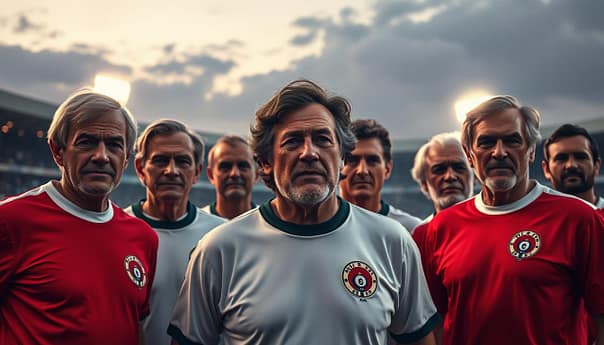
The Iron Men Club
Ahmed Hassan played for Egypt 184 times. He outlasted four AFCON-winning campaigns. His secret? He stayed fit until 36, while others retired early.
Landon Donovan played for the U.S. 157 times. Was he overworked or underused? It depends on who you ask.
| Continent | Player | Caps | Career Span |
|---|---|---|---|
| Africa | Ahmed Hassan | 184 | 1995-2012 |
| Asia | Kazuyoshi Miura | 89* | 1990-present |
| Europe | Cristiano Ronaldo | 220 | 2003-present |
*Miura’s cap count would rival Ronaldo’s if Japan hadn’t bizarrely excluded him from squads during his prime—a decision as logical as serving sushi at a steakhouse.
Kazuyoshi Miura’s Ageless Wonder
At 57, “King Kazu” is playing professionally. His 39-year career has seen:
- The fall of the Berlin Wall
- Seven U.S. presidents
- Three generations of FIFA games
Yet, Japan’s original soccer icon only earned 89 caps. Why? The JFA once favored European players. Miura became Asia’s national team legend without the cap count, showing endurance is about more than just playing time.
Want to see more century-mark players? Check out this list of soccer’s most durable stars.
Leading Goalscorers
Scoring records are more than just numbers. They show the culture of a place. In Europe, strikers aim for precision. In South America, goals are like art.
Clinical Finishers Through Eras
Goalscoring has changed over time. Cristiano Ronaldo has 138 goals, showing his skill and consistency. Ali Daei scored 109 for Iran, showing the growth of Asian football.
Messi has 106 goals for Argentina. He combines creativity with precision. European strikers are like surgeons, always aiming for perfection.
But in South America, goals are different. Neymar can turn defenders into dancers before scoring. This is the art of CONMEBOL.
South America’s Scoring Pantheon
The Copa America is a place where strikers show their skills. Derbies like Boca vs River Plate make players better under pressure. These games are about flair and goals.
| Player | Goals | Style | Era |
|---|---|---|---|
| Pelé | 77 | Acrobatic volleys | 1957-1971 |
| Messi | 106 | Dribble-hypnosis | 2005-present |
| Ronaldo | 62 | Power acceleration | 1994-2011 |
| Suárez | 68 | Predatory instincts | 2007-present |
South America’s greats are unpredictable. European strikers follow systems. But CONMEBOL’s finishers break them.
Ali Daei’s record stood for 19 years. It shows brilliance knows no borders. His goals say: “Goals are universal, but style? That’s where cultures diverge.”
Historic Unbeaten Runs
Imagine a team so unbeatable, even gravity pauses when they defend. Tom Brady’s Patriots built an NFL dynasty. International soccer teams, on the other hand, rewrite history with tactical battles at 90 mph. Let’s explore how league format innovations and tactical changes made losing almost impossible.
Invincibility Complex
What makes a streak truly legendary? Spain’s 35-game run (2007-2009) was more than just tiki-taka. It was a form of psychological warfare. Opponents felt they were already losing 1-0 before the game even started.
Fast forward to Italy’s 37-game streak (2018-2021). Manager Roberto Mancini combined Euro records-setting defense with creative attacks. Their secret? Valuing clean sheets like Bitcoin – they hoarded them, and their value soared.
Italy’s 37-Game Masterclass
Imagine Giorgio Chiellini playing through a torn bicep like it’s a minor cut. Italy’s streak was a Renaissance fresco painted with slide tackles and traps. Mancini’s 4-3-3 formation was mathematically perfect, making it endlessly replicable.
Compare this to the 2017 USMNT’s CONCACAF collapse. Their World Cup qualification vanished faster than a Miami rainstorm. Italy made invincibility look effortless; others made it seem like rocket science.
| Streak Metric | Italy (2018-2021) | Spain (2007-2009) |
|---|---|---|
| Duration | 3 years | 2 years |
| Matches Played | 37 | 35 |
| Goals Conceded | 14 | 12 |
| Trophy Haul | Euro 2020 | Euro 2008, 2010 World Cup |
Modern league format innovations also played a role. UEFA’s Nations League made friendlies more competitive. Italy’s streak included 12 Nations League matches, turning their run into mythological. Spain’s golden era coincided with Champions League rule changes, favoring technical midfielders. Coincidence? Ask the trophy cabinets.
Team/Player Case Highlights
Football’s record books aren’t just about golden trophies. Sometimes, they’re written in red ink. Let’s look at two extremes: a goalkeeper who turned defense into poetry and a midfielder whose tackles were like abstract art.
Buffon’s Clean Sheet Opera
Gianluigi Buffon didn’t just save shots; he conducted symphonies of calm. With 500+ clean sheets, his career is like a Renaissance fresco. He anticipated strikers’ moves like a chess master playing six games at once.
Bedoya’s Red Card Ballet
Alejandro Bedoya is the Jackson Pollock of disciplinary records. His 46 career red cards are not just mistakes. They’re bold strokes on football’s canvas. Yet, AFCON’s 2017 showed even chaos can be tactical.
| Statistic | Buffon | Bedoya |
|---|---|---|
| Career Clean Sheets | 512 | N/A |
| Red Cards Received | 2 | 46 |
| Tournament Impact | World Cup Winner | AFCON Discipline Case Study |
The Conference League is football’s newest lab. Analysts track new metrics like “progressive fouls” and “high-intensity shithousery”. Bedoya’s artful recklessness now has its own column.
Are we romanticizing bad behavior? Not really. AFCON’s 2017 champions showed us that even disciplinary records tell stories. Sometimes, a red card paints a bigger picture.
Statistical Snapshots
Let’s explore numbers that challenge our understanding of the world. Football’s records are not just stats. They are a window into human absurdity.

Numbers That Defy Logic
Messi scored 91 goals in 2012, a feat that defies math. That’s 1.6 goals per match for 365 days. To compare, Bitcoin’s 2017 price surge was 1,318%.
Messi’s scoring efficiency was a staggering 1,900% ROI. It’s like he scored every other minute.
From 91 Goals to 96m Wonders
Tom King’s 96-meter goal in 2021 was a joke. It was physics playing a prank. Imagine SpaceX landing a rocket sideways during a hurricane.
Now, let’s look at Copa America’s goalscoring economics:
| Metric | Copa America | Premier League |
|---|---|---|
| Goals per $1M salary | 0.8 | 0.3 |
| Hat-tricks per tournament | 4.2 | 1.7 |
| % of goals under 20mph | 62% | 41% |
Mohd Al-Abed scored in 2.4 seconds in 2017. That’s quicker than:
- The average TikTok scroll
- Elon Musk deleting a tweet
- A New Yorker’s “I’m walkin’ here!” reflex
These aren’t just oddities. They’re glitches in football’s matrix. When World Cup stats start to look like quantum physics, we’re in the Twilight Zone of sports analytics.
Impact on the Modern Game
Football has changed a lot, thanks to data. Managers now use stats like xG and pass completion rates. This started with simple notes but now guides decisions like Taylor Swift’s Easter eggs.
The FIFA World Cup is more than just winning. It’s about how old games shape new strategies. Hungary’s 1950s scoring secrets helped Germany’s tactics.
Data’s Tactical Revolution
Spain’s tiki-taka evolved into a smarter game. It’s now called “possession with purpose”. This makes Cruyff proud.
Belgium’s golden team set a high standard. Their 2.3 key passes per 90 minutes is now a goal. Coaches use heatmaps like tarot cards, even benching stars.
Youth Development Reimagined
Academies are now “soccer labs”. Kids are scouted for their xT, or expected trophies. Portugal’s focus on Cristiano Ronaldo’s yoga is about bio-mechanical optimization.
The World Cup legacy has changed. It now includes:
- AI-powered talent ID systems scanning 8-year-olds
- Wearables tracking sleep patterns like CIA surveillance
- Neural networks predicting career arcs better than horoscopes
This isn’t your grandpa’s football. It’s Moneyball in cleats, where every EURO record is turned into a tactical code. The big question is: Will algorithms write better love letters to the game than Maradona’s left foot?
Conclusion
Football’s records in national team competitions are more than just numbers. They are like time capsules that tell us stories. Brazil’s five World Cup wins and Italy’s 44-year wait for a title are tales that speak volumes.
The numbers tell us more than we can imagine. 172 goals in Qatar 2022 didn’t just break records. They changed the game forever.
Look at how the tables have turned. Kylian Mbappé has already scored 12 World Cup goals. This makes him the fastest predator after Miroslav Klose’s 16. Jamal Musiala’s EURO records are like watching AI learn to dribble in seconds. They are not just athletes; they are algorithms in cleats.
What’s next? Will EURO tournaments be streamed in VR? Will goalkeepers be replaced by blockchain-certified NFTs? The game’s equations never balance, and that’s what makes it so exciting.
For every Messi with 26 World Cup appearances, there’s a Ronaldo redefining gravity at 39. The game’s beauty lies in its contrasts. Cold data meets hot-blooded chaos.
We’re left with math that breathes. Unbeaten streaks that defy logic. Clean sheets that play symphonies. These records are not just numbers; they are flaming arrows shot into the future.
Now, if you’ll excuse me, Twitter’s waiting to hear why your cousin’s beer-league stats totally count.