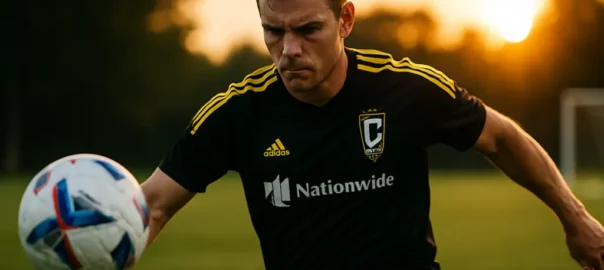
Columbus Crew players reached the final stage of the 2026 U.S. Open Cup with a run shaped by summer arrivals, goalkeeper stability, and squad depth. As of October 20, 2026, the final against St. Louis CITY SC was scheduled for October 21, 2026, after Columbus defeated Orlando City SC in the semifinal on September 17, 2026.
The semifinal offered the clearest picture of how the Crew’s cup campaign had changed by late summer. Josef Martínez, Santiago Rodríguez, and Brais Méndez all played direct roles in a decisive match, while Nicholas Hagen’s minutes in goal gave the side continuity across every round from the Round of 32 through the semifinal.
That combination matters because Columbus did not rely on one narrow match script. The run included early-round production from players who later moved out of the squad, new attacking options who arrived during the season, and midfielders who supplied minutes without always appearing on the scoresheet. For a related match-by-match treatment of the run, see the site’s Columbus Crew Open Cup final run profile.
How Columbus Crew Players Shifted The Cup Run
Columbus Crew Players In The Semifinal
The semifinal against Orlando City SC on September 17, 2026, became the reference point for the Crew’s reshaped attacking group. Martínez scored in the ninth minute, assisted by Rodríguez, for his first goal for Columbus. U.S. Soccer’s match report noted that Columbus defeated Orlando City SC to reach the final and host the October decider, with Martínez’s early goal setting the match direction U.S. Soccer semifinal report.
Martínez had joined Columbus in early August 2026, making the timing of his goal significant beyond the scoreline. The research record notes that it was only his fifth start for the Crew during this cup run. It also matched his personal high against Orlando, bringing him to 11 all-time goals against that opponent, including goals scored earlier in his career with Atlanta United.
Rodríguez’s role in the same move was just as important for the way Columbus built attacks. The assist was his first for the Crew, and it counted as his third goal contribution in four starts. These Columbus Crew players gave the side a different final-third profile from the one that had carried earlier rounds, turning a semifinal into a snapshot of roster change.
Brais Méndez And The Second Goal
Brais Méndez added the second goal in the 52nd minute against Orlando, finishing a through ball from Rodríguez. Columbus’ own coverage described Méndez’s Open Cup final build-up and noted the momentum around the side after the Hell is Real match, with the midfielder’s contribution arriving in his first Open Cup appearance for the club club coverage.
The research record lists that goal as Méndez’s fifth of the season in all competitions, with 13 MLS matches referenced in the same context. His full 90-minute performance in the semifinal gave Columbus another senior attacking midfielder capable of connecting possession to penalty-area action.
The Crew’s semifinal goals were not isolated moments. They reflected a match plan in which Rodríguez supplied the final pass twice, Martínez attacked the box early, and Méndez arrived to convert a second-half chance. Columbus entered the final with a forward line strengthened by players who had not been part of the club’s full cup pathway from the opening round.
Semifinal Roles That Sent Columbus Through
Rodríguez As A Connector
Rodríguez’s two-assist semifinal gave Columbus a central creative thread. The first assist found Martínez after only nine minutes, giving the Crew a lead before Orlando could settle. The second released Méndez for the 52nd-minute goal, giving Columbus control at a stage when cup ties often become more open.
His production also framed the broader change in the squad. Summer signings can take time to fit, especially in knockout competition where training time is limited by league fixtures. Rodríguez’s early goal contributions suggested that Columbus had found a useful connection between midfield possession and the final line.
Martínez As A Cup-Ready Forward
Martínez’s goal had value because of both timing and profile. Columbus had a forward with a strong history against Orlando, and he delivered before the match reached its first tactical reset. A ninth-minute goal can alter a knockout match because it forces the trailing team to take more risks while protecting the leading side from chasing the game.
For Columbus, the strike also carried internal value. A player who arrived in early August scored his first Crew goal in a semifinal, in only his fifth start during the cup run. That is the sort of contribution that changes how a final roster is read: not simply by minutes accumulated, but by who can decide a knockout match.
The table shows why the final run cannot be reduced to one scorer. Columbus moved through the competition with different players carrying different phases of the campaign.
Depth, Goalkeeping, And Midfield Balance

Hagen’s Full Cup Workload
Nicholas Hagen’s role stands apart because he played every minute of Columbus’ four U.S. Open Cup matches before the final: Round of 32, Round of 16, quarterfinal, and semifinal. The research record credits him with 360 minutes, two goals allowed, nine shots on target faced, and seven saves. That equates to a 0.50 goals-against average per 90 minutes and a save percentage near 77.8 percent.
Goalkeeper continuity can be especially valuable in cup competition. Rotations are common, but a consistent goalkeeper helps organize set pieces, defensive spacing, and rest-defense decisions. Hagen’s full workload gave Columbus one stable reference point while other areas of the squad changed during the summer window.
Midfield Minutes Beyond The Scoresheet
Not every major cup contribution appears as a goal or assist. Sékou Tidiany Bangoura featured in three matches, started all three, and totaled 251 minutes. The research record credits him with a plus-seven goal differential while on the field and about 2.8 shots per 90 minutes in the competition, despite no goals or assists.
Nəriman Axundzadə and Taha Habroune gave Columbus more midfield cover. Axundzadə played 243 minutes over three starts and was part of a plus-seven goal differential. Habroune played 227 minutes across four matches, including two starts, and added to the club’s attacking midfield options.
Marcelo Herrera’s defensive minutes also deserve mention. He logged 254 minutes across four Open Cup matches, with three starts and one substitute appearance. The research record lists a plus-six goal differential during his time on the field, which fits the broader picture of a side that protected matches while still rotating.
Hugo Picard led Columbus in Open Cup scoring with four goals before his August 2026 loan to Troyes. His role is a reminder that a cup finalist’s path can be shaped by players who are no longer available for the final itself. Columbus used 31 different players in the competition before the final and received goal contributions from 15 different players, based on the research record through the semifinal.
- Early-round scoring came from a wider squad, including Picard’s four goals before his loan.
- Late-round attacking production shifted toward Martínez, Rodríguez, and Méndez.
- Goalkeeper continuity came from Hagen’s 360 minutes across the four matches.
- Midfield depth came from Bangoura, Axundzadə, Habroune, and others who supplied minutes without dominating the score sheet.
The network, known for a diverse range of publications, also runs CAD CAM Net, which focuses on different topics.
Columbus Crew Players And The U.S. Open Cup Final
The final against St. Louis CITY SC was scheduled for October 21, 2026, giving Columbus a chance to turn a varied cup run into a trophy. The evidence from the semifinal points toward a squad shaped by more than one player type: a veteran forward in Martínez, a connector in Rodríguez, a finishing midfielder in Méndez, a steady goalkeeper in Hagen, and a set of midfield and defensive contributors who helped carry earlier rounds.
The Crew’s run also shows how cup football can reward squad breadth. A league campaign often highlights repeat starters and season-long patterns. A knockout run can depend on who is available on a specific date, who adapts quickly after arrival, and which role players keep matches stable long enough for attacking quality to decide them.
For Columbus, the story before the final is clear enough without adding claims beyond the record. Martínez scored his first Crew goal in the semifinal. Rodríguez created both semifinal goals. Méndez converted in his first Open Cup appearance for Columbus. Hagen played every minute of the campaign before the final. Behind them, the club’s wider group supplied minutes, goals, and positional cover across four rounds.
Those facts explain why the Crew entered October 21, 2026, with a final squad defined by recent additions and by the foundation laid earlier in the tournament. Columbus did not reach the U.S. Open Cup Final through a single figure. It arrived there through a changing group that kept producing at the right moments.