
Imagine a league where factory whistle echoes compete with chants from 80,000 fans. A single match can change power dynamics faster than a Game of Thrones finale. Welcome to Germany’s top-flight football circus – a cultural institution that transformed from gritty industrial battleground to global sports phenomenon.
This isn’t just football. It’s working-class poetry performed in cathedrals of concrete and steel, where underdog stories matter. While Premier League oligarchs count their oil barrels, the Bundesliga offers rich narratives that would make a Netflix showrunner blush.
We’ll explore the Bavarian bluebloods, Bayern Munich, who treat silverware like IKEA furniture. They have an eternal dance with Borussia Dortmund, the Ruhr Valley rebels. Think Yankees-Red Sox drama, but with more bratwurst and yellow wall choreography. We’ll also look at title races tighter than Oktoberfest lederhosen and derbies that turn neighbors into sworn enemies.
Stick around. By the time we’re done, you’ll see why this league makes Serie A’s “dramatic finales” look like community theater.
Why Bundesliga Was Created
Imagine trying to unite a fractured nation with football. That’s what West Germany did in 1963 with the Bundesliga. Unlike England’s Premier League, which came from money fights, Germany’s top league was born from Cold War needs. It’s a rare case where politics made sports better.
The league was more than just football. It was a way to bring Germany together. After the war, the country needed something to unite it. Football, with its heroes and shared moments, was the answer. The new league format innovations united the country, creating a unique form of “soccer diplomacy.”
The Bundesliga’s start was not just about fairness. It set the stage for future giants. The league started with 16 teams, including big names and newcomers. Who could have guessed Bayern Munich would win so many titles?
England’s Premier League, on the other hand, was all about money. German clubs focused on healing the nation. Today, Bayern Munich’s dominance is like a royal dynasty.
Top Clubs: Bayern, Dortmund, More
German football is more than just bratwurst and beer halls. It’s a world of corporate battles for the top. The Bundesliga’s fair structure means three clubs often lead the way. Let’s look at these giants.
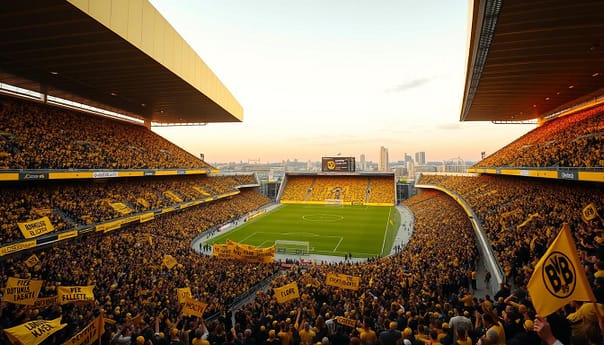
The Bavarian Juggernaut
Bayern Munich is like Amazon Prime: efficient, sometimes hated, but always winning. They’ve won 32 league titles, including 11 in a row. Their success comes from a smart business model.
- Poaching top players (like Lewandowski and Goretzka)
- Securing huge commercial deals
- Spending over €100M a year, while others ask for salary caps
But their dominance also gets them criticized. A Frankfurt fan once said: “Supporting Bayern is like cheering for ChatGPT in a poetry contest.”
Ruhr Valley Royalty
Borussia Dortmund is like the punk rockers to Bayern’s classical music. They’ve won 5 Bundesliga titles and have the Yellow Wall, Europe’s biggest standing terrace. Their €200M revenue goes to young stars like Bellingham and Haaland.
But Dortmund’s passion doesn’t mean they’re poor. When they play Bayern, it’s like David vs. Goliath. But Dortmund has an 80,000-strong choir and a €500M value.
| Club | Bundesliga Titles | UCL Wins | 2023 Revenue |
|---|---|---|---|
| Bayern Munich | 32 | 6 | €800M |
| Borussia Dortmund | 5 | 1 | €420M |
| Bayer Leverkusen | 0 | 0 | €310M |
Bayer Leverkusen is often called the “Neverkusen” because of their runner-up finishes. They’re funded by a pharmaceutical company but haven’t achieved much. Bayern uses them as a warning to their young players.
Relegation and Promotion Drama
If Hollywood made a movie about German football’s second division, it would be too wild. The 2.Bundesliga is like a gladiator arena. Teams need skill, luck, and desperation to survive.
Hamburg SV’s 2018 relegation was a huge shock. They had been in the top league for 55 years. Their “Nordderby” ego crashed into reality. They became known as the “permanent elevator club” for their ups and downs.
Hertha Berlin’s 2023 financial disaster is another story. They lost €78 million a year. Their relegation was a big lesson in bad money management.
Why do American fans care? The 2.Bundesliga drama is intense. Teams fight to stay afloat, not just for European spots. One bad season can destroy a team’s history, like Kaiserslautern’s fall.
The numbers show the truth:
| Club | Relegations | Promotions |
|---|---|---|
| Hamburg SV | 1 | 0 |
| Hertha Berlin | 3 | 2 |
| Schalke 04 | 2 | 1 |
This isn’t just sports – it’s a survival show. Every season brings new surprises. No script is needed for the drama in the 2.Bundesliga.
Der Klassikers and Fiercest Rivalries
German football rivalries are more than games. They show regional pride, old grudges, and sometimes, too much excitement. In these matches, 22 players act out dramas of class and geography.
When Prussia Meets Bavaria
The Klassiker between Bayern Munich and Borussia Dortmund looks like a fancy car ad. But don’t be fooled by the Allianz Arena’s flags. This rivalry is full of real sports tension. They’ve won 27 titles together, score 4-3 on average, and have a combined squad value of €1.2 billion.
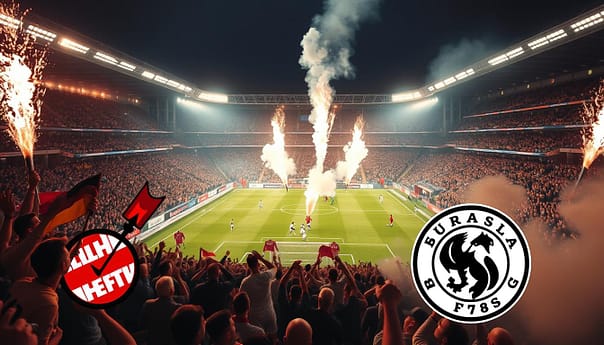
The Revierderby between Schalke and Dortmund shows Germany’s true football passion. It’s like a battle between the Ruhr Valley’s industrial workers. This rivalry is about miners versus steelworkers, with blue collars facing off against slightly darker ones. The numbers speak for themselves:
| Metric | Der Klassiker | Revierderby |
|---|---|---|
| Average Attendance | 81,365 | 62,271 |
| Pyrotechnic Incidents (2023) | 3 | 17 |
| Social Media Buzz | #1 Trending | Local News Headlines |
While Der Klassiker gets all the marketing love, true fans enjoy Hamburg’s culture derbies. St. Pauli’s punk fans face off against Hansa Rostock’s Baltic hardliners. Scarves here are more than fashion; they’re symbols of punk and post-reunification feelings.
Greatest Players & Legends
If the Bundesliga were a Renaissance painting, its legends would be the vibrant brushstrokes that define its legacy. Some strokes are delicate, others bold, but all are unforgettable. Germany’s top league has given us icons who’ve shaped football’s DNA.
Kaiser to King Kahn
Franz Beckenbauer didn’t just play football—he curated it. He was the original libero, moving like a chess grandmaster. His defense was like avant-garde performance art.
Lothar Matthäus had a career like a rockstar’s memoir. He played in five World Cups, bringing endless drama. His midfield presence was as sharp as a Berlin winter.
Then came Oliver Kahn. He redefined goalkeeping as psychological warfare. His 2001 Champions League final performance was like Shakespearean tragedy with gloves. Bayern’s 11-1 win over Dortmund in 1971? Goalkeeping standards have evolved a lot.
Modern Maestros
Robert Lewandowski’s 2014 move to Bayern was like football’s Cuban Missile Crisis. Dortmund fans are haunted by it. He didn’t just score; he conducted symphonies with his left foot.
Manuel Neuer turned goalkeeping into a 360-degree art form. He made goalkeeping look like a 360-degree dance. Who needs defenders when you have a human drone patrolling the box?
| Player | Era | Signature Move | Cultural Impact |
|---|---|---|---|
| Franz Beckenbauer | 1960s-70s | Elegant libero sweeps | Redefined defensive artistry |
| Lothar Matthäus | 1980s-90s | Rocket-powered tackles | Midfield dominance personified |
| Oliver Kahn | 1990s-2000s | Psych-out stare downs | Goalkeeping as theater |
| Robert Lewandowski | 2010s-present | 5-goal hauls | Strikeronomics 101 |
Today’s Bundesliga stars walk a tightrope between tradition and innovation. They’re not just athletes—they’re national team legends writing new chapters in a story that began with Kaiser Franz’s first elegant pivot.
Statistical Leaders
Numbers don’t lie, but in the Bundesliga, they gossip. Modern football analysis says expected goals and pass completion rates tell all. But in Germany, stats reveal a tale of Bavarian efficiency and financial might.
Bayern Munich’s 1977/78 season was a goal difference of +64. It was like economic warfare. Today, they spend more on left-backs than some teams do on entire squads. It’s not just financial doping; it’s a long-term advantage.
Gerd Müller scored 40 goals in 1971/72. He ate more bratwurst than Haaland does protein shakes. Yet, he outscored modern xG models easily. Our table shows the difference:
| Player | Goals/Season | Diet | xG Quirk |
|---|---|---|---|
| Gerd Müller (1972) | 40 | Pork-heavy | Defied angles |
| Robert Lewandowski (2021) | 41 | Sports science | Precision machine |
| Erling Haaland (2020) | 27 | 6 meals/day | Header paradox |
Statistics in modern football analysis often miss the mark. xG models love to mock Haaland’s headers. How do you measure Neuer’s incredible saves? The Südkurve’s energy? Some moments are beyond algorithms.
Bayern Munich’s stats are always impressive. Their 32 Bundesliga titles prove it. But remember, true German football magic happens when stats fail and chaos reigns. Prost to that.
Spectacular Comebacks
Bundesliga matches are like novels with amazing twists. The Revierderby between Borussia Dortmund and Schalke is a perfect example. It’s a game where leads can quickly turn into losses.
In 2008, Dortmund lost 3-2 at home, despite being up 2-0. Schalke’s Kevin Kuranyi scored twice, turning the game around. This was a huge upset for Dortmund.
In 2017, Anthony Modeste scored a goal in the 95th minute. This goal was a huge surprise for Dortmund. It left fans stunned and the stadium in silence.
So, what makes these derby games so intense? Let’s look at the reasons:
| Year | Match | Turning Point | Aftermath |
|---|---|---|---|
| 2008 | Dortmund vs Schalke | Kuranyi’s double strike | 9-game winless streak for BVB |
| 2017 | Schalke vs Dortmund | Modeste’s header at 90+5′ | Coaches aged 7 years in 90 minutes |
After the games, managers looked like they’d aged years. Dortmund’s Peter Bosz looked like he’d been through a lot. Schalke’s Domenico Tedesco seemed to have aged quickly too.
These matches show that in the Ruhr Valley, football is a show. It has heroes and unexpected twists. The real question is, can any lead be safe when pride takes over?
Conclusion
Germany’s top league is a strong stand against money and spreadsheets in football. The Champions League is like a fancy dinner, but the Bundesliga is more like a backyard BBQ. Here, Bayern Munich’s big money meets Union Berlin’s hard work, and Borussia Dortmund’s fans sing louder than any stock market.
German football is all about contrasts that marketers can’t match. RB Leipzig’s energy drinks battle Schalke’s mining roots. Wolfsburg’s car makers face off against Freiburg’s green team. The magic is in the upsets, where big money teams lose to underdogs and everyone cheers.
This realness isn’t by chance. The 50+1 rule keeps power with fans, not just big money. Fan protests here actually change things, like when Bayern fans stopped Champions League reforms. The Bundesliga’s secret is that it puts cities first, not just companies.
Forget about FIFA’s fake games. In Germany, fans do real, wild things. Thomas Müller’s jokes and Jamal Musiala’s TikTok are part of the fun. Football here is a conversation, not just a game. The big question is, will other leagues follow this example?