
St. Louis Tactics became a useful shorthand for explaining how St. Louis CITY SC turned a strong 2026 run into one of the major unbeaten stretches in MLS history. By September 9, 2026, a 2-2 draw at Portland Timbers had extended CITY’s run to 15 matches across all competitions, with the club reporting that the league portion had reached 14 regular-season matches, the second longest unbeaten run in MLS history, in the detailed match report.
The streak was not explained by one attacking player or one defensive statistic alone. The available research points to a structure associated with head coach Yoann Damet, appointed in early 2026, that used central density, pressing, transition speed, and width at different moments. The label most often attached to the setup is a ball-oriented 3-diamond-3, though that should be read as an analytical description of spacing and roles rather than a fixed team-sheet formation.
Another marker came on August 22, 2026, when St. Louis beat Houston Dynamo 2-1 at home. That result moved the club to 12 unbeaten in all competitions and 11 straight MLS regular-season matches without defeat, described by the club as its best league run of 2026 in the Houston match report.
St. Louis Tactics And The 3-Diamond-3 Shape
The tactical frame of the streak began with the back line and the midfield diamond. Three center-backs gave St. Louis a platform to build with security, while wingbacks or wide outlets could stretch opponents who packed the middle. In front of the defenders, Chris Durkin was described in the research as the single pivot, with Alex Mățan and Daniel Edelman operating as dual number eights who helped with ball progression and defensive support.
St. Louis Tactics In The First Line
In St. Louis Tactics, the first line was not just a defensive insurance policy. The three-center-back base allowed the team to circulate possession across the width of the pitch before playing into midfield. That mattered because a central diamond can invite pressure. If opponents stepped forward to block Durkin or the number eights, St. Louis could move the ball outside and attack through width.
The shape also helped CITY remain compact after losing the ball. A three-man rest defense, supported by a pivot and two eights, reduced the space opponents could attack through the middle. That balance is central to any long unbeaten run: a team must create enough chances to win, but it must also keep bad possessions from becoming open-field chances against.
Why The Pivot Mattered
The single pivot role was especially significant because it connected the back three to the attacking diamond. Durkin’s positioning gave the center-backs a central passing option, and it gave the eights a reference point when they stepped higher. When the structure worked, CITY could draw opponents inside, create pressure on the ball, and then switch play into wider lanes.
That did not mean every attack had to be slow or possession-heavy. The same setup could support direct transitions. Once St. Louis regained the ball, the eights and wide players were already positioned to run forward, while the back three remained available behind the play. The unbeaten run was built on that mix: stable spacing before the turnover, quick attacking after it.
Pressing, Width, And Central Control
The research describes Damet’s public messaging around intensity, pressing, transitions, and shared understanding among starters and substitutes. Those themes fit the tactical evidence from the run. CITY did not rely only on holding possession; it used pressure and compact spacing to make opponents play in uncomfortable areas.
Central Pressure With Wide Escape Routes
The central overload was one of the clearest features of the system. By placing several players near the middle, St. Louis could contest second balls and deny easy passes into attacking midfield zones. If an opponent defended narrowly, CITY could use the wingbacks or wide outlets to attack the outside channel. If an opponent spread out to cover the width, the diamond offered short passing options through the middle.
This push-and-pull is why St. Louis Tactics were more adaptable than a simple formation graphic suggests. The shape gave the team a way to compress the game, but it also preserved width. That helped CITY avoid becoming predictable during a run in which opponents had repeated chances to study its patterns.
Transitions After Regains
The transition phase was another reason the streak held. A team that presses without structure can leave gaps behind the ball. St. Louis’ approach, as described in the research, paired pressure with a compact defensive base. That meant a regain could become an attack quickly, while a failed press did not always leave the back line exposed.
The available notes point to one recent five-game span in which CITY scored seven goals and conceded four. Without adding unsupported claims from shot data, that simple balance shows the broad tactical picture: the team was productive enough in attack and controlled enough without the ball to keep collecting results.
Set Pieces, Depth, And Match State Responses
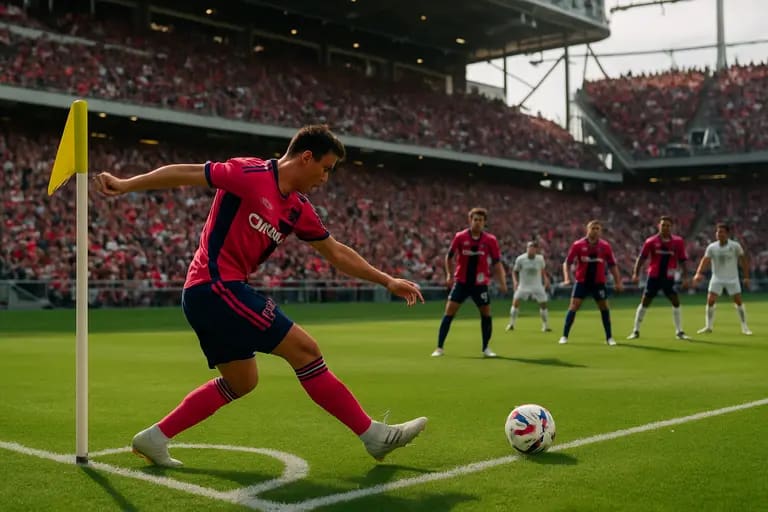
Set pieces remained part of the wider St. Louis identity. Earlier in the club’s MLS history, the research notes that CITY had been highly productive from dead-ball situations in 2023, using screens, movement inside the six-yard box, and deeper runners. During the 2026 unbeaten run, that background mattered because it gave the team another route to pressure opponents beyond open-play patterns.
Multiple Scoring Sources
That made St. Louis Tactics less dependent on one scorer. The September 9 draw at Portland was a useful example because Rafael Navarro scored his first two MLS goals in a brace. A new attacking addition contributing in that way supported the broader pattern described in the research: goals and attacking actions came from varied positions and roles, not only from one fixed final-third outlet.
Depth also mattered in tactical terms. If substitutes understand pressing triggers, movement rules, and defensive spacing, a coach can change personnel without changing the whole team behavior. That is often the difference between a short good run and a sustained unbeaten streak, especially during fixture congestion across league and cup play.
Responses To Early Setbacks
The research also notes a September 12, 2026 match against Minnesota United in which CITY conceded first, led 3-1 by halftime, and won 4-2. That type of response is tactical as much as emotional. A team with clear spacing can recover from an early goal against because it does not need to abandon its base structure immediately.
Match state management was part of the streak’s value. When CITY led, the back-three platform and compact midfield could protect central areas. When CITY trailed or needed a goal, the same structure could push numbers forward through the eights and wide players. The shape was useful because it did not require a full reset every time the score changed.
What The St. Louis CITY SC Streak Showed
Viewed retrospectively, St. Louis Tactics during the 2026 unbeaten run showed how a clear structure can raise a squad’s floor. The 3-diamond-3 label captured several connected ideas: three-player security behind the ball, a pivot-led midfield, aggressive eights, width against narrow defending, and quick transitions after regains.
The official results gave the run its historical weight. The tactical details explain why the streak was not a random sequence of draws and narrow wins. CITY combined defensive compactness, multi-lane attacking, set-piece threat, and squad-wide role clarity. Those ingredients helped turn a strong period of form into a club reference point within MLS competition.
For readers exploring this page as part of broader recreational content, the same network also includes information on leisure topics like Copeland Hills Golf. The football lesson remains specific: St. Louis’ 2026 run was built on repeatable behaviors, not only momentum. The streak stood because the team had answers for pressure, narrow blocks, wide spaces, and difficult scorelines.